 2 citations
,
December 2021
2 citations
,
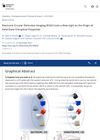
December 2021 This study found that the observed isotropic ss-ECD spectrum of finasteride is influenced by the anisotropy of locally oriented crystals, offering new possibilities for analyzing solid-state chiral materials.
 July 1995 in “Hair transplant forum international”
 This article summarizes the first meeting of the ISHRS held in Rome, noting over 150 attendees but presenting no new research findings.
January 2026 in “SSRN Electronic Journal” This study on Antirrhinum trichomes found that stickiness in A. hispanicum is due to a recessive allele and mapped it to a specific region on Chromosome 1, while baldness in A. siculum likely involves a novel hairy allele.
6 citations
,
February 2024 in “Pharmaceutics” This study found that echogenic liposomes improved the delivery and penetration of CRISPR/Cas9 genetic materials into cardiomyocytes, both in vitro and in vivo, especially when combined with ultrasound, highlighting a promising strategy for cardiovascular gene therapy.
July 2026 in “Research Square” 64 citations
,
October 2018 in “Thérapie” This report describes the enhancement of the French SNIIRAM/SNDS healthcare database through external data linkages, highlighting its potential use in medical research despite complexities in the integration process.
 1 citations
,
August 2018 in “bioRxiv (Cold Spring Harbor Laboratory)”
1 citations
,
August 2018 in “bioRxiv (Cold Spring Harbor Laboratory)” This study reports that a novel gain-of-function mutation in TMEM173, combined with polymorphisms in TMEM173 and IFIH1, results in a distinct clinical phenotype with features of SAVI, including alopecia and photosensitivity.
 1 citations
,
November 2023 in “Rice”
1 citations
,
November 2023 in “Rice” This study found that PRX102, a peroxidase with a unique polar localization pattern, plays a role in root hair growth by aiding the transport of materials to the tips of growing root hairs.
December 1963 in “Bulletin of Experimental Biology and Medicine” Radioiodine-131 significantly accumulates in skin and hair.
3 citations
,
July 2025 in “Clinical and Experimental Dermatology” This study reported that patients with alopecia areata treated with ritlecitinib in a real-life setting had a higher rate of positive response on the Severity of Alopecia Tool score compared to those in the ALLEGRO trial.
4 citations
,
August 2023 in “Biomedicine & Pharmacotherapy” This study found that in noise-exposed FVB/NJ mice and cell models, ivacaftor reduced oxidative stress and hearing damage by maintaining CFTR function and increasing Nrf2 expression, suggesting its potential for treating noise-induced hearing loss.
September 2015 in “Photodiagnosis and Photodynamic Therapy” 7 citations
,
May 2021 in “Animal Genetics” This study found that the Siberian sunshine tabby coat modification is associated with a specific CORIN gene variant, suggesting a genetic basis for this golden phenotype in cats.
May 2026 in “Science Advances” This research observed that translation initiation shifts from cap-dependent to IRES-mediated pathways varied across tissues and cell types under stress and differentiation conditions in mice, with low IRES/Cap ratios signaling high stemness and potential multipotency, mediated by the RNA processing protein PTBP1.
August 2025 in “BMC Pharmacology and Toxicology” The LTF gene may help predict and manage nonspecific orbital inflammation.
 1 citations
,
May 2013 in “Journal of the Egyptian Women's Dermatologic Society (Print)”
1 citations
,
May 2013 in “Journal of the Egyptian Women's Dermatologic Society (Print)” Women with idiopathic hirsutism and PCOS have higher RBP4 levels, and PCOS is linked to greater insulin resistance; weight management may help both conditions.
February 2024 in “bioRxiv (Cold Spring Harbor Laboratory)” This study found that Pik3r1 Y657* mice, which model human SHORT syndrome, show increased energy expenditure despite insulin resistance, but this is not due to changes in locomotion, thermoregulation, or Ucp1-dependent thermogenesis, suggesting a different metabolic mechanism may protect against lipotoxicity.
 123 citations
,
November 2012 in “Stem cells”
123 citations
,
November 2012 in “Stem cells” This study reports that miR-302 promotes pluripotency by inhibiting NR2F2 and indirectly regulating OCT4 in stem cells, enhancing reprogramming efficiency when added to traditional factors.
July 2023 in “SKIN The Journal of Cutaneous Medicine” This study found that some patients with alopecia areata who did not respond to ritlecitinib treatment by Week 24 achieved a positive response with continued therapy by Week 48, with tolerable side effects.
 October 2025 in “Asian Journal of Pharmaceutical Research and Development”
 This study reported that phytosome formulations of citrus flavonoids naringenin and naringin showed significantly increased oral bioavailability and plasma drug concentration in rabbits, suggesting that phytosome technology effectively addresses the pharmacokinetic limitations of these compounds.
 6 citations
,
August 2022 in “The Italian Journal of Pediatrics/Italian journal of pediatrics”
6 citations
,
August 2022 in “The Italian Journal of Pediatrics/Italian journal of pediatrics” This report identified three novel genetic mutations associated with congenital ichthyosis in Italian newborns and emphasized the importance of next-generation sequencing for personalized patient management.
 November 2022 in “The journal of investigative dermatology/Journal of investigative dermatology”
 This study found that applying ivermectin 1% cream significantly improved both visible symptoms like erythema and invisible symptoms such as stinging, burning, and dryness in rosacea patients over a period of at least 16 weeks.
 May 2022 in “International Journal of Health Sciences (IJHS)”
 This review discusses the diverse medicinal uses and pharmacological aspects of Hibiscus Rosa Sinensis Linn and highlights the need for further research on this plant.
 June 2026 in “Annals of Medicine and Surgery”
 This study highlights the approval of orforglipron under the FDA's National Priority Voucher program, emphasizing its significance as a convenient oral treatment option with beneficial effects on glycemic and lipid profiles for diabetes and obesity management.
 1 citations
,
November 2023 in “Journal of neurology”
1 citations
,
November 2023 in “Journal of neurology” This study reports a case of a patient with neuromyelitis optica spectrum disorders treated with eculizumab who developed fatal sepsis after insulin resistance emerged.
 April 2017 in “Journal of Investigative Dermatology”
 This study suggests that mutation-targeted siRNA therapy could potentially treat keratitis-ichthyosis-deafness syndrome by selectively reducing harmful GJB2 mutant gene expression in patient-derived keratinocytes.
 April 2023 in “Journal of Investigative Dermatology”
 This report details the development of a PSR™ Terminalia extract with antioxidant and anti-aging potential, highlighting its rich composition in phenolic acids, polysaccharides, and organic acids, without new clinical results.
July 2026 in “Dermatology and Therapy” In this retrospective study, baricitinib and ritlecitinib showed similar effectiveness and safety over 52 weeks for treating severe alopecia areata, with non-severe adverse events more common for baricitinib, driven by weight gain.