49 citations
,
February 2022 in “Drug Design Development and Therapy” This study found that treatment with ritlecitinib improved hair regrowth in alopecia areata patients, with many achieving significant results after 24 weeks compared to placebo.
 2 citations
,
June 2023 in “Journal of cell science”
2 citations
,
June 2023 in “Journal of cell science” In this study, researchers found that specific mutations in iRhom2 in mice lead to skin and hair abnormalities which depend on the presence of the protein ADAM17, suggesting a complex role for iRhom2 in tissue development and potential implications for treating tylosis with oesophageal cancer.
November 2002 in “International Society of Hair Restoration Surgery” This letter raises concerns about the International Alliance of Hair Restoration Surgeons and reports no new research findings.
January 2023 in “BOĞAZİÇİ TIP DERGİSİ” This study found that female adolescents with pilonidal sinus disease had significantly higher insulin levels and HOMA-IR scores, suggesting hyperinsulinemia may be a risk factor for the condition.
June 2026 in “British Journal of Dermatology” This study evaluated the real-world use of ritlecitinib for severe alopecia areata in the UK, reporting that 37% of patients achieved significant hair regrowth by week 36, with no serious adverse effects noted, although response varied with disease duration.
 July 2013 in “Hair transplant forum international”
 This article discusses ISHRS regional workshops for hair restoration, highlighting their appeal to both newcomers and seasoned professionals, but reports no new clinical findings.

This review analyzed clinical trials and guidelines on 5-α-reductase inhibitors (5-ARIs) and found these drugs significantly improve urinary symptoms in BPH and stabilize hair loss in androgenic alopecia, but may cause sexual dysfunction and gynecomastia.
 August 2024 in “Research Square (Research Square)”
 This study found that women taking 5α-reductase inhibitors (5aRI) for alopecia had a lower risk of breast cancer compared to those not using these medications, with no increased risk of developing ovarian or endometrial cancer.
March 2014 in “Institutional Repositories DataBase (IRDB)”  December 2025 in “International Journal of Innovative Technologies in Social Science”
 This study found that ritlecitinib, approved for alopecia areata in patients aged 12 and older, has an acceptable safety profile with mild to moderate side effects and no increase in serious adverse events compared to placebo.
February 2025 in “Canadian Journal of Health Technologies” This review assessed the clinical and cost-effectiveness of baricitinib, an oral treatment for severe alopecia areata in adults, to inform Canadian reimbursement recommendations, excluding Quebec.
September 2018 in “The Journal of Urology” This review discusses FAERS data on 5-alpha reductase inhibitors and their potential implications for post-finasteride syndrome, but it does not report any new clinical results.
 January 2024 in “Archives of Endocrinology and Metabolism”
 In this case report, a novel heterozygous mutation in the insulin receptor gene was identified in an adolescent girl with type A insulin resistance syndrome, characterized by excessive hair growth and skin changes, and her mother.
 February 2025 in “PubMed”
 This case report observed successful hair regrowth with ritlecitinib in a patient with severe alopecia who did not respond to a previous year of baricitinib therapy.
July 2025 in “SKIN The Journal of Cutaneous Medicine” This study describes characteristics and outcomes for adults initiating ritlecitinib for severe alopecia areata, highlighting increased hair regrowth and physician satisfaction with longer treatment durations, despite ongoing psychosocial impacts like embarrassment and anxiety among patients.
June 2025 in “British Journal of Dermatology” This study reviewed clinical trials on JAK inhibitors for alopecia areata, finding them effective for short-term hair regrowth with a favorable safety profile, but noted limited data on long-term risks like malignancies or cardiovascular events beyond two years.
 March 2001 in “Hair transplant forum international”
 This meeting announcement reports no new research results; it describes the upcoming Annual Meeting of the International Society of Hair Restoration Surgery in 2001.
 13 citations
,
November 2012 in “PubMed”
13 citations
,
November 2012 in “PubMed” This study found that in men with sexual dysfunction, use of 5ARI may reduce sexual drive and spontaneous erections without worsening pre-existing erectile or ejaculatory issues.
 7 citations
,
August 2023 in “Journal of the American Academy of Dermatology”
7 citations
,
August 2023 in “Journal of the American Academy of Dermatology” This source reports that the approval of baricitinib and ritlecitinib, which are JAK inhibitors, has marked a significant advancement in treating severe alopecia areata (AA), and suggests that additional treatments with new mechanisms may further improve patient outcomes in the future.
2 citations
,
July 2006 in “European Urology Supplements” 5α-reductase inhibitors can reduce prostate cancer risk but may increase high-grade tumors, needing more research.
 May 2017 in “Hair transplant forum international”
 This abstract describes a privately organized live surgery meeting in Rio de Janeiro in 1992 but does not present new research results.
 68 citations
,
April 2002 in “Journal of Alternative and Complementary Medicine”
68 citations
,
April 2002 in “Journal of Alternative and Complementary Medicine” This study suggests that botanical 5AR inhibitors like Serenoa repens and β-sitosterol may improve symptoms of androgenetic alopecia, with 60% of treated subjects showing improvement compared to placebo.
 March 2026 in “Dermatology Online Journal”
 Medicaid coverage for alopecia areata treatments is inconsistent and often limited.
November 2025 in “SKIN The Journal of Cutaneous Medicine” This study observed that adolescents with alopecia areata receiving ritlecitinib 50 mg daily showed notable hair regrowth over three years, as seen in both clinician- and patient-reported outcomes. However, the decreased number of participants at later stages limits the findings.

This research review concluded that 5α-reductase inhibitors may be effective in treating androgenetic alopecia, showing general efficacy over placebo, though future clinical trials are needed to determine the best drug, dose, and duration, as well as gender differences in treatment response.
 3 citations
,
July 2021 in “Drug Testing and Analysis”
3 citations
,
July 2021 in “Drug Testing and Analysis” This study found that chronic administration of finasteride affected the isotopic composition of testosterone and nandrolone metabolites, impacting the drug-testing outcomes in athletic contexts.
3 citations
,
July 2022 in “Brain and Behavior” This study observed that a CARASIL mouse model demonstrated abnormal behavior, vascular and cellular changes, and upregulation of the TGF-β/Smad signaling pathway, indicating its potential involvement in CARASIL pathogenesis.
6 citations
,
June 2009 in “Journal of Clinical Oncology” This study reports that 5-alpha-reductase inhibitors do not prevent prostate cancer and merely reduce the likelihood of undergoing diagnostic biopsies, potentially misleading patients and physicians.
 June 2022 in “C&EN global enterprise”
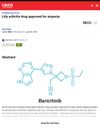
 This source notes that Olumiant (baricitinib), a rheumatoid arthritis drug by Eli Lilly and Company, has been approved as the first systemic treatment for severe alopecia areata.