26 citations
,
September 2009 in “Clinical genetics” This study identified four novel and one recurrent mutation in the AIRE gene among Arab families with APS1, suggesting these contribute to the disorder.
 20 citations
,
May 2013 in “International Journal of Molecular Medicine”
20 citations
,
May 2013 in “International Journal of Molecular Medicine” This study identified a novel missense MAFB variant in a family with some unaffected members, suggesting incomplete penetrance and the potential influence of modifier genes, epigenetic mechanisms, or environmental factors on MCTO phenotype.
 November 2022 in “Journal of Investigative Dermatology”
 In this study, analysis of over 800 Iranian patients with epidermolysis bullosa identified 15 with pathogenic PLEC variants, highlighting a correlation between variant locations and phenotypic manifestations of plectinopathies.
February 2024 in “bioRxiv (Cold Spring Harbor Laboratory)” This study found that Pik3r1 Y657* mice, which model human SHORT syndrome, show increased energy expenditure despite insulin resistance, but this is not due to changes in locomotion, thermoregulation, or Ucp1-dependent thermogenesis, suggesting a different metabolic mechanism may protect against lipotoxicity.
175 citations
,
August 1997 in “Nature Genetics” 9 citations
,
June 2017 in “American journal of ophthalmology. Case reports” This case report identifies a novel CDH3 gene mutation associated with hypotrichosis with juvenile macular dystrophy in a 13-year-old Turkish girl, highlighting implications for future genetic analysis and counseling.
 August 2020 in “Pakistan Journal of Zoology”
 This study identified a novel genetic mutation, c.429delC in the hairless gene, associated with atrichia with papular lesions in two Pakistani families.
15 citations
,
February 2014 in “PloS one” This study identified two prevalent and one newly proposed founder LIPH mutations in Japanese patients with autosomal recessive woolly hair/hypotrichosis and associated these mutations with different severities of hair loss.
 9 citations
,
November 2019 in “Cell calcium”
9 citations
,
November 2019 in “Cell calcium” This study found that a mutation causing Stormorken syndrome in mice led to skeletal abnormalities and unusual hair growth, showcasing the STIM1 R304W protein’s role in bone development and cell fate.
April 2024 in “Institutional Repositories DataBase (IRDB)” This study identified 11 previously unreported ABCA12 variants associated with varying severities of autosomal recessive congenital ichthyoses and expanded the phenotype spectrum of ichthyosis linked to these variants.
 6 citations
,
November 2017 in “Scientific reports”
6 citations
,
November 2017 in “Scientific reports” This study found that a novel R343H mutation in the vitamin D receptor gene impairs its transcription activity, contributing to hereditary vitamin D-resistant rickets and alopecia in the affected family.
37 citations
,
August 2011 in “Journal of Bone and Mineral Research” This study reported a case of hereditary vitamin D–resistant rickets caused by a single heterozygous missense mutation in the VDR gene, showing dominant-negative effects and reduced response to 1,25-dihydroxyvitamin D3.
21 citations
,
March 2015 in “Neurological Sciences” This study reports that a novel frameshift mutation in the HTRA1 gene in a CARASIL pedigree led to reduced HTRA1 protein and increased TGF-β1 expression, potentially causing severe CARASIL and peripheral small arterial disease.
October 2025 in “Clinical and Experimental Pediatrics” In this case report and literature review, researchers identified a novel mutation in the CLDN1 gene linked to neonatal ichthyosis-sclerosing cholangitis syndrome and found that its phenotype varies widely, suggesting a multidisciplinary approach is crucial for management.
 17 citations
,
June 2017 in “Gene”
17 citations
,
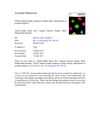
June 2017 in “Gene” This is the first report of the FOXN1 p.R255X mutation from India, demonstrating the global spread of this genetic mutation previously found only in an Italian community.
 13 citations
,
November 2009 in “Journal of Dermatological Science”
13 citations
,
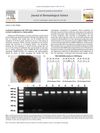
November 2009 in “Journal of Dermatological Science” This article discusses various dermatological studies cited by previous authors and reports no new clinical results.
March 2026 in “JID Innovations” In a mouse model study, researchers found that mutations in Aire reduced alopecia areata frequency, while Notch4 mutations did not lead to the disease, likely due to proximity with a resistance gene.
September 2019 in “The journal of investigative dermatology/Journal of investigative dermatology” This study identifies two previously unreported pathogenic RIPK4 gene variants, suggesting a functional link with cell adhesion molecules in ectodermal dysplasias.
May 2018 in “The journal of immunology/The Journal of immunology” This study identified that patients with compound heterozygous mutations in FOXN1 exhibited severe T-cell lymphopenia but retained normal hair and nail development, indicating a distinct clinical phenotype from classic FOXN1 cases.
2 citations
,
August 2020 in “CRC Press eBooks” This article discusses the impact of the tabby mutation on secondary vibrissae and hair follicle patterns in mice and reports no new clinical results.
 24 citations
,
May 2019 in “PLOS genetics”
24 citations
,
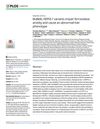
May 2019 in “PLOS genetics” This study reports that compound heterozygous loss-of-function mutations in the HEPHL1 gene in a child were associated with abnormal hair and cognitive issues, linking altered ferroxidase activity to hair disorders.
 5 citations
,
June 2023 in “BMC genomics”
5 citations
,
June 2023 in “BMC genomics” This study found that a specific genetic mutation in the Fgf5 gene may contribute to the long-hair trait in Angora rabbits by reducing the binding capacity of the FGF5 protein.
 December 2013 in “Appetite”
 This study identified a nonfunctional Itpr3 gene in BTBR mice, attributed to a 12-bp deletion, which likely causes their simultaneous hair loss and taste perception deficits.
47 citations
,
July 1998 in “Journal of Investigative Dermatology” A new mutation, Glu402Lys, in hair keratin is linked to variable symptoms of monilethrix.
In this study, researchers identified the c.296C>T (p.T99I) variant in the KRT32 gene, which co-segregates with loose anagen hair syndrome, and found it decreases binding affinity to KRT82, potentially weakening hair anchorage.
 6 citations
,
September 2015 in “Journal of Investigative Dermatology”
6 citations
,
September 2015 in “Journal of Investigative Dermatology” This study demonstrated that RNA interference targeting mutant keratin genes can effectively correct hair shaft structural defects in a mouse model by reducing mutant gene expression.
3 citations
,
March 2019 in “European Journal of Dermatology” A specific gene mutation (Y449H in K10) was found in a patient with severe skin disorder.
30 citations
,
January 2013 in “Human Mutation” This study identified a homozygous frameshift mutation in the HOXC13 gene associated with pure hair and nail ectodermal dysplasia in a consanguineous Syrian family, suggesting crucial roles for HOXC13 in hair and nail development.
50 citations
,
February 2007 in “The Journal of Pathology” This study found a rare germline mutation in the Birt–Hogg–Dubé gene in a Japanese patient with renal cell carcinoma, suggesting distinct biological features and challenging current renal tumor classifications.
19 citations
,
February 2001 in “Journal of paediatrics and child health” This report documents a 14-year-old Chinese boy with mitochondrial encephalopathy, lactic acidosis, stroke-like episodes, and a de novo A3243G mitochondrial DNA mutation, highlighting the condition's multisystem involvement without ragged red fibers in muscle biopsy.