July 2025 in “Journal of Investigative Dermatology” Hhip-Cre effectively targets dermal papilla cells for gene manipulation in hair biology.
 August 2023 in “Journal of Dermatological Science”
 A specific RNA molecule blocks hair growth by affecting a protein related to hair loss conditions.
This study found that in mice, the combination of azelaic acid and vitamin B6 enhanced hair regrowth, follicle elongation, and thickness more than individual treatments.
July 2025 in “Frontiers in Medicine” This study identified compound heterozygous mutations, c.1101del and c.736 T > A, in the LIPH gene responsible for causing autosomal recessive woolly hair in a child, with c.1101del being a novel frameshift mutation.
26 citations
,
January 1992 in “Carcinogenesis” This study suggests that chronic treatment with TPA in mouse skin selectively expands a keratinocyte subpopulation hyperinducible for ODC, which may be a key target for neoplastic transformation.
 February 2020 in “Definitions”
 This abstract reviews the role of the human KRT 16 wild-type allele in skin and hair development and its association with certain genetic skin disorders, without presenting new findings.
9 citations
,
October 2017 in “Frontiers in plant science” This study found that the peach gene CTG134 mediates auxin-ethylene crosstalk, affecting root hair growth and hormone-regulated processes in plants.
16 citations
,
July 2018 in “Experimental Dermatology” This study suggests that the transcription factor Gata6 plays a role in maintaining the structure of the upper hair follicle and may be implicated in conditions marked by its abnormal expansion, such as acne or cystic diseases.
 April 2016 in “Journal of Investigative Dermatology”
 This study provides a comprehensive platform to explore stem cell interactions regulating hair follicle growth, revealing key signaling pathways in epithelial-mesenchymal interactions using advanced RNA sequencing and transgenic reporters.
 6 citations
,
January 2011 in “Journal of pediatric endocrinology & metabolism/Journal of pediatric endocrinology and metabolism”
6 citations
,
January 2011 in “Journal of pediatric endocrinology & metabolism/Journal of pediatric endocrinology and metabolism” This report details the case of an 11-year-old girl with APECED syndrome carrying a unique homozygous mutation in the AIRE gene, the first of its kind documented.
 6 citations
,
May 2022 in “Aging”
6 citations
,
May 2022 in “Aging” This study found that Si Jun Zi Tang may have anti-aging effects in mice, linked to inhibition of the PI3K-AKT and P38 MAPK signaling pathways.
 17 citations
,
February 2015 in “International Journal of Molecular Sciences”
17 citations
,
February 2015 in “International Journal of Molecular Sciences” This study found that keratinocyte stem/progenitor cell-conditioned medium significantly enhanced hair growth in mice and increased the proliferation of human hair follicle cells.
 11 citations
,
April 2020 in “Life sciences”
11 citations
,
April 2020 in “Life sciences” In this study, pantothenic acid at 20 μg/ml was observed to promote dermal papilla cell proliferation and migration, likely through up-regulation of ID3 and inhibition of Notch signaling.
July 2024 in “Journal of Investigative Dermatology” Substance P helps restore skin thickness and cell renewal when sensory nerves are reduced.
 April 2023 in “Journal of Investigative Dermatology”
 This study found that PX-12 inhibited the NLRP3 inflammasome and reduced psoriasis-like symptoms in a mouse model, suggesting its potential as a treatment for psoriasis.
 August 2019 in “Journal of Investigative Dermatology”
 This study found that tight junctions extend to the most superficial layer of the stratum granulosum in human skin, challenging previous claims of their limited presence in the epidermis.
 April 2026 in “Human Genome Variation”
 In this study, researchers identified a recurrent MBTPS2 splice-site variant as a mutational hotspot in IFAP syndrome across diverse families, with phenotype severity suggesting the influence of additional modifiers.
33 citations
,
June 2007 in “Gene Expression Patterns” This study found that CTIP2 is highly expressed in mouse skin during embryogenesis and adulthood, suggesting it may play a role in skin development and homeostasis.
 April 2016 in “Journal of Investigative Dermatology”
 This study found that Pdgfα signaling is crucial for maintaining dermal adipose tissue in mice by initiating dermal adipocyte stem cell proliferation, with implications for age-related skin defects.
November 2022 in “Journal of Investigative Dermatology” This study reported that an HS-associated NCSTN mutation in iPSC-derived skin organoids led to altered hair follicle stem cell differentiation and increased expression of proteins linked to HS inflammation.
 7 citations
,
March 2020 in “PloS one”
7 citations
,
March 2020 in “PloS one” This study demonstrates that α-parvin is crucial for epidermal morphogenesis and hair follicle development by mediating integrin-dependent adhesion and actin organization in keratinocytes.
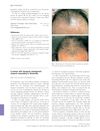
 January 2018 in “Jaypee Brothers Medical Publishers (P) Ltd. eBooks”
 Scalp micropigmentation is a process where tiny dots of pigment are tattooed onto the scalp to create the appearance of a shaved head or fuller hair.
 13 citations
,
February 2007 in “British Journal of Dermatology”
13 citations
,
February 2007 in “British Journal of Dermatology” EF and PXE not closely related.
 September 2019 in “Journal of Investigative Dermatology”
 This study found that a combination of botanical extracts from jasmine, Longoza, peony, and lily significantly increased a6 and b4 integrin protein expression in human skin cells, suggesting complementary effects that could enhance skin quality.
 April 2018 in “Journal of Investigative Dermatology”
 This study found that the absence of Hes1 in hair follicles delays secondary hair germ activation and shortens the anagen phase, impacting HFSC self-renewal and long-term hair regeneration.
October 2012 in “Sax's Dangerous Properties of Industrial Materials”  7 citations
,
July 2018 in “Journal of Functional Biomaterials”
7 citations
,
July 2018 in “Journal of Functional Biomaterials” This study evaluated a new anti-baldness product, IPSTiC patch hair, designed to treat androgenetic alopecia, and reported that it effectively inhibits NO radical and 5α-reductase activity while maintaining safety and stability, suggesting its potential for topical use.
 June 2020 in “Journal of Investigative Dermatology”
 This study of photobiomodulation therapy devices for androgenetic alopecia found variable improvements in hair grade across different skin types and devices, suggesting a need for larger, more comprehensive trials.
December 2025 in “Mycoses” In this study involving a murine skin infection model, researchers found that the Trichophyton mentagrophytes strain TIMM 2789, specific to rodents, induced typical symptoms of superficial dermatophytosis, while revealing that the fungal gene SUB6 is not essential for virulence.
79 citations
,
August 1998 in “The Journal of Cell Biology” In a transgenic mouse model, this study found that overexpression of keratin 16 in skin keratinocytes led to hyperkeratosis and increased EGF receptor signaling, altering skin cell behavior and structure.