15 citations
,
February 2015 in “Anais brasileiros de dermatologia/Anais Brasileiros de Dermatologia” This article reviews the use of dermoscopy in distinguishing temporal triangular alopecia from alopecia areata, emphasizing its role in avoiding invasive diagnostics and ineffective treatments; it reports no new clinical findings.
 1 citations
,
September 2023
1 citations
,
September 2023 In this study, autologous micrografting technology using auricular cartilage was reported to be safe and effective for improving knee function and reducing symptoms in patients with early-stage knee osteoarthritis over six months, but larger studies are needed to confirm these results.
 3 citations
,
August 2020 in “Cutaneous and Ocular Toxicology”
3 citations
,
August 2020 in “Cutaneous and Ocular Toxicology” This study demonstrated that adenosine triphosphate may prevent vandetanib-induced skin toxicity in rats, suggesting potential for further research in other animal models and humans.
October 2021 in “The journal of investigative dermatology/Journal of investigative dermatology” This study found that the proprietary aptamer TAGX-0003 significantly inhibited IFNγ-induced effects in pre-clinical human models of alopecia areata, promoting hair regrowth and potentially preventing disease relapse.
November 2025 in “Journal of Investigative Dermatology” IMG-007 helps regrow hair and reduce scalp inflammation in severe alopecia areata.
 April 2023 in “Journal of Investigative Dermatology”
 This research developed new in vitro models for high-throughput screening of drugs that could protect or restore immune privilege in hair follicles, finding that Tofacitinib was effective in preventing inflammation-related marker upregulation, while Tacrolimus and αMSH worked specifically in outer root sheath keratinocytes.
5 citations
,
February 2023 in “Veterinary Sciences” This study found that adhesive tape impression cytology was effective for diagnosing dermatophytosis in dogs and cats, particularly in dogs with kerion, exhibiting sensitivity comparable to or higher than other tests.
 May 2026 in “Journal of Asia Pacific Aesthetic Sciences”
 This case report highlights significant hair regrowth in a Malaysian woman with localized alopecia areata after intralesional triamcinolone acetonide treatment at a concentration of 5 mg/mL.
 13 citations
,
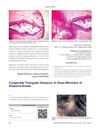
January 2011 in “International Journal of Trichology”
13 citations
,
January 2011 in “International Journal of Trichology” CTA is often mistaken for AA but doesn't respond to steroids and may require hair transplantation.
 November 2023 in “Indian Dermatology Online Journal”
 This study found that tofacitinib was safe and effective for patients with severe or treatment-resistant alopecia areata, alopecia totalis, and alopecia universalis, resulting in significant hair regrowth for most participants.
6 citations
,
May 2022 in “Pharmaceutics” This study demonstrates that MPM-FLIM multimodal imaging can effectively assess the delivery and dissolution of zinc pyrithione particles in human skin follicles using different application techniques.
 July 2026 in “Diagnostics”
 This review outlines the key principles and clinical applications of multimodal non-invasive skin imaging technologies, emphasizing their combined strengths in enhancing diagnosis and treatment assessment in dermatology.
 8 citations
,
May 2020 in “Anais Brasileiros de Dermatologia”
8 citations
,
May 2020 in “Anais Brasileiros de Dermatologia” This study found that serum ischemia-modified albumin levels were significantly higher in patients with telogen effluvium compared to healthy controls, suggesting a potential role of oxidative stress in the condition's pathogenesis.
January 2026 in “International Society of Hair Restoration Surgery” This article explains the relevance of the American Medical Association to ISHRS members for health policy and medical education, with no new research findings reported.
This study found that tenuazonic acid from Alternaria alternata can cause significant damage to vital organs in mice at low doses and highlights the need for regulatory measures to manage its risk in agricultural products.
 35 citations
,
September 2012 in “PloS one”
35 citations
,
September 2012 in “PloS one” This study found that in Arabidopsis seedlings, tonoplast intrinsic proteins are targeted to the vacuole via at least two pathways, including pathways with differing sensitivity to a chemical inhibitor that affect root hair growth and PIN2 targeting.
45 citations
,
February 2011 in “IOP Conference Series Materials Science and Engineering” This study developed a sensor that effectively measures Tl+ cation in solutions with a wide dynamic range and low detection limit, responding linearly within the concentration range 1.0 × 10⁻⁸ to 1.0 × 10⁻¹M.
January 1999 in “Birkhäuser Basel eBooks” This study observed increased metallothionein expression in regenerating liver and hyperplastic mouse skin, suggesting a potential role in cellular proliferation and differentiation.
 35 citations
,
June 2005 in “The Milbank Quarterly”
35 citations
,
June 2005 in “The Milbank Quarterly” This article describes a framework for evaluating new health technologies by integrating quantitative evidence with qualitative assessments and using precedents to guide policy decisions, without reporting new clinical results.
 October 2024 in “Canadian Journal of Health Technologies”
 This CADTH recommendation advises that Olumiant should be publicly reimbursed for treating severe alopecia areata in adults, provided conditions such as a 50% scalp hair loss and specific prescribing criteria are met.
 2 citations
,
January 2022 in “BioMed Research International”
2 citations
,
January 2022 in “BioMed Research International” This study found that using an LED array with an 863 nm wavelength delayed tumor development and reduced systemic inflammatory cytokines in DMBA/TPA-induced mouse skin tumors, suggesting potential but limited benefits of light therapy.
 July 2023 in “Skin Research and Technology”
 This study reports that combining baricitinib with low-dose cyclosporine and steroids resulted in effective and safe treatment for a case of alopecia totalis, maintaining hair regrowth without adverse effects.
 7 citations
,
August 2011 in “Giornale italiano di dermatologia e venereologia : organo ufficiale, Società italiana di dermatologia e sifilografia”
7 citations
,
August 2011 in “Giornale italiano di dermatologia e venereologia : organo ufficiale, Società italiana di dermatologia e sifilografia” This study found that the modified wash test demonstrated high reliability in diagnosing and assessing the severity of androgenetic alopecia and telogen effluvium.
 16 citations
,
January 2010 in “American Journal of Neuroradiology”
16 citations
,
January 2010 in “American Journal of Neuroradiology” This case report describes a 3-year-old boy with trichothiodystrophy, highlighting specific MRI findings of diffuse dysmyelination and osteosclerosis that may be unique to the disorder.
 November 2022 in “CARDIOMETRY”
 This article discusses the potential benefits of GcMAF and oral MAF, developed by "Saisei Mirai", for cancer and other conditions, but reports no new clinical results.
 28 citations
,
July 2007 in “Development”
28 citations
,
July 2007 in “Development” In this study, inactivating the TAF4 subunit of transcription factor TFIID in mouse epidermis disrupted gene expression linked to skin and hair function, and increased tumor risk.
 10 citations
,
January 2011 in “Case reports in dermatological medicine”
10 citations
,
January 2011 in “Case reports in dermatological medicine” This report documented a successful and sustained hair restoration surgery using follicular unit transplantation for temporal triangular alopecia, lasting over six years.
 November 2025 in “Mendeley Data”
 This study found that tofacitinib and baricitinib, when administered with unorthodox weight-stratified dosing in pediatric patients with moderate-to-severe AA, showed comparable efficacy and tolerability, though baricitinib's efficacy decreased with non-standard dosing.
January 2024 in “Defence life science journal” This review explores the potential of non-invasive photobiomodulation therapy for managing combat and traumatic soft tissue injuries, emphasizing its benefits, efficacy, and underlying mechanisms, but reports no new clinical results.
In a proof-of-concept study at Xiangya Hospital, the researchers observed that combining tofacitinib with low-dose interleukin-2 helped maintain remission in refractory alopecia areata patients, with three out of four maintaining complete remission for 11–20 months post-treatment and no adverse events reported.