 20 citations
,
May 2013 in “International Journal of Molecular Medicine”
20 citations
,
May 2013 in “International Journal of Molecular Medicine” This study identified a novel missense MAFB variant in a family with some unaffected members, suggesting incomplete penetrance and the potential influence of modifier genes, epigenetic mechanisms, or environmental factors on MCTO phenotype.

In this study, baricitinib treatment for severe alopecia areata was associated with complete hair regrowth after 12 months in two patients, suggesting it may be an effective alternative to traditional therapies, although safety and clinical implications need careful consideration.
 January 2024 in “Wiadomości Lekarskie”
 This presentation discusses the importance of fluid therapy in critical care, reviewing current data, guidelines, and emerging technologies to help clinicians make informed decisions about fluid type and volume for treating critically ill patients. Results are not reported in this abstract.
May 2024 in “Drugs & Therapy Perspectives” In this study, the authors discuss that while traditional alopecia areata treatments like corticosteroids offer limited efficacy and pose long-term adverse effects, new treatments using janus kinase inhibitors show potential for changing treatment protocols, pending a better understanding of associated adverse drug events.
July 2024 in “Journal of Investigative Dermatology” This study examined the market trends for biologics that have lost patent exclusivity and predicted that drugs like adalimumab, once facing competition, could see price reductions and decreased market share, although the impact on accessibility and total patient use remains unclear.
 1 citations
,
December 2022 in “The Nishinihon Journal of Dermatology”
1 citations
,
December 2022 in “The Nishinihon Journal of Dermatology” This source reports that based on international Phase 3 trial results, the JAK1/2 inhibitor baricitinib was approved in Japan in June 2022 for treating extensive alopecia areata, offering a potentially useful treatment option.
 5 citations
,
June 2001 in “Annals of Internal Medicine”
5 citations
,
June 2001 in “Annals of Internal Medicine” This report describes a case where rituximab provided durable remission in a patient with refractory aggressive diffuse B-cell lymphoma that was unresponsive to prior chemotherapy.
September 2023 in “British Journal of Dermatology” In this study, researchers found that patients with severe alopecia areata show varied regrowth timelines with baricitinib, and those with the most severe cases may still experience delayed but eventual improvement.

Thoracic medial branch block may be a simpler and effective alternative to thoracic vertebroplasty for pain management.
3 citations
,
May 2025 in “Carbohydrate Polymers” In this study, researchers developed a dissolvable microneedle patch containing baricitinib for alopecia areata treatment, reporting significantly higher hair growth in mouse models compared to controls, suggesting its potential as an effective, pain-free topical therapy.
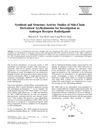 18 citations
,
April 2001 in “Bioorganic & Medicinal Chemistry Letters”
18 citations
,
April 2001 in “Bioorganic & Medicinal Chemistry Letters” This study identified the N-(iodopropenyl) derivative 13 as a promising candidate for development as a radioiodinated androgen receptor ligand due to its binding affinity.
 April 2017 in “Journal of Investigative Dermatology”
 In this study, the novel isoprenylcysteine analog SIG-1451 was shown to inhibit pro-inflammatory cytokine release in various cell-based assays relevant to allergic dermatitis, acting on targets such as IL-4 and IL-6 with potential anti-inflammatory benefits.
 November 2023 in “British Journal of Dermatology”
 Different people with severe hair loss respond to baricitinib treatment at different times, with some showing improvement early, some gradually, and others later.
Ritlecitinib significantly regrows scalp hair in people with alopecia areata.
August 2024 in “Journal of Ayurveda and Holistic medicine.” This review study reports that while Bharangi, a traditional Indian medicinal shrub, is used for various conditions like asthma and epilepsy, it has been clinically underexplored and could benefit from scientific validation for broader use.
May 2024 in “Reactions weekly” 1 citations
,
October 2023 in “European Journal of Dermatology” This study found that combining hair transplantation with platelet-rich plasma treatment significantly improved hair regeneration, reduced hair loss, and minimized skin lesion areas in patients with androgenic alopecia compared to hair transplantation alone, suggesting enhanced treatment efficacy.
 7 citations
,
September 2024 in “Journal of Comparative Effectiveness Research”
7 citations
,
September 2024 in “Journal of Comparative Effectiveness Research” This study reports that health-related quality of life was generally maintained, and sometimes improved, in patients with HR+/HER2- advanced or metastatic breast cancer treated with palbociclib, compared to monotherapy, across various study types.
27 citations
,
August 2008 in “Mayo Clinic proceedings” This review discusses the diagnosis, management, and treatment options for peripheral arterial disease and does not report new clinical findings; the authors emphasize the need for early diagnosis and comprehensive management.
 November 2023 in “Frontiers in pharmacology”
 This review highlights the ongoing need for novel treatments for autosomal recessive congenital ichthyoses, suggesting that drug repositioning, utilizing existing medications or biologics, could provide more affordable and effective options for managing this lifelong skin condition.
May 2024 in “International journal of medicine and psychology.” This study found that elderly patients with acute coronary syndrome had higher PRU rates, and ticagrelor showed greater antiplatelet efficacy compared to clopidogrel in this population.
May 2026 in “Dermatology and Therapy” This study reports that among adults with severe alopecia areata taking ritlecitinib, 49% saw hair regrowth within 3 months, increasing to 82% after more than 6 months; treatment satisfaction also rose with longer duration, indicating sustained efficacy and improved quality of life over time.
2 citations
,
November 2004 in “Hospital pharmacy” This article reviews adverse drug reactions, emphasizes methods of prevention, and encourages reporting to the FDA's medWatch program, but presents no new study findings.
3 citations
,
November 2023 in “Journal of Investigative Dermatology” Over 45% of patients with alopecia areata benefit from ritlecitinib, mostly within a year.
March 2023 in “SKIN The Journal of Cutaneous Medicine” This study observed that most patients with alopecia areata experienced sustained scalp hair regrowth after 48 weeks of ritlecitinib treatment, with safety consistent with prior findings.
 August 2025 in “Fabad Journal of Pharmaceutical Sciences”
 This review highlights that bicalutamide, a non-steroidal antiandrogen used in prostate cancer treatment, is mainly effective through its (R)-enantiomer and emphasizes the need to monitor its adverse effects despite its targeted antiandrogenic action.
January 2024 in “Acta dermato-venereologica” 227 citations
,
April 2023 in “The Lancet” Ritlecitinib effectively treats alopecia areata and is well-tolerated.