
This study found that lateral root formation in plants in response to L. bicolor volatiles involves complex signaling processes, potentially including unknown proteins, CRKs, and ABA pathways.
March 2026 in “Immunological Medicine” This review discusses the use of Janus kinase inhibitors for severe alopecia areata in Japan, noting their effectiveness in some patients but highlighting the need for new therapies due to non-responsiveness and relapse in others; it reports no new clinical results.
14 citations
,
January 2025 in “Journal of Dermatological Treatment” In this multicenter retrospective study, 61.5% of Italian patients with severe alopecia areata achieved significant hair improvement after 52 weeks of treatment with baricitinib, with no major safety issues reported, indicating long-term effectiveness in a real-world setting.
October 2024 in “Developmental Dynamics” This paper highlights advances in Developmental Dynamics, noting how epoa-deficient zebrafish can model Diamond-Blackfan anemia like disorders for drug screening, Alx4 mouse models offer insights into craniofacial development, and mTORC1 signaling is crucial for retinal development.
48 citations
,
March 2007 in “The journal of investigative dermatology/Journal of investigative dermatology” This study observed that retinoic acid biosynthesis and signaling in hair follicles have a spatial and temporal regulation linked to distinct stages of the hair cycle in mice.
29 citations
,
January 2003 in “Genomics” A new mouse mutation causes skin and hair issues, influenced by another gene.
7 citations
,
February 2017 in “Open veterinary journal” This study suggests that deficiencies in certain amino acids, like taurine and tryptophan, in artificial milk formulas may contribute to skin and eye problems in Bengal tiger cubs.
6 citations
,
August 2024 in “Steroids” 1 citations
,
May 2025 in “Journal of the European Academy of Dermatology and Venereology” This review by Aceituno et al. found that both baricitinib and ritlecitinib demonstrate strong efficacy for severe alopecia areata, with meaningful hair regrowth by Week 24, but notes limitations like differing trial sizes and potential effect size overestimations.
46 citations
,
October 2018 in “Neuroscience Bulletin” 39 citations
,
August 1998 in “FEBS Letters” In this study, researchers identified two novel peptidylarginine deiminases from treated rat keratinocytes, both showing enzyme activity with PAD‐R11 reflecting a characteristic of epidermal enzymes.
1 citations
,
January 2023 in “Pediatric Dermatology” This case study of a neonate with ichthyosis and ILVASC demonstrates how an interdisciplinary approach facilitated a timely genetic diagnosis and management of complications.
 February 2026 in “Pharmaceuticals”
 This study introduced the KRDQN predictive framework, which outperformed existing methods in predicting adverse drug reactions and provided interpretable insights into drug mechanisms, aiding pharmacovigilance and clinical decision-making.
June 2025 in “Rapid Communications in Mass Spectrometry”  2 citations
,
July 2014 in “Irish Journal of Medical Science”
2 citations
,
July 2014 in “Irish Journal of Medical Science” The meeting discussed medical findings, including benefits of certain treatments for cancer and heart conditions, and highlighted issues like poor adherence to preventive measures and skill gaps among interns.
January 2023 in “Brazilian Journals Editora eBooks” 2 citations
,
January 2000 in “Elsevier eBooks”  1 citations
,
May 2020 in “Beilstein Journal of Organic Chemistry”
1 citations
,
May 2020 in “Beilstein Journal of Organic Chemistry” This study developed a novel smart deoxyribozyme-based fluorescent sensor that efficiently detects androgen receptor mRNA with high selectivity and can be adapted to target various nucleic acid sequences.
75 citations
,
January 2004 in “Molecular and Cellular Biology” In this study, EDA-A2 transgenic mice exhibited multifocal myodegeneration dependent on XEDAR, suggesting a potential role for XEDAR in skeletal muscle homeostasis.
 7 citations
,
August 2008 in “Cases Journal”
7 citations
,
August 2008 in “Cases Journal” This article reports a case of a 14-month-old child with a constriction ring syndrome caused by tightly wrapped hair, highlighting the importance of early recognition and treatment to prevent serious complications.
 March 2026 in “Dermatology Online Journal”
 Medicaid coverage for alopecia areata treatments is inconsistent and often limited.
March 2008 in “The Knowledge Bank (The Ohio State University)” This study found that AR-007 degrades faster and has a stronger association with hsp70 than AR-014, suggesting it is less stable when bound to the androgen receptor.
 June 2022 in “C&EN global enterprise”
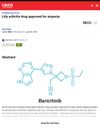
 This source notes that Olumiant (baricitinib), a rheumatoid arthritis drug by Eli Lilly and Company, has been approved as the first systemic treatment for severe alopecia areata.
1 citations
,
January 2012 In this study, the researchers cloned and analyzed the CRABP I gene in Inner Mongolian cashmere goats, finding its highest mRNA expression at 90 days in embryo skin compared to later stages.
 September 2023 in “Plant journal”
 This study showed that the zinc finger protein GIS3 is important for root hair growth in Arabidopsis by regulating RHD2 and RHD4 genes, with application of ethylene and cytokinin helping restore root hair presence in mutated variants.
January 2014 in “cIRcle (University of British Columbia)” This research found that modifying brachytherapy seeds with contrast-enhancing materials in photoacoustic imaging increased signal-to-noise ratios and imaging depth, and demonstrated potential for tissue differentiation by analyzing temperature-induced changes in PA intensity.
13 citations
,
June 2014 in “Molecular therapy” This study found that a lentiviral array of reporters can identify lineage-specific promoters and pathways in mesenchymal stem cell differentiation, aiding in the prediction of signaling pathway effects.
 1 citations
,
February 2024 in “JEADV. Journal of the European Academy of Dermatology and Venereology/Journal of the European Academy of Dermatology and Venereology”
1 citations
,
February 2024 in “JEADV. Journal of the European Academy of Dermatology and Venereology/Journal of the European Academy of Dermatology and Venereology” In this research, the authors reported that long-term treatment with the JAK1/JAK2 inhibitor baricitinib effectively maintains hair regrowth in patients with severe alopecia areata and may gradually improve outcomes for partial responders over 104 weeks, without increasing side effect incidence.