31 citations
,
April 2005 in “American journal of ophthalmology” This case report identified lash ptosis as a potential complication of latanoprost therapy in a 61-year-old man with ocular hypertension.
 7 citations
,
May 2018 in “Curēus”
7 citations
,
May 2018 in “Curēus” In this case report, a 60-year-old woman with eyebrow hypotrichosis experienced significant and lasting eyebrow growth after daily use of bimatoprost 0.03% solution, highlighting its potential as an effective treatment for eyebrow hair restoration.
 4 citations
,
January 2018 in “International Journal of Trichology”
4 citations
,
January 2018 in “International Journal of Trichology” This case report describes a 4-year-old girl with hypotrichosis and juvenile macular dystrophy, linked to mutations in the cadherin 3 gene affecting P-cadherin expression.
9 citations
,
June 2017 in “American journal of ophthalmology. Case reports” This case report identifies a novel CDH3 gene mutation associated with hypotrichosis with juvenile macular dystrophy in a 13-year-old Turkish girl, highlighting implications for future genetic analysis and counseling.
22 citations
,
April 2012 in “The American journal of pathology” This study found that the loss of Msx2 in knockout mice led to phenotypes similar to Peters anomaly and microphthalmia, suggesting that MSX2 plays a critical role in anterior segment development of the eye.
 34 citations
,
February 2018 in “Drug Design Development and Therapy”
34 citations
,
February 2018 in “Drug Design Development and Therapy” This source reports that bimatoprost, a medication approved for eyelash growth, has shown efficacy in treating eyebrow hypotrichosis, suggesting it as a noninvasive, effective, and well-tolerated option for enhancing eyebrow hair.
 10 citations
,
February 2015 in “Clinics in Dermatology”
10 citations
,
February 2015 in “Clinics in Dermatology” This article discusses various periocular conditions like madarosis, milphosis, trichomegaly, and dermatochalasis, and highlights their potential link to underlying local and systemic diseases, but reports no new clinical findings.
 22 citations
,
April 2013 in “Dermatologic surgery”
22 citations
,
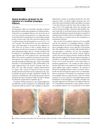
April 2013 in “Dermatologic surgery” In this study, daily application of bimatoprost 0.03% ophthalmic solution for 9 months significantly improved eyebrow appearance in individuals with mild to moderate eyebrow hypotrichosis, without observed side effects.
 22 citations
,
September 2004 in “Journal of The European Academy of Dermatology and Venereology”
22 citations
,
September 2004 in “Journal of The European Academy of Dermatology and Venereology” Bimatoprost can cause longer, thicker, darker eyelashes and eyebrows.
 32 citations
,
November 2011 in “Reproductive Sciences”
32 citations
,
November 2011 in “Reproductive Sciences” The study found that among young Brazilian women, the likelihood of metabolic syndrome in those with PCOS is strongly associated with BMI and the phenotype involving menstrual irregularity and hyperandrogenism.
8 citations
,
March 2005 in “JDDG Journal der Deutschen Dermatologischen Gesellschaft” This case report describes a patient with glaucoma who developed reversible hyperpigmentation and hypertrichosis after using bimatoprost eye drops, aiming to explore prostaglandin analogues' potential roles in hair and depigmentation therapies.
 October 2023 in “Archives of Aesthetic Plastic Surgery”
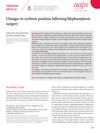
 This study observed that blepharoptosis surgery resulted in brow lowering at various points on the eyebrow, with the most significant change at the medial canthus. The researchers reported that preoperative brow position was the main predictor of brow height descent after surgery.
 6 citations
,
February 2004 in “Clinical and Experimental Ophthalmology”
6 citations
,
February 2004 in “Clinical and Experimental Ophthalmology” This case report indicates that retinoblastoma can occur in a microphthalmic eye and recommends using multiple imaging techniques due to potential differences in calcification visibility.
11 citations
,
January 2012 in “PubMed” This case report suggests that topical bimatoprost may promote eyebrow hair growth, as observed in a patient with eyebrow hypotrichosis, but lacks broader published scientific evidence.
 3 citations
,
November 2020 in “Cleveland Clinic Journal of Medicine”
3 citations
,
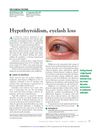
November 2020 in “Cleveland Clinic Journal of Medicine” Eyelash loss can be a sign of thyroid problems.
 October 2023 in “Indian Journal of Ophthalmology - Case Reports”
 This report details the clinical presentation of an 18-year-old female with Kallmann syndrome, noting her ocular issues and differences in sexual development. The researchers treated her eye conditions cosmetically with superficial keratectomy and amniotic membrane graft, followed by corneal tattooing and strabismus correction.
 June 2022 in “Indian journal of clinical and experimental opthalmology”
 This case report details the ocular complications of Hutchinson-Gilford Progeria syndrome in a 20-year-old Bangladeshi patient, highlighting symptoms like dry eyes, Meibomian gland dysfunction, and cataracts.
April 2024 in “Women s Health Reports” This study explored the clinical and biochemical hyperandrogenic status in adolescents with irregular menses to identify significant indicators of potential metabolic problems linked to PCOS.
 May 2025 in “BMJ Case Reports”
 In this case report, a young man's vision problems, including blurred vision and difficulty with color perception, were suspected to be an adverse reaction to oral and topical minoxidil used for alopecia; his symptoms resolved after discontinuing the medication.
4 citations
,
July 2019 in “Journal of cosmetic dermatology” This clinical study reported that while both 0.01% and 0.03% bimatoprost significantly improved eyebrow density and diameter in patients with eyebrow hypotrichosis, the 0.03% concentration was more clinically preferred by patients.
7 citations
,
May 2014 in “Iranian Red Crescent medical journal” This case study describes a 17-year-old female with severe hirsutism diagnosed with PCOS, NC-CAH, and HAIR-AN syndrome who was successfully treated based on her specific underlying conditions.
 1 citations
,
September 2024 in “BMC Ophthalmology”
1 citations
,
September 2024 in “BMC Ophthalmology” This study found significantly elevated central corneal thickness and intraocular pressure in patients with polycystic ovary syndrome, suggesting it should be considered in evaluating anterior segment diseases and glaucoma in women.
 March 2023 in “İnönü Üniversitesi Sağlık Hizmetleri Meslek Yüksek Okulu Dergisi”
 This study found that metabolic syndrome prevalence was significantly higher in obese patients with polycystic ovary syndrome, but no difference was observed among the different phenotypes.
 2 citations
,
February 2016 in “British Journal of Dermatology”
2 citations
,
February 2016 in “British Journal of Dermatology” This study found that topical bimatoprost significantly improved eyelash growth in individuals with idiopathic and chemotherapy-induced eyelash hypotrichosis compared to a vehicle treatment.
 7 citations
,
March 2019 in “Dermatologic surgery”
7 citations
,
March 2019 in “Dermatologic surgery” In this randomized trial, bimatoprost 0.01% significantly improved eyebrow hair density and diameter in patients with eyebrow hypotrichosis compared to a placebo, with minimal adverse effects, suggesting it is an effective and safe treatment option.
6 citations
,
April 2015 in “Plastic surgical nursing” This study reports that applying bimatoprost ophthalmic solution 0.03% to the upper eyelid margin enhances eyelash growth by increasing length, thickness, and darkness, with a favorable safety profile.
2 citations
,
July 2019 in “Indian dermatology online journal” This report documents a rare case of familial eyelash trichomegaly and synophrys in three siblings, with one sister also having loose anagen hair syndrome, an unreported association.
 23 citations
,
April 2010 in “Clinical, cosmetic and investigational dermatology”
23 citations
,
April 2010 in “Clinical, cosmetic and investigational dermatology” This review discusses the cutaneous application of bimatoprost ophthalmic solution 0.03% for enhancing upper eyelash growth and suggests it is both safe and effective; no new clinical results are reported.
 23 citations
,
February 2004 in “Clinical and Experimental Ophthalmology”
23 citations
,
February 2004 in “Clinical and Experimental Ophthalmology” This case report describes a 68-year-old woman with metastatic breast cancer who experienced significant improvement in visual acuity after stopping tamoxifen, which was associated with bilateral optic neuropathies.
June 2007 in “Taiwan Journal of Ophthalmology” This case report on a 17-year-old with Vogt-Koyanagi-Harada syndrome found that while steroid treatments improved vision during uveitis episodes, recurring ocular issues led to significant long-term visual impairment.