 January 2025 in “RSC Pharmaceutics”
 Smart microneedles using advanced tech could improve psoriasis treatment.
 July 2009 in “Medical & surgical dermatology”
 Low-dose acitretin helps nail psoriasis, stem cells may treat scarring alopecia, Chinese men have lower baldness rates, lateral foldplasty is good for ingrown toenails, hair diameter helps diagnose female baldness, childhood trauma linked to alopecia areata, certain hair-weaving leads to scalp conditions in African American women, and new methods for hair research and understanding hair and sweat gland development were introduced.
 September 2004 in “Experimental dermatology”
 This study found that normal murine hair follicles are direct targets for melatonin bioregulation, expressing receptors that are regulated in a hair cycle-dependent manner, influencing keratinocyte apoptosis.
32 citations
,
July 2017 in “Oncotarget” This study found that intermittent treatment with FTI lonafarnib and sulforaphane may be a promising therapeutic approach for children with Hutchinson-Gilford progeria syndrome, as it improved the cellular phenotype.
 August 2021 in “Acta Haematologica Polonica”
 This paper discusses the diagnostic challenges and treatment options for folliculotropic mycosis fungoides, emphasizing the differing prognoses between its indolent and aggressive subtypes and reporting no new clinical results.
 1 citations
,
October 2023 in “Journal of the Pakistan Medical Association”
1 citations
,
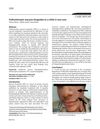
October 2023 in “Journal of the Pakistan Medical Association” This source describes a case of a 12-year-old male diagnosed with folliculotropic mycosis fungoides, presenting with an asymptomatic, erythematous plaque. Histology and immunohistochemistry confirmed FMF, which is typically rare in children and marked by follicular infiltration by CD4+ lymphocytes.
2 citations
,
January 2009 in “Human cell culture” January 2026 in “Dermatologic Therapy” This review discusses folliculotropic mycosis fungoides, highlighting its diagnostic criteria and therapeutic strategies based on disease staging, but does not report new clinical findings.
 5 citations
,
January 2018 in “Annals of Dermatology”
5 citations
,
January 2018 in “Annals of Dermatology” A 308 nm excimer laser successfully treated a boy with a rare skin condition after about a year of weekly sessions.
 April 2023 in “The journal of investigative dermatology/Journal of investigative dermatology”
 This study revealed distinct cellular and transcriptomic differences among various subtypes of cutaneous T-cell lymphoma, particularly highlighting characteristics unique to folliculotropic mycosis fungoides.
475 citations
,
October 2006 in “Proceedings of the National Academy of Sciences” This study suggests that folliculin, mutated in Birt–Hogg–Dubé syndrome, and its partner FNIP1 may play a role in energy and nutrient sensing through the AMPK and mTOR pathways.
 December 2022 in “Journal of neurodevelopmental disorders”
 This study observed that repeated hair follicle sampling is feasible and reliable for measuring FMR1 mRNA and FMRP in individuals with Fragile X syndrome, supporting its use in longitudinal studies.
 December 2021 in “Research Square (Research Square)”
 This study found that repeatedly collecting hair follicles from individuals with fragile X syndrome is feasible for measuring FMR1 and FMRP levels in both home and office settings.
8 citations
,
October 2012 in “Transgenic Research” This study found that transgenic mice overexpressing human H-ferritin showed mild growth retardation and a temporary hairless phenotype, highlighting H-ferritin's physiological roles.
 September 2017 in “Journal of Investigative Dermatology Symposium Proceedings”
 This review discusses the clinical features of hypopigmented mycosis fungoides in primary cutaneous T cell lymphoma and reports no new clinical results.
 October 2024 in “Cermin Dunia Kedokteran”
 This article discusses the surveillance and spread of hand, foot, and mouth disease in China, Singapore, and Indonesia, and reports no new results, emphasizing the need for improved prevention and management strategies.
June 2025 in “Journal of Ultrasound in Medicine” This study reports that high-frequency ultrasound can characterize frontal fibrosing alopecia by assessing dermal atrophy, hair follicle changes, and subclinical inflammation.
2 citations
,
June 2018 in “International Journal of Pharmacological Research” This article reviews treatments for progeria, including aspirin, hydrotherapy, and farnesyl transferase inhibitors, but reports no new clinical results.
September 2023 in “Pharmaceutics” In this study, the authors developed a medicated face mask using electrospun fibers to deliver the active compound Eflornithine hydrochloride for managing hirsutism. The mask showed promising drug release characteristics, a high safety profile, and reduced hair growth in mice.
 January 2015 in “Hair transplant forum international”
 This snippet mentions an increase in women seeking surgical hair restoration and subsequently encountering more cases of frontal fibrosing alopecia, but the abstract doesn't contain results or conclusions.
September 2023 in “JEADV Clinical Practice” This study identified key dermoscopic features in folliculotropic mycosis fungoides patients, showing that dilation of follicular openings and spiky follicular keratosis are specific indicators of follicular involvement, potentially aiding in diagnosis, classification, and treatment decisions.
January 2015 in “Pathology” A 64-year-old man had a rare skin cancer near his ear, unresponsive to antibiotics, with specific skin and hair follicle changes.
1 citations
,
September 2023 in “Portuguese Journal of Dermatology and Venereology” This case report describes a 50-year-old man with folliculotropic mycosis fungoides stage IB, noting trichoscopic findings like dilated follicular openings, black dots, and dystrophic hairs, which are less commonly documented in this condition, suggesting trichoscopy could aid in early diagnosis.
 September 2017 in “Journal of Dermatology & Cosmetology”
 This study reports a case of frontal fibrosing alopecia associated with hepatitis C treatment involving interferon and ribavirin.
March 2024 in “SVU- International Journal of Veterinary Sciences” This study suggests that fecal microbiota transplantation was effective in reducing symptoms of feline hyperesthesia syndrome, with most cats showing clinical remission or improvement and no observed side effects.
 1 citations
,
January 2021 in “Journal of biological chemistry/The Journal of biological chemistry”
1 citations
,
January 2021 in “Journal of biological chemistry/The Journal of biological chemistry” This study found that loss of the folliculin protein delays transferrin receptor recycling, leading to iron deficiency and suggesting a role in the mechanisms of Birt-Hogg-Dubé syndrome.
 January 2025 in “Journal of Case Reports and Scientific Images”
 In this case report, a 65-year-old woman was diagnosed with folliculotropic mycosis fungoides after experiencing scarring alopecia and intense pruritus, highlighting the importance of early diagnosis due to its aggressive nature.
4 citations
,
January 2025 in “Diagnostics” This article reviews the use of high-frequency ultrasonography to visualize nail units and scalps in dermatology, highlighting its potential benefits for disease assessment and treatment monitoring, but reports no new clinical results.

In this report, two pediatric cases of solitary basaloid follicular hamartoma, a rare benign skin malformation often misdiagnosed, were documented using dermoscopy, highlighting its clinical diversity and the need for accurate diagnosis.
 June 2024 in “British Journal of Dermatology”
 This case report highlights the diagnosis of folliculotropic mycosis fungoides in a 15-year-old boy with atypical skin and hair follicle changes, a rare occurrence in pediatric patients.