 207 citations
,
January 2011 in “Dermatologic Therapy”
207 citations
,
January 2011 in “Dermatologic Therapy” This article discusses the factors involved in optimizing laser hair removal, emphasizing patient selection, laser safety, and understanding laser–tissue interactions, but presents no new clinical findings.
 2 citations
,
December 2008 in “Journal of Chemical Crystallography”
2 citations
,
December 2008 in “Journal of Chemical Crystallography” This study reports the crystal structure and geometric parameters of a modified Finasteride derivative, highlighting significant differences in dihedral angles compared to its solvated analog and computational models.
September 2020 in “Journal of Mind and Medical Sciences” This study reported that using a Cutera Xeo laser with specific probes may help treat rosacea symptoms like diffuse facial erythema and telangiectasias, with some risks like bruises and hypopigmentation.
 19 citations
,
May 1991 in “Journal of Chromatography B: Biomedical Sciences and Applications”
19 citations
,
May 1991 in “Journal of Chromatography B: Biomedical Sciences and Applications” This study developed and validated an HPLC method for detecting a novel 5α-reductase inhibitor in human plasma, supporting its pharmacokinetic evaluation at low doses.
October 2025 in “Environment International” This study reports that prenatal and prepubertal exposure to organochlorine compounds and perfluoroalkyl substances may affect pubertal development at age 12, with observed changes in development patterns in both girls and boys, highlighting the need for further research.
This review reports no new results and discusses various topical treatments, noting that fluocortin butyl ester offers anti-inflammatory effects without systemic side effects, while combinations outperform single-agent therapies in managing hyperpigmentation.
 February 2025 in “Journal of Biophotonics”
 This study found that using dual-wavelength low-level laser therapy is more effective for hair regrowth in mice than single-wavelength treatment and significantly better than no treatment, based on 14 days of phototherapy with LED lights.
 January 2025 in “International Journal of Mosquito Research”
 In this study, the combination of petroleum ether extracts from Jacquinia ruscifolia flowers and Thuja orientalis strobili demonstrated synergistic larvicidal effects against third-instar Culex quinquefasciatus larvae, achieving 100% mortality at 250 ppm with noted synergism particularly in a 1:2 ratio.
9 citations
,
April 2009 in “Dermatologic surgery” Infrared light might help treat stubborn alopecia areata.
 9 citations
,
August 2017 in “Photochemistry and Photobiology”
9 citations
,
August 2017 in “Photochemistry and Photobiology” This study found that isolated red light may serve as an alternative for photo-immunotherapy without additional photosensitizers, as it did not reduce keratinocyte differentiation markers or increase photo-oxidative damage, unlike treatment with IL-4 or UVA1/blue light.
 May 2023 in “Elsevier eBooks”
 This study found that low-level laser/light therapy is effective and safe for treating mild to moderate androgenetic alopecia in individuals with certain skin types, especially when combined with other treatments, although further research is needed to refine protocols and verify long-term outcomes.
July 2021 in “British Journal of Dermatology” This article suggests that eyelash prostheses may exacerbate isotretinoin-induced blepharitis, highlighting the need for caution among young women using both products.
 February 2019 in “Journal of Pakistan Association of Dermatologists”
 In this study, eflornithine cream combined with intense pulsed light treatment significantly improved facial hair removal in women with hirsutism compared to IPL treatment alone.
3 citations
,
February 2013 in “Actas dermo-sifiliográficas/Actas dermo-sifiliográficas” A 6-year-old boy developed excessive hair growth after taking diazoxide for low blood sugar.
 September 2018 in “The Medical Journal of Cairo University/The Medical Journal of Cairo University”
 In this study, polarized light therapy increased hair regrowth in patients with alopecia areata compared to those who received only minoxidil.
January 2018 in “대한미용학회지” This study found that white hair demonstrated denser and more hydrophobic properties compared to black hair.
 18 citations
,
April 2001 in “Bioorganic & Medicinal Chemistry Letters”
18 citations
,
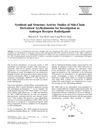
April 2001 in “Bioorganic & Medicinal Chemistry Letters” This study identified the N-(iodopropenyl) derivative 13 as a promising candidate for development as a radioiodinated androgen receptor ligand due to its binding affinity.
1 citations
,
November 2023 in “Skin Appendage Disorders” This study found that 308 nm excimer lamp therapy provides a good clinical response with fewer adverse effects for limited alopecia areata but is less effective for widespread hair loss like alopecia totalis.
 February 2023 in “Cosmoderma”
 This study found that combining red light therapy with oral beta-carotene significantly improved photoaging treatment outcomes compared to red light therapy alone, with Group A showing a 56.12% reduction in photoaging scores over 12 weeks versus 44.78% in Group B.
 February 1938 in “Journal of the American Medical Association”
 This abstract contains no research results but appears to be a web navigation or user interface message.
 1 citations
,
January 2026 in “Physical review. D/Physical review. D.”
1 citations
,
January 2026 in “Physical review. D/Physical review. D.” In this study, researchers found that black holes with primary Proca hair exhibit distinctive optical properties, including a two-boundary shadow structure and additional inner rings, offering novel observational signatures and potential insights into strong-gravity environments.
1 citations
,
August 2025 in “Clinica Chimica Acta” 35 citations
,
February 2003 in “Biochimica et Biophysica Acta (BBA) - General Subjects” This study found that lead treatment enhances the imaging of organized hair lipid structures, revealing their orientation and possible composition as lead and calcium soaps, with potential applications in various fields.
 2 citations
,
June 2011 in “Journal of clinical and experimental investigations”
2 citations
,
June 2011 in “Journal of clinical and experimental investigations” This study found that oral zinc sulphate appeared effective and safe for treating thallium poisoning, particularly in reducing hair and skin symptoms and mitigating its severe progression in patients.
 June 1999 in “Proceedings of SPIE”
 The study suggests that CO₂ laser creates hair transplant channels with significantly less lateral thermal damage than Ho:YAG laser in the human scalp.
 June 2026 in “HAL (Le Centre pour la Communication Scientifique Directe)”
 This article presents the SH-1 molecule as a novel AR antagonist for androgenetic alopecia treatment, highlighting its tissue-specific action and potential for commercialization, but provides no new clinical results.
December 2022 in “Zenodo (CERN European Organization for Nuclear Research)” This abstract contains fragmented and promotional text about various topics, including Hondrostrong and unrelated products, without presenting any new research findings.
 June 2011 in “Journal of clinical and experimental investigations”
 This study suggests that oral zinc sulphate may be an effective and safe treatment for thallium poisoning, particularly in improving dermatological symptoms and reducing the progression of the condition.
This study found that combining prodigiosin and essential oil from Thuja orientalis leaves showed a synergistic effect against the 3rd larva stage of Cx. pipiens, significantly reducing acetylcholine esterase activity and altering midgut pH, compared to untreated larvae.
65 citations
,
November 2008 in “Pediatric Dermatology” This study observed that phototherapy is an effective and well-tolerated treatment for childhood dermatoses, particularly for psoriasis and pityriasis lichenoides chronica.