 3 citations
,
January 2023 in “Journal of Pharmaceutical Negative Results”
3 citations
,
January 2023 in “Journal of Pharmaceutical Negative Results” This study reports that fluconazole emulgel formulations, using jojoba oil and liquid paraffin, showed effective drug release and improved characteristics for treating skin diseases compared to traditional oral formulations.
 2 citations
,
July 2020 in “Journal of Applied Pharmaceutical Science”
2 citations
,
July 2020 in “Journal of Applied Pharmaceutical Science” This study examined the preservative and antimicrobial susceptibility of non-fermenting bacilli collected from beauty salon waste in Brazil.
 1 citations
,
February 2024 in “npj digital medicine”
1 citations
,
February 2024 in “npj digital medicine” This study developed a deep-learning model using unannotated dermatology images from online forums, achieving 49.64% accuracy in classifying 22 skin diseases and 61.76% accuracy in detecting monkeypox, highlighting the potential of these images for skin disease diagnostics in China.
 1 citations
,
May 2021 in “Journal of Cosmetic Dermatology”
1 citations
,
May 2021 in “Journal of Cosmetic Dermatology” This study found that a cosmetic foam reduced the telogen rate in men with androgenetic alopecia, suggesting a potential benefit against male pattern hair loss.
 1 citations
,
February 2021 in “Animal feed science and technology”
1 citations
,
February 2021 in “Animal feed science and technology” This study found that puppies fed organic selenium had better retention of selenium compared to those fed inorganic selenium, with no significant difference in coat quality or hair growth.
 1 citations
,
July 2011 in “Climacteric”
1 citations
,
July 2011 in “Climacteric” Long-term estrogen therapy in postmenopausal women can improve certain health markers, hair loss is common regardless of hormone use, stopping estrogen doesn't increase breast cancer risk, smoking does, and a balanced BMI is linked to lower mortality.
 July 2026 in “Clinical Cosmetic and Investigational Dermatology”
 In this cross-sectional study of healthy urban women in Shanghai, poor sleep quality and elevated perceived stress were linked to various self-reported dermatological issues and clinical signs, reinforcing the potential relevance of psychological factors in skin health.
 June 2026 in “International Journal of Drug Delivery Technology”
 In this study, researchers developed a polyherbal hair growth oil using botanical substances and base oils like coconut and castor oil, finding it to be stable, non-irritating, and suggesting potential hair-growing properties through mechanisms such as scalp blood flow improvement and anti-inflammatory effects.
 April 2026 in “International Journal for Research in Applied Science and Engineering Technology”
 In this study, the developed polyherbal shampoo with Hibiscus rosa-sinensis exhibited good stability and cleansing properties, suggesting it may be an effective natural alternative to synthetic anti-hair fall products.
 January 2026 in “International Journal of Advanced Research in Science Communication and Technology”
 This report describes the creation of a natural herbal beard balm formulated to nourish, hydrate, and support healthy beard growth while reducing irritation, using ingredients like coconut oil, rosemary oil, and beeswax.
 December 2025 in “International Journal of Research in Dermatology”
 This clinical study in healthy Indian adults found that a four-month application of an Ayurvedic leave-on treatment significantly increased natural black hair density, reduced grey hair count, and was well-tolerated without adverse effects, suggesting its efficacy and safety for treating premature hair greying.
 December 2025 in “Aesthetic Cosmetology and Medicine”
 This study reported that platelet-rich fibrin (iPRF) therapy may improve scalp health and hair appearance in women, showing beneficial changes in scalp hydration, redness, oiliness, and hair density, thickness, and loss.
 November 2025 in “Quality in Sport”
 This study reviews natural hair and scalp care methods, highlighting the importance of plant-derived ingredients and scalp type diagnostics for effective trichological management and optimal hair health.
 August 2025 in “International Journal of Applied Pharmaceutics”
 This study developed a stable nanoemulsion-based hair serum containing M. oleifera seed oil, which maintained its physical characteristics and reduced the oil's sticky texture, making it more suitable for hair loss treatment compared to traditional formulations.
 June 2025 in “Open Access Research Journal of Biology and Pharmacy”
 This study formulated an ointment using ethanolic extract from M. paradisiaca unripe peels and found that while the extract alone showed higher antibacterial activity against S. aureus and E. coli than the ointment, strategies to enhance the ointment's activity could be explored.
This study reports that a polyherbal hair mask made from ingredients like strawberry, amla, and fenugreek demonstrates effectiveness as a non-toxic alternative to chemical hair products, promoting hair growth and scalp nourishment while offering ease of use and stability.
 January 2025 in “RSC Pharmaceutics”
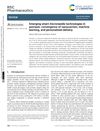
 Smart microneedles using advanced tech could improve psoriasis treatment.
 January 2025 in “International journal of Indian medicine”
 This article discussed the potential risks of commercial hair oils, which may contain harmful ingredients, and suggested that additive-free ayurvedic oils could offer a safer alternative for maintaining healthy hair, while urging dermatologists to be informed about different herbal hair oil options.
 August 2024 in “International Journal For Multidisciplinary Research”
 This case study suggests that an Ayurvedic treatment regimen, involving Amlaki-Amrasthi lepa, Amalaki-Amrasthi kashay, and Avipattikar churna, may effectively manage hair loss symptoms without side effects in a 25-year-old woman.
 August 2024 in “Journal of Contemporary Medical Practice”
 In this analysis, Professor Ma Shuanquan attributes androgenetic alopecia to liver, spleen, and kidney dysfunctions and describes a treatment approach using Chinese medicines focused on these organs, suggesting individualization and noting significant therapeutic effects.
 February 2024 in “International journal of biology, pharmacy and allied sciences”
 This review discusses the potential of plant-based preparations for treating hair loss and reports no new clinical results; the authors highlight herbs with evidence of efficacy against alopecia.
 January 2024 in “Journal of medical clinical case reports”
 In this study, the researchers observed that a new hair serum containing NX35growthTM molecules increased hair density, volume, and thickness in all hair types among 51 participants, following regular daily application over 56 days.
 January 2024 in “International Research Journal of Modernization in Engineering Technology and Science”
 This review suggests that combining nanotechnology with herbal components in hair cosmetics may improve the delivery and effectiveness of treatments for issues like damage, dandruff, and hair loss.
 January 2024 in “Pharmacophore”
 This source discusses the potential of integrating herbal extracts with nanotechnology in skincare products, highlighting improved effectiveness and targeted delivery of active ingredients to skin cells compared to traditional formulations.
 January 2024 in “Middle East Journal of Applied Science & Technology”
 This study formulated and evaluated a polyherbal body lotion using neem, tulsi, and aloe vera extracts, finding it met satisfactory physicochemical standards and was well received by users for skin smoothness and hydration without causing allergies.
 February 2022 in “International Journal of Complementary & Alternative Medicine”
 This review explores traditional Ayurvedic methods in Bhela Samhita for assessing health through physical parameters, and calls for further research to validate these practices.
 August 2021 in “Journal of emerging technologies and innovative research”
 This review examines the efficacy of platelet-rich plasma for treating hair loss, highlighting the lack of standardized protocols for PRP preparation and delivery and reporting no new clinical results.
 April 2021 in “Journal of evolution of medical and dental sciences”
 This study found that bioavailable testosterone and the free androgen index were significantly associated with various clinical and biochemical features of PCOS, including hirsutism, showing higher levels in PCOS patients compared to controls.
 October 2020 in “Veterinary Dermatology”
 This review discusses autoimmune blistering diseases across species and highlights new treatment efficacy findings and ongoing trials, but it reports no new clinical results.
 January 2020 in “Journal of Pharmacognosy and Phytochemistry”
 This study observed that a polyherbal hair oil made from virgin coconut oil and extracts of nine different herbs demonstrated effectiveness in promoting hair growth with a cooling effect and no reported side effects, based on various evaluated properties.