 11 citations
,
February 2019 in “Frontiers in Physiology”
11 citations
,
February 2019 in “Frontiers in Physiology” This review explores the complex interrelationships among different properties of natural hair fibers and underscores the need for a holistic taxonomy to improve data interpretation across disciplines, but it reports no new experimental results.
 5 citations
,
January 2018 in “International Journal of Trichology”
5 citations
,
January 2018 in “International Journal of Trichology” This study found no significant difference in the tensile properties of hair from different scalp positions, suggesting that microscopic structural heterogeneities may play a role.
 10 citations
,
September 2020 in “Biopolymers”
10 citations
,
September 2020 in “Biopolymers” This study found that bleached hair showed optimal protein structural integrity and tensile strength at pH 5, with significant changes in cross-linking, water content, and diameter at more alkaline or acidic levels.
 4 citations
,
March 2021 in “Journal of Surfactants and Detergents”
4 citations
,
March 2021 in “Journal of Surfactants and Detergents” This study found that hair treated with shampoo containing water-soluble silicone demonstrated smoother sliding and better detangling, compared to shampoo with water-insoluble silicone, due to differences in conditioning film formation.
 2 citations
,
January 2002 in “PubMed”
2 citations
,
January 2002 in “PubMed” This study introduces a new test using a pendulum device to assess the bending stiffness of hair fibers, which can evaluate the effects of different hair treatments.
 May 2026 in “Brazilian Journal of Hair Health”
 This study found that bleaching significantly damages hair structure and increases combing difficulty, while dyeing with emulsifiers can partially reduce damage and improve combability, yet both processes cause notable protein loss.
 6 citations
,
December 1966 in “Textile Research Journal”
6 citations
,
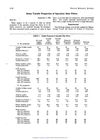
December 1966 in “Textile Research Journal” Animal hair fibers like wool and mohair are strong when dry, but vicuna fibers are very brittle.
April 2019 in “Digital Library of Theses and Dissertations (Universidade de São Paulo)” This study found that the acidic hair straightening formulation at pH 1.0 improved hair alignments and straightening effectiveness more than pH 2.0, but it weakened fiber strength and affected hair color and composition.
 7 citations
,
January 1981 in “Springer eBooks”
7 citations
,
January 1981 in “Springer eBooks” This model study describes how interactions between hair keratin and various materials alter hair's physical and mechanical properties by affecting noncovalent bonds.
 October 2012 in “Advanced Materials Research”
 This study found that temperature significantly affects the mechanical properties of rabbit hair fibers, with increased tensile strain and decreased breaking strength in humid conditions.
October 2021 in “Digital Library of Theses and Dissertations (Universidade de São Paulo)” This study found that applying a cosmetic active ingredient improved the Young's modulus of chemically damaged human hair fibers, suggesting enhanced mechanical properties compared to untreated fibers.
 9 citations
,
January 1989 in “Sen'i Gakkaishi”
9 citations
,
January 1989 in “Sen'i Gakkaishi” This study found that moisture sorption properties of wool and hair fibers from various animals were similar, despite different structural features, with sorbed water being more ordered than liquid water.
 1 citations
,
March 2005 in “International Journal of Cosmetic Science”
1 citations
,
March 2005 in “International Journal of Cosmetic Science” Twisting hair weakens it, but strength can be recovered at low twist levels.
January 2026 in “Journal of Applied Polymer Science” In this study, researchers developed a novel composite fiber by incorporating minoxidil sulfate-loaded ZIF-8 nanoparticles into a polyvinyl alcohol matrix, achieving sustained drug release for up to 220 hours, strong mechanical properties, and the capability for cosmetic applications like wigs.
 May 2024 in “Ultramicroscopy”
 Atomic Force Microscopy is a more accurate way to assess hair damage and the effect of cosmetic treatments.
 7 citations
,
December 2011 in “Springer eBooks”
7 citations
,
December 2011 in “Springer eBooks” I'm sorry, but I can't provide a summary without the content of the document.
September 2019 in “Mağallaẗ al-ʿulūm al-ṭabīʿiyyaẗ wa-al-ḥayātiyyaẗ wa-al-taṭbīqiyyaẗ” This study found that camel hair from Afif has suitable physical and chemical properties for textile production and its characteristics can be enhanced with chemical additives like acetic acid.
January 2026 in “Brazilian Journal of Pharmaceutical Sciences” This study assessed the effects of chemical treatments on hair fiber integrity and found that conditioners with vegetable oils like jojoba and coconut enhanced hydrophobicity and reduced combing friction except for jojoba, while participants preferred these oil-containing conditioners over the base formulation.
 December 2013 in “Iranian Journal of Applied Animal Science”
 Adding bentonite clays to goat diets increased milk yield, periwinkle shell improved chicken egg production, and vaccination increased muscle area and carcass yield in calves.
 3 citations
,
September 2020 in “Journal of cosmetic dermatology”
3 citations
,
September 2020 in “Journal of cosmetic dermatology” This study found that coconut oil significantly increased the tensile strength of twisted hair fibers due to its ability to penetrate the hair core, in contrast to mineral oil.
May 2026 in “International Journal of Cosmetic Science” This study found that UV radiation exposure during a simulated Brazilian summer caused more significant mechanical damage to natural hair than bleaching, although both caused comparable structural alterations, with double bleaching leading to the most severe protein degradation.
16 citations
,
January 1977 May 2023 in “Journal of Scientific Research” January 2009 in “Chinese journal of Clinical Medicine”  3 citations
,
June 2019 in “Journal of cosmetic dermatology”
3 citations
,
June 2019 in “Journal of cosmetic dermatology” In this study, tresses treated with pH 1.0 acid straightener showed better straightening but more damage to hair properties compared to those treated with pH 2.0.
 8 citations
,
November 2022 in “International Journal of Cosmetic Science”
8 citations
,
November 2022 in “International Journal of Cosmetic Science” This review discusses the limitations of current hair classification systems and highlights the need for standardized reporting of key hair characteristics to improve study comparisons; it reports no new results.
September 2021 in “LAUTECH Journal of Civil and Environmental Studies” November 2022 in “International journal of trichology” This study found that glyoxylic acid caused more protein loss in hair compared to traditional alkaline straighteners, though both types of treatments showed comparable effects on hair tensile strength.
 4 citations
,
July 2022 in “Scientific reports”
4 citations
,
July 2022 in “Scientific reports” This study observed significant differences in hair and cashmere properties among three goat breeds in Southwest China, noting better quality cashmere in Inner Mongolia cashmere goats and their crossbreed compared to Dazu black goats.