12 citations
,
November 2022 in “Toxics” This review describes how liver and kidney diseases and diabetes may affect ethyl glucuronide levels in hair, impacting forensic and clinical interpretations, but reports no new experimental results.
 7 citations
,
December 2014 in “Gynecological Endocrinology”
7 citations
,
December 2014 in “Gynecological Endocrinology” This study found that LC-MS/MS is a more reliable method than immunoassays for measuring serum 17OHP and androgen levels in women with hyperandrogenism.
6 citations
,
January 2016 in “Indian Journal of Dermatology Venereology and Leprology” This study found that the majority of "hypoallergenic" hair dyes still triggered allergic reactions in patients sensitive to para-phenylenediamine.
6 citations
,
June 2009 in “Journal of Clinical Oncology” This study reports that 5-alpha-reductase inhibitors do not prevent prostate cancer and merely reduce the likelihood of undergoing diagnostic biopsies, potentially misleading patients and physicians.
 4 citations
,
May 2024 in “INTERANTIONAL JOURNAL OF SCIENTIFIC RESEARCH IN ENGINEERING AND MANAGEMENT”
4 citations
,
May 2024 in “INTERANTIONAL JOURNAL OF SCIENTIFIC RESEARCH IN ENGINEERING AND MANAGEMENT” This study developed a deep learning model using the VGG architecture to predict hair disorders and provide tailored therapeutic suggestions, showing reliable recognition of conditions like dandruff, fungal infections, and alopecia by analyzing images of hair and scalp.
 4 citations
,
January 2018 in “Hair transplant forum international”
4 citations
,
January 2018 in “Hair transplant forum international” This article talks about the concept of extraction and reports no new research findings.
 3 citations
,
February 2018 in “Australian Veterinary Journal”
3 citations
,
February 2018 in “Australian Veterinary Journal” This article explores the possibility that veterinarians may test positive for ketamine due to occupational exposure, but it reports no specific new findings.
 1 citations
,
June 2016 in “Equine Veterinary Education”
1 citations
,
June 2016 in “Equine Veterinary Education” This article discusses various diagnostic techniques for investigating equine skin diseases and reports no new clinical results.
 1 citations
,
August 2006 in “International forensic science and investigation series”
1 citations
,
August 2006 in “International forensic science and investigation series” Hair testing is a reliable method for detecting workplace drug use when done with proper sample preparation and confirmation.
November 2025 in “Wiley Interdisciplinary Reviews Forensic Science” This article reviews recent advancements in forensic hair testing, emphasizing its growing use for detecting past substance exposure, identifying emerging trends like micro-segmentation and hair scanning, and proposing standardized procedures to improve reliability and application in forensic toxicology.
November 2025 in “OPAL (Open@LaTrobe) (La Trobe University)” In this study, researchers conducted additional IHC staining on equine skin sections and found that collagen type III primarily labels the extracellular matrix, while anti-PDGFR-antibody staining highlights cells with long-shaped processes mainly arranged around hair follicles.
September 2025 in “Chinese Journal of Chromatography” This study developed a method using ultra-high performance liquid chromatography-mass spectrometry (UHPLC-MRM-IDA-EPI) for the rapid and sensitive detection of 13 JAK inhibitors in anti-alopecia cosmetics, showing excellent separation and accurate quantification with high recovery rates in tested matrices.
July 2025 in “International Journal of Trichology” This review discusses telogen effluvium and highlights the importance of considering seasonal hair shedding fluctuations in managing hair loss and evaluating hair growth treatments, without presenting new clinical findings.
 January 2024 in “Wiadomości Lekarskie”
 This source analyzes linguistic difficulties faced by speakers of East Slavic languages learning Polish, emphasizing challenges in pronunciation, vocabulary, and grammar. It suggests that tailored educational materials comparing linguistic nuances can improve learning outcomes by highlighting important differences between the languages.
 July 2023 in “Journal of Cosmetic Dermatology”
 This study investigated AGA professionals' perspectives and found that 42% were misled by commercial influences, underestimated these biases' extent, and faced ethical challenges in treatment due to societal pressures and misinformation, highlighting a need for evidence-based guidance and research scrutiny tools.
 March 2021 in “The British Journal of Psychiatry”
 The abstract for this research is not provided, so results or conclusions from this study are not available.
 January 2021 in “Scandinavian journal of clinical and laboratory investigation”
 This study presents a method using liquid chromatography tandem mass spectrometry to quantify biotin in plasma and serum, and explores how high biotin intake can interfere with diagnostic immunoassays that utilize biotin-streptavidin technology, potentially leading to misdiagnosis of endocrine disorders.
July 2017 in “OPAL (Open@LaTrobe) (La Trobe University)” In this study, researchers investigated the role of the ATX-LPA axis in asthma pathogenesis using human and mouse models and highlighted the potential for developing new ATX inhibitors as effective asthma treatments.
June 2017 in “The Medical Journal of Australia” This article provides no abstract or new research findings.
March 2013 in “Faculty Opinions – Post-Publication Peer Review of the Biomedical Literature” This study found that screening for prostate cancer did not significantly reduce prostate cancer-specific mortality in a meta-analysis of five randomized controlled trials, although one trial reported a benefit in a specific age subgroup.
 March 2011 in “Journal of Dermatology”
 This figure in the publication investigates the relationship between expression levels and tumor burden but reports no specific findings or conclusions.
The digital system for measuring melasma shows promise but needs more development for better accuracy and automation.
This research suggests that the digit ratio, 2D:4D, is unlikely to be a significant indicator of male androgenetic alopecia, contradicting a prominent isolated finding from a previous study.
 5 citations
,
June 1996 in “Journal of Consumer Policy”
5 citations
,
June 1996 in “Journal of Consumer Policy” This study observed a decline in investigations, prosecutions, and convictions for misleading advertising in Canada, suggesting Industry Canada's diminished role necessitates new strategies to address this issue.
4 citations
,
April 2018 in “Clinical microbiology and infection” This article examines the limitations of using large databases for epidemiological research, highlighting the risk of spurious associations due to data quality issues and insufficient adjustment for multiple comparisons, and reports no new results.
 January 2024 in “Zenodo (CERN European Organization for Nuclear Research)”
 This meta-analysis utilized genome-wide association data to explore the genetic traits related to perceived youthfulness across different sex groups in the UK Biobank, incorporating factors like facial aging and lifestyle habits, but the abstract does not report specific results.
 January 2024 in “Zenodo (CERN European Organization for Nuclear Research)”
 This study conducted a genome-wide association meta-analysis using UK Biobank data to explore genetic correlations with perceived youthfulness, revealing traits linked to this perception among both male and female participants.
 November 2025 in “Frontiers of Agricultural Science and Engineering”
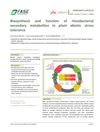
 This study observed that rhizobacterial strain RT3 significantly improved drought tolerance in lettuce by increasing survival rates and fresh biomass after rewatering, with metabolites such as proline and glycine enhancing stress resilience.
 January 2015 in “Journal of cosmetology & trichology”
 In this pilot study, eyebrow mesotherapy was reported to achieve clinically apparent thickening and darkening of eyebrows, with 8 out of 12 patients satisfied with the results after 15 days.
April 2006 in “The Journal of Urology” This study investigates the potential influence of genetic variations in the 5α-reductase type 2 gene on the effectiveness of finasteride treatment for benign prostatic hyperplasia, but it reports no new clinical results.