 August 2026 in “Zenodo (CERN European Organization for Nuclear Research)”
 This source provides supplementary materials for the Carnivore Follicular Integrity Framework, a theoretical model proposing that animal-based diets may support hair follicle stability through several biological mechanisms. The materials include definitions, nutrient tables, and mechanistic notes but do not report empirical results.
April 2022 in “Actas Dermo-Sifiliográficas” This article discusses the case of a 59-year-old woman with a history of progressive facial hyperpigmentation and explores potential connections between her condition and her family history, but reports no clinical findings.
5 citations
,
October 2020 in “Veterinary record case reports” In this case report, a 15-year-old golden retriever with calcinosis cutis showed accelerated improvement in FLE-treated skin infections compared to untreated areas, highlighting FLE's potential as a treatment adjunct.
 46 citations
,
January 2015 in “Journal of The American Academy of Dermatology”
46 citations
,
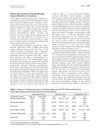
January 2015 in “Journal of The American Academy of Dermatology” This study suggests that trichoscopic features, such as perifollicular erythema and cicatricial white patches, are independently associated with pruritus and the severity of frontal fibrosing alopecia.
June 2026 in “British Journal of Dermatology” This study presents cases suggesting that hair transplantation may trigger de novo frontal fibrosing alopecia in some patients, highlighting a potential association worth considering as cosmetic hair procedures become more common.
 46 citations
,
December 2001 in “Journal of Endocrinology/Journal of endocrinology”
46 citations
,
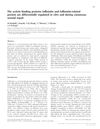
December 2001 in “Journal of Endocrinology/Journal of endocrinology” This study found that mouse FLRG protein, a secreted glycoprotein, is expressed in certain tissues and plays a role distinct from follistatin during wound healing, suggesting different functions in vivo.
3 citations
,
February 2020 in “DOAJ (DOAJ: Directory of Open Access Journals)” This review discusses the challenges of managing intraoperative floppy iris syndrome during cataract surgery and highlights the importance of preoperative risk assessment and multidisciplinary collaboration, reporting no new clinical results.
45 citations
,
April 2009 in “Journal of anatomy” This study examined the complex morphology of the cornified claw sheath in domesticated cats, uncovering structures and growth patterns that help maintain sharp claw tips essential for climbing and prey capture.
 67 citations
,
October 2005 in “Annals of Oncology”
67 citations
,
October 2005 in “Annals of Oncology” This review found that fulvestrant is well tolerated in postmenopausal women with hormone receptor-positive advanced breast cancer, showing lower incidence of joint disorders than non-steroidal aromatase inhibitors.
This study highlights the successful design of recombinant fortilin constructs for potential drug development targeting atherosclerotic plaque formation in cardiovascular disease.
8 citations
,
May 2024 in “ACS Applied Materials & Interfaces” This study found that incorporating PCL-based nanoscaffolds into liver spheroids enhances their viability and liver-specific biofunctionality, suggesting these scaffolds improve the model's potential for preclinical drug screening by increasing sensitivity to acetaminophen toxicity compared to traditional methods.
January 2020 in “Journal of clinical and cosmetic dermatology” This article reviews the etiology of FPHL, distinguishing between androgen-dependent and androgen-independent forms, but reports no new clinical findings; it highlights the need to better understand its pathogenesis.
 12 citations
,
May 2019 in “Molecular Medicine Reports”
12 citations
,
May 2019 in “Molecular Medicine Reports” This study demonstrated that Forsythiaside A improved survival and reduced neurological deficits in rats with cerebral ischemic injury, potentially through activating Nrf2 and reducing ER stress pathways.
April 2024 in “Journal of clinical medicine” This review discusses various therapeutic options for frontal fibrosing alopecia and highlights the need for more research, as existing data are largely retrospective and lack precise treatment guidelines.
 January 2021 in “Hair transplant forum international”
 This article describes a new T-Fast multi-implanter that potentially reduces operating costs and surgical time by implanting two follicular unit excision grafts simultaneously, which may encourage clinics to adopt this technique.
 January 2024 in “Dermatology practical & conceptual”
 In this publication, the authors explored whether there is a scientific basis for using lymecycline to treat frontal fibrosing alopecia, but the abstract does not provide study results or conclusions on its efficacy.
July 2026 in “Theranostics” This study developed a novel ferritin-based delivery system (LR@Fn) that effectively co-delivers RG108 and LLY283 for hearing loss treatment in animal models, reducing hair cell loss and synaptic damage more effectively than dexamethasone.
 9 citations
,
February 2004 in “Clinical and Experimental Ophthalmology”
9 citations
,
February 2004 in “Clinical and Experimental Ophthalmology” This report documents the second known case of Castleman's disease in the lacrimal gland, diagnosed in an 84-year-old woman through histological examination after excising a left upper lid mass.
 April 2018 in “Journal of Investigative Dermatology”
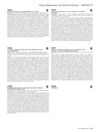
 In this study, injecting Fetuin A into embryonic mouse wounds led to scar formation, suggesting the protein may play a role in scar development by promoting collagen production.
 7 citations
,
December 2021 in “European Respiratory Review”
7 citations
,
December 2021 in “European Respiratory Review” This review covers the current status of the interstitial pneumonia with autoimmune features (IPAF) category, pointing out the need for revision of its criteria to establish it as a standalone diagnostic term, but reports no new clinical findings.
 March 2026 in “Dermatology Reports”
 This study found that frontal fibrosing alopecia had higher long-term remission rates compared to lichen planopilaris, highlighting differences in their clinical presentations and outcomes.
 25 citations
,
June 2018 in “Journal of The American Academy of Dermatology”
25 citations
,
June 2018 in “Journal of The American Academy of Dermatology” This study identified upregulation of genes linked to fibroproliferative disorders, such as platelet-derived growth factor and collagen genes, in patients with central centrifugal cicatricial alopecia, suggesting potential therapeutic targets.
July 2022 in “Journal of Cosmetic Dermatology” This study found that in patients with frontal fibrosing alopecia, combining topical tacrolimus with isotretinoin is more effective after four weeks of treatment compared to tacrolimus with finasteride, though both regimens offered some benefit.
February 2025 in “Archives of Dermatological Research” This study observed that fibrosing alopecia in a pattern distribution shows varied histological features and may resemble lichen planopilaris with initial diffuse distribution, potentially leading to scarring alopecia.
 March 2021 in “CRC Press eBooks”
 This chapter reviews trichoscopic features of primary cicatricial alopecias, particularly lichen planopilaris and frontal fibrosing alopecia, and reports no new results.
 32 citations
,
February 2008 in “Journal of the American Academy of Dermatology”
32 citations
,
February 2008 in “Journal of the American Academy of Dermatology” This case report describes a family with autosomal dominant transmission of keratosis follicularis spinulosa decalvans, with observed treatment refractoriness in multiple topical and systemic therapies.
January 2025 in “Dermatologic Therapy” In this study, treatment with fractional CO2 laser combined with recombinant humanized type III collagen led to significantly better improvements in atrophic acne scars compared to laser treatment with saline, attributed to collagen upregulation and MAPK pathway activation in human dermal fibroblasts.
136 citations
,
July 2014 in “Proceedings of the National Academy of Sciences of the United States of America” This study identified mutations in the FGF5 gene as a cause of extreme eyelash growth in Pakistani families, highlighting a potential target for regulating eyelash growth.
August 2018 in “Journal of the American Academy of Dermatology”