 January 2024 in “Wiadomości Lekarskie”
 This abstract describes the processes for recognizing foreign medical degrees in the US and the reciprocal credentialing of US medical qualifications in Poland, highlighting differences in evaluation and certification requirements between the two countries.
 February 2026 in “International Journal of Molecular Sciences”
 This review explores the potential roles of extracellular vesicles in various medical fields, emphasizing their promise but noting the need for standardization and clinical testing before widespread application.
 August 2023 in “The Indonesian Biomedical Journal”
 This study on UVB-exposed mice found that topical application of 10% Rosmarinus officinalis essential oil significantly increased hair length and follicle diameter, attributed potentially to its antioxidant compounds.
January 2026 in “Journal of the European Academy of Dermatology and Venereology” 4 citations
,
October 2023 in “Journal of Medicine and Life” In this study, UDCA treatment reduced inflammation, oxidative stress, and cartilage damage in rats with experimentally induced rheumatoid arthritis, suggesting potential anti-rheumatoid arthritis properties.
 May 2021 in “Clinical Endoscopy”
 This study found that adding platelet-rich plasma to standard treatment reduced rebleeding in patients with peptic ulcer bleeding compared to additional epinephrine injections.
 1 citations
,
July 2021 in “Dermatologic Surgery”
1 citations
,
July 2021 in “Dermatologic Surgery” This study found that follicular de-epithelialization in follicular unit extraction does not impact graft survival rates but may improve immediate postoperative appearance and cosmetic satisfaction.
October 2023 in “Open Repository of the University of Porto (University of Porto)” 18 citations
,
January 2018 in “BMC dermatology” This paper describes a case of epidermolysis bullosa simplex with muscular dystrophy associated with a novel PLEC mutation and diffuse alopecia, highlighting a potential genetic link that remains uncertain.
 August 2023 in “International journal of research in medical sciences”
 In this study, application of Revgrey® hair serum was found to be safe and may offer some benefit in treating premature greying of hair, with slightly to moderately increased hair recovery observed in a small group of patients after 12 weeks.
August 2024 in “Journal of Controlled Release” In a study using an AGA mouse model, researchers observed that a novel topical gel combining hybrid extracellular vesicles, gold nanoparticles, and finasteride accelerated hair regrowth and improved hair quality more effectively than conventional minoxidil treatment, presenting a promising option with fewer side effects.
 3 citations
,
May 2011 in “Journal of the American Academy of Dermatology”
3 citations
,
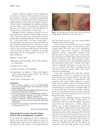
May 2011 in “Journal of the American Academy of Dermatology” This case report describes a 54-year-old woman who developed hypertrichosis around a leg ulcer while using PGE1 ointment, suggesting a potential side effect of the treatment.
 April 2023 in “JMIR. Journal of medical internet research/Journal of medical internet research”
 This study found that pharmacists using the EVInews database for self-medication information achieved significantly higher quality scores compared to those using other web-based sources.
 May 2025 in “The Journal of Rheumatology”
 In this case report, researchers detailed the clinical management and positive outcome of a 62-year-old woman with catastrophic antiphospholipid syndrome associated with systemic lupus erythematosus, highlighting the potential effectiveness of Eculizumab in achieving disease remission and maintaining stability over 18 months.
3 citations
,
January 2025 in “International Journal of Molecular Sciences” In this study, researchers investigated EGCG's spectroscopic properties and its interaction with DPPG lipid, finding that both experimental and theoretical approaches agree on the electronic transitions and reveal an increased absorbance due to molecular interactions.
November 2025 in “OPAL (Open@LaTrobe) (La Trobe University)” This study found that the leaf extract of Tectona grandis and its major bioactive constituents moderately inhibit the 5α-reductase enzyme, which is linked to androgenetic alopecia, and also possess anti-inflammatory properties, showing promise as dual-action candidates for managing this condition.
3 citations
,
April 2010 in “The FASEB Journal” This study found that estrogen, through estrogen receptors, can regulate the expression of the HOXC13 gene involved in hair follicle development, with MLL3 histone methylase playing a collaborative role.
 January 2021 in “Figshare”
 This study found that Coenzyme Q10 delivered through transethosomes improved clinical outcomes for androgenic alopecia patients compared to CoQ10 solution.
 June 2018 in “The Journal of Sexual Medicine”
 This study used high-resolution ultrasound to investigate the pathophysiology of persistent erectile dysfunction in young men who used the drug finasteride, observing differences in erectile tissue homogeneity compared to control subjects without finasteride exposure.
 November 2022 in “Journal of Investigative Dermatology”
 This study developed a novel method to analyze the effects of COL7A1 mutations using mRNA from peripheral blood mononuclear cells, aiding genetic diagnosis and potential therapies for dystrophic epidermolysis bullosa.

Robotic-assisted hair transplant is effective and less painful, but needs more evaluation for long-term results.
 64 citations
,
January 1998 in “Drugs”
64 citations
,
January 1998 in “Drugs” In this study, oral dienogest combined with ethinylestradiol provided effective contraception with a Pearl Index of approximately 0.2 and improved androgenic symptoms without significant metabolic effects.
 February 2026 in “International Journal of Homoeopathic Sciences”
 In this case report, a 20-year-old woman with chronic spontaneous urticaria experienced clinical improvement after receiving personalized homeopathic treatment with Natrum muriaticum 1M, underscoring the potential role of individualized homeopathy in managing this condition.
63 citations
,
July 2024 in “Journal of the American Academy of Dermatology” This study found that the oral JAK1/JAK2 inhibitor deuruxolitinib effectively promoted hair regrowth and patient satisfaction in adults with alopecia areata over 24 weeks.
12 citations
,
May 2016 in “British Journal of Dermatology” This report describes a rare case of epidermolysis bullosa acquisita in a child developing during therapy with squaric acid dibutyl ester for alopecia areata, suggesting a possible link between the medication and disease onset.
 66 citations
,
August 2011 in “Parasitology Research”
66 citations
,
August 2011 in “Parasitology Research” This study found that Mentha pulegium essential oil had a stronger protoscolicidal effect against Echinococcus granulosus in vitro than Mentha piperita, showing dose- and time-dependent effects.
 4 citations
,
November 2019 in “Biomedical Journal of Scientific and Technical Research”
4 citations
,
November 2019 in “Biomedical Journal of Scientific and Technical Research” This paper does not provide study results; it shares author affiliations and publication details without reporting any findings.
January 2018 in “Digital Commons - PCOM (Philadelphia College of Osteopathic Medicine)” This systematic review of three randomized controlled trials found that topical eflornithine is an effective adjunctive therapy for reducing unwanted facial hair in women with hirsutism, with benefits lasting at least six months, although efficacy may diminish over time.
 9 citations
,
November 2012 in “Biomolecules & therapeutics”
9 citations
,
November 2012 in “Biomolecules & therapeutics” This study found that diphlorethohydroxycarmalol significantly increased prostaglandin $E_2$ synthesis in HaCaT human keratinocytes by upregulating COX-1 and COX-2 expression, suggesting potential benefits from elevated $PGE_2$ production.