This study found that an extract treatment showed similar efficacy and tolerability to calcipotriol/betamethasone ointment in reducing psoriasis severity and symptoms over 28 days in patients with mild-to-moderate plaque psoriasis.
 13 citations
,
May 1993 in “International Journal of Dermatology”
13 citations
,
May 1993 in “International Journal of Dermatology” This article presents a theory on the causes and development of telogen effluvium and reports no new clinical findings.
1 citations
,
November 2025 in “Molecules” This review highlights the potential of ellagic acid for treating various skin conditions due to its antioxidant, anti-inflammatory, and depigmenting properties, but notes that novel formulations are needed to overcome its poor solubility and skin permeability to enhance clinical efficacy.
 1 citations
,
April 2019 in “Journal of Investigative Dermatology”
1 citations
,
April 2019 in “Journal of Investigative Dermatology” This study examined the safety and efficacy of dupilumab in adolescents with moderate-to-severe atopic dermatitis, finding that it was well tolerated and significantly improved symptoms over 52 weeks, with its safety profile similar to that in adults.
1 citations
,
May 2024 in “Dermatology Online Journal” In this case study, two middle-aged patients with pruritic scalp erosions were diagnosed with localized pemphigus vulgaris, which resolved without relapse after treatment with low-dose oral prednisone and intralesional triamcinolone acetonide.
30 citations
,
May 2019 in “Journal of the European Academy of Dermatology and Venereology” January 2015 in “Annals of dermatology/Annals of Dermatology” This report describes a case where travoprost treatment for open-angle glaucoma was associated with periocular hypertrichosis, hyperpigmentation, and eyelash growth, which gradually improved after discontinuation.
25 citations
,
September 2005 in “Journal of the American Academy of Dermatology” This study reported that Rapp-Hodgkin syndrome, AEC syndrome, and EEC syndrome are likely part of a single genetic disorder spectrum linked to mutations in the TP63 gene.
68 citations
,
January 2014 in “Dermatology research and practice” This review discusses the presentation and management of skin toxicity from epidermal growth factor inhibitors, highlighting a correlation between cutaneous adverse effects and tumor response, but reports no new clinical results.
 1 citations
,
April 2018 in “Lasers in Surgery and Medicine”
1 citations
,
April 2018 in “Lasers in Surgery and Medicine” This review summarizes late-breaking abstracts from the American Society for Laser Medicine and Surgery, 2018, and reports no new clinical findings.
 March 2025 in “Asian Journal of Beauty and Cosmetology”
 This study found that microspicule cosmetics with low-molecular-weight peptide complexes significantly improved skin whitening, pore condition, and skin barrier function over four weeks compared to a non-microspicule formulation.
 January 2026 in “American Journal of Medical and Clinical Research & Reviews”
 The study discusses using red light therapy for hair regrowth, noting red light alone may aid non-inflammatory hair loss, while infrared-red light combination is necessary for conditions like alopecia areata.
 March 2026 in “Preprints.org”
 In this study, plerixafor was found to enhance melanogenesis and promote repigmentation by engaging a β-arrestin–β-catenin–MITF signaling axis in melanocytes, and showed effectiveness in restoring depigmentation in a murine model without causing systemic toxicity.
2 citations
,
October 2023 in “Cosmetics” This study found that applying 0.005% latanoprost topically to eyelashes significantly increased their length and darkened their color in healthy volunteers over three months, without causing any side effects or changes in intraocular pressure compared to a placebo.
February 2025 in “Journal of the European Academy of Dermatology and Venereology” This study found that ultraviolet-induced fluorescence dermoscopy enhanced the identification of follicular openings in alopecia areata, potentially aiding in the assessment of disease severity and treatment strategies.
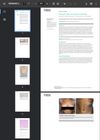
This case report describes a pediatric instance of follicular atopic dermatitis in a dark-skinned patient, highlighting its unique clinical and dermoscopic features, such as purplish to brownish scaly papules and specific dermoscopic patterns, which are crucial for enhancing diagnostic accuracy in similar cases.
 1 citations
,
September 1984 in “Journal of Biological Education”
1 citations
,
September 1984 in “Journal of Biological Education” Plants change their growth in response to shade based on light signals detected by phytochrome.
July 2026 in “Frontiers in Oncology” This mini review reports on papulopustular eruptions linked to classical EGFR inhibitors, MEK inhibitors, and amivantamab, highlighting distinct dermatologic toxicities in each treatment context and exploring underlying mechanisms and management strategies.
33 citations
,
April 2003 in “Oncogene” 3 citations
,
August 2024 in “Clinical Cosmetic and Investigational Dermatology” In this study, researchers found that specific treatment parameters disrupted follicles and sebaceous glands, damaging the bacteria Cutibacterium acnes and promoting follicular remodeling, which may improve both inflammatory and noninflammatory acne lesions.
2 citations
,
September 2023 in “Journal of the American Academy of Dermatology” In a post-hoc analysis of six trials, this study observed that both adult and pediatric patients with moderate-to-severe palmoplantar psoriasis treated with ixekizumab experienced rapid and complete clearance of lesions, sustained for up to 5 years in adults and 2 years in children.
November 2025 in “Indian Journal of Dermatology” This study reports a rare cluster of four patients with ectodermal dysplasia, highlighting its typical dental and dermatological manifestations and the necessity of multidisciplinary management.

In this study involving two volunteers with Androgenetic Alopecia, phototherapy using red and blue wavelengths promoted benefits, as observed through photographic and trichoscopy comparison after 12 weekly sessions.
11 citations
,
May 2021 in “Asian Journal of Pharmaceutical and Clinical Research” This review summarizes the phytomedicinal importance of Eclipta alba in Ayurvedic and folk medicine, particularly its use for hair growth and various biological properties, without reporting new clinical results.
 November 2021 in “CRC Press eBooks”
 This article reviews anagen effluvium, a type of non-scarring alopecia that affects both men and women, often induced by chemotherapy or radiation, and discusses diagnostic approaches but reports no new clinical findings.
 April 2016 in “Journal of The American Academy of Dermatology”
 A child on life support experienced rapid hair loss due to severe illness affecting hair growth.
5 citations
,
February 2014 in “PloS one” This study reports differential gene expression in the leading edge and inner surface epithelial cells of murine eyelids, suggesting that distinct signaling pathways are active during embryonic eyelid closure.
 2 citations
,
June 2017 in “Pediatric Dermatology”
2 citations
,
June 2017 in “Pediatric Dermatology” This case report describes a 2-year-old boy in critical condition who developed anagen effluvium, possibly due to hypotension and hypoxia triggering hair follicle apoptosis.
1 citations
,
October 2023 in “PROTOPLASMA”  January 2024 in “International Journal For Multidisciplinary Research”
 This review examines existing studies on Eclipta prostrata, highlighting its diverse bioactive compounds and potential therapeutic benefits in traditional medicine, and underscores the need for further research to fully develop its medicinal promise.