 May 2022 in “Gastroenterology”
 This study investigated the possible role of neutrophil extracellular traps in contributing to fibrosis in stenotic Crohn's disease.

This study found that sericin dressing containing collagen hydrolysate significantly reduced wound healing time and improved scar quality compared to commercial dressing in split-thickness skin graft donor sites.
 May 2019 in “Pakistan Journal of Pharmaceutical Sciences”
 This study investigated the effects of 10600nm CO2 dot laser and Nd: YAG laser on Wistar rats' skin, finding that CO2 laser treatment resulted in higher positive expression of MMP-1 and TIMP-1 compared to Nd: YAG laser, with statistically significant differences noted.
 January 2019 in “Springer Reference Medizin”
 This article reviews the role of factor Xa inhibitors like Rivaroxaban and suggests they may eventually replace vitamin K antagonists, but their side effects require further clarification.
 April 2018 in “The journal of investigative dermatology/Journal of investigative dermatology”
 This study identified two distinct fibroblast subsets in mouse skin, revealing that adult skin scarring occurs due to the repair process utilizing only one, lineage-restricted fibroblast type instead of coordinated diverse populations.
 January 2017 in “Qucosa (Saxon State and University Library Dresden)”
 This study found that plasma protein binding significantly contributes to the shifts in glucocorticosteroid concentration ratios among blood, saliva, and hair, challenging prior assumptions about enzyme inactivation as the main factor.
 November 2016 in “Universiti Putra Malaysia Institutional Repository (Universiti Putra Malaysia)”
 This study found that Dendrobium sabin flower extracts, especially the methanolic one, demonstrated strong antioxidant and anti-aging properties without significant toxicity, suggesting its potential in treating photo-induced skin aging.
 June 1996 in “Irish Journal of Medical Science (1971 -)”
 This study found a statistically significant increase in glycosylated hemoglobins among patients with adult-acquired panhypopituitarism undergoing long-term GH replacement therapy, with two developing diabetes requiring treatment.
 17 citations
,
July 2014 in “Our Dermatology Online”
17 citations
,
July 2014 in “Our Dermatology Online” In this study of elderly patients at an Indian medical center, researchers found that xerosis was the most common physiological skin change and pruritus was the most frequent complaint.
 4 citations
,
March 2017 in “Journal of evolution of medical and dental sciences”
4 citations
,
March 2017 in “Journal of evolution of medical and dental sciences” This study observed that pruritus and xerosis were the most common skin complaints among the geriatric population attending a dermatology clinic in Puducherry.
 1 citations
,
December 2005 in “Therapeutische Umschau”
1 citations
,
December 2005 in “Therapeutische Umschau” This article reviews anti-aging strategies in dermatology, emphasizing the role of skin as a model for studying aging and promoting preventive and therapeutic interventions, but it does not present new findings.

This study found that a combination of photoprotector and nighttime formulations with essential oils improved skin barrier function and structural characteristics in young men's oily, acne-prone, and photoaged skin.
 April 2018 in “Deleted Journal”
 This article reviews various skin grafting techniques for treating large wounds, particularly in animals, but does not present new experimental data.
 October 2014 in “Aktuelle Dermatologie”
 This study reports that elderly men with baldness and comorbid conditions experienced persistent scalp erosions following topical treatment with imiquimod or diclofenac, suggesting alternative therapies should be considered for this group.
 May 2013 in “Springer eBooks”
 Skin problems in the elderly are unique and may indicate other diseases, involving changes in skin, hair, nails, and increased cancer risk.
 35 citations
,
February 2006 in “Textile Research Journal”
35 citations
,
February 2006 in “Textile Research Journal” This study found that xylanase and pectinase enzymes clean wool and specialty hair fibers as effectively as soap, without causing physical damage, whereas resinase was not effective.
 100 citations
,
March 2006 in “Journal of biological chemistry/The Journal of biological chemistry”
100 citations
,
March 2006 in “Journal of biological chemistry/The Journal of biological chemistry” This study found that cystatin M/E strongly inhibits human cathepsin V and cathepsin L via distinct non-overlapping sites, suggesting an important role in human epidermal differentiation and hair follicle morphogenesis.
 137 citations
,
October 2009 in “The American journal of pathology”
137 citations
,
October 2009 in “The American journal of pathology” This study found that matriptase, a membrane serine protease, is crucial for maintaining multiple types of epithelial tissues in mice, with its absence leading to severe organ dysfunction and increased permeability.
22 citations
,
November 2008 in “The journal of investigative dermatology/Journal of investigative dermatology” This study observed that cathepsin L and transglutaminase 3 colocalize in the human hair bulb and nail matrix, suggesting their involvement in terminal differentiation within these epidermal appendages.
53 citations
,
June 1983 in “Journal of Investigative Dermatology” This study reports that human epidermal transglutaminase activity increases with treatment using organic solvents and chemicals without significant molecular weight changes, which may allow modulation of the enzyme in skin diseases.
11 citations
,
April 1982 in “Journal of the Forensic Science Society” This study found that specific enzymes could be detected in fresh hair sheath cells, with most remaining detectable in older cells, except for Adenylate kinase and Esterase D.
49 citations
,
May 1974 in “Biochimica et Biophysica Acta (BBA) - Protein Structure” Transamidases are present in the epidermis but their exact role is unclear.
138 citations
,
December 1976 in “Journal of Biological Chemistry” This study purified a transglutaminase enzyme from human epidermis that requires calcium or strontium for activity and forms cross-linked polymers, but its detailed activation mechanism remains unclear.
34 citations
,
April 2012 in “Molecular Biology Reports” This study isolated a thermophilic bacterial strain, Bacillus cereus, from soil that produces an extracellular protease; the enzyme effectively removed non-leather structures from animal pelts and was compatible with commercial detergents.
2 citations
,
July 1999 in “JEADV. Journal of the European Academy of Dermatology and Venereology/Journal of the European Academy of Dermatology and Venereology” In this study, proteolytic enzymes applied to mice skin caused severe degeneration in hair follicles, including detachment of stem cells from their niche, suggesting potential impairment of stem cell function.
165 citations
,
January 2006 in “Molecular Medicine” This review highlights the role of matriptase in epithelial differentiation and cancer, noting that unregulated matriptase expression can enhance cancer progression in animal models, but reports no new experimental data.
 13 citations
,
February 2007 in “British Journal of Dermatology”
13 citations
,
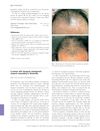
February 2007 in “British Journal of Dermatology” EF and PXE not closely related.
 December 2023 in “Sains Malaysiana”
 In this study, researchers used in silico mutagenesis to identify key calcium-binding sites influencing the stability of Rand protease from Bacillus subtilis, potentially enhancing its application in industries like leather dehairing by improving stability and eliminating the need for additional metal ions during the process.
118 citations
,
January 2004 in “European Journal of Cell Biology” Balanced protease activity is crucial for healthy skin and hair development.
 75 citations
,
November 1965 in “Textile research journal”
75 citations
,
November 1965 in “Textile research journal” This study found that papain/bisulfite disintegrates human hair cuticles by dissolving the endocuticle, potentially accelerated by ethanol's removal of cell membrane material.