1 citations
,
July 2024 in “British Journal of Dermatology” This study found that inhibiting EGFR and MEK in hair follicles may lead to a partial collapse of the immune privilege in the follicles and increased secretion of IL-33.
22 citations
,
August 2013 in “Experimental Dermatology” In this study, the researchers found that constitutive activation of the EGFR in mice led to increased sebum production, enlarged sebaceous glands, and altered gene expression related to sebocyte proliferation and lipogenesis.
114 citations
,
September 1985 in “Journal of Investigative Dermatology” 150 citations
,
June 1999 in “Oncogene” 4 citations
,
July 2025 in “International Journal of Molecular Sciences” This review discusses Amphiregulin (AREG) as a potential target for treating fibrotic disorders and cancer, highlighting its role in disease progression and promising results in preclinical studies and early trials.
 2 citations
,
January 2019 in “Annals of Dermatology”
2 citations
,
January 2019 in “Annals of Dermatology” Certain gene variations in EGF and EGFR may increase the risk of alopecia areata in Koreans.
 August 2013 in “Nature Reviews Drug Discovery”
 New cancer treatments show promise in reducing tumor growth and improving skin regeneration in mice.
 66 citations
,
April 1995 in “The journal of cell biology/The Journal of cell biology”
66 citations
,
April 1995 in “The journal of cell biology/The Journal of cell biology” In this study, researchers reported that a keratinocyte growth factor-Ig fusion protein could specifically detect and localize KGFRs in epithelial tissues, suggesting a method for histochemical detection of growth factor receptors.
In this study, the researchers found that EGF and EGFR play crucial roles in goat fetal skin development, with their expression increasing progressively during gestation.
 12 citations
,
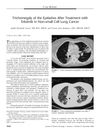
November 2006 in “Journal of thoracic oncology”
12 citations
,
November 2006 in “Journal of thoracic oncology” This case report describes a patient with non-small cell lung cancer who experienced trichomegaly (excessive eyelash growth) as a side effect of erlotinib treatment without developing typical skin rash.
 30 citations
,
August 2010 in “American Journal of Clinical Dermatology”
30 citations
,
August 2010 in “American Journal of Clinical Dermatology” This article reviews eyelash elongation as a side effect of EGFR inhibitors in cancer treatment, finding that the condition is typically not severe and may be managed by trimming.
125 citations
,
February 2007 in “The EMBO Journal” Fgfr2b helps maintain healthy skin and prevent cancer.
This study observed that the expression of EGF and EGFR increased during goat fetal skin development, suggesting these components play significant roles in skin maturation.
 179 citations
,
October 2018 in “American Journal of Clinical Dermatology”
179 citations
,
October 2018 in “American Journal of Clinical Dermatology” This review outlines various dermatologic adverse events associated with targeted therapies and immunotherapies, emphasizing the need for collaboration between dermatologists and oncologists to manage these effects effectively; it reports no new clinical findings.
 88 citations
,
July 2014 in “Journal of the American Academy of Dermatology”
88 citations
,
July 2014 in “Journal of the American Academy of Dermatology” This review discusses common cutaneous reactions to targeted cancer drugs such as tyrosine kinase inhibitors and reports no new clinical results.
 26 citations
,
August 2018 in “American Journal of Clinical Dermatology”
26 citations
,
August 2018 in “American Journal of Clinical Dermatology” This review discusses the clinical characteristics of alopecia in cancer patients, highlighting its potential role as an associated finding or diagnostic clue, but reports no new clinical results.
 11 citations
,
June 2011 in “Expert Review of Dermatology”
11 citations
,
June 2011 in “Expert Review of Dermatology” This review covers various skin-related adverse drug reactions and lists common drugs associated with these reactions but presents no new clinical findings.
 3 citations
,
November 2018 in “Oncology issues”
3 citations
,
November 2018 in “Oncology issues” This article discusses the emerging field of supportive oncodermatology, which collaborates between oncology and dermatology to address skin-related side effects of cancer treatments, and reports no new clinical results.
 2 citations
,
October 2018 in “Springer eBooks”
2 citations
,
October 2018 in “Springer eBooks” Cancer treatments can cause skin-related side effects that may affect patient quality of life and require changes in treatment.
 March 2026 in “American Journal of Clinical Dermatology”
 This narrative review provides an overview of the persistent dermatological side effects experienced by cancer survivors due to treatments, highlighting their impact on quality of life and the need for structured dermatological care during survivorship.
 10 citations
,
October 2015 in “Medicina Clínica (english Edition)”
10 citations
,
October 2015 in “Medicina Clínica (english Edition)” This review discusses the therapeutic potential and safety of bioidentical recombinant human epidermal growth factor (rhEGF) for various skin and mucosa conditions and reports no new clinical results.
20 citations
,
January 2017 in “Experimental Dermatology” In this study, deleting the Igf1 receptor in specific skin cells of mice affected hair follicle cycling but not overall skin health, suggesting Igf1r's role in hair cycle regulation through Bmp-4 activation.
43 citations
,
January 2016 in “Cellular physiology and biochemistry” This study reports that EGF at specific concentrations promotes the proliferation and migration of hair follicle ORS cells by activating the Wnt/β-catenin signaling pathway in vitro.
12 citations
,
January 2021 in “Journal of Cutaneous and Aesthetic Surgery” This systematic review describes current findings on the use of recombinant epidermal growth factor (rhEGF) for skin aging and wound healing, emphasizing its potential benefits but highlighting the need for more controlled studies to optimize dosing and treatment protocols.
4 citations
,
March 2007 in “British Journal of Dermatology” This case report observed that terminal hair growth on the nose tip was associated with gefitinib treatment in a 65-year-old woman with lung adenocarcinoma.
This study found that bursts of ERK activation in the epidermis of mice were linked to cell division, supporting synchronized cell proliferation and transient ERK activity in living tissues.
 April 2016 in “Journal of Investigative Dermatology”
 This study found that in mutant NRAS melanoma, MEK inhibitors led to increased AKT signaling and reduced MIG6, a change that may enhance cell migration and invasiveness.
July 2024 in “Journal of Investigative Dermatology” ATR04-484 ointment shows promise for treating skin issues from cancer therapies.
 192 citations
,
January 2015 in “Journal of the American Academy of Dermatology”
192 citations
,
January 2015 in “Journal of the American Academy of Dermatology” This review discusses skin-related toxicities associated with targeted cancer therapies and emphasizes the need for dermatologists to understand and manage these adverse effects, but reports no new experimental results.
 114 citations
,
January 2007 in “Drug Safety”
114 citations
,
January 2007 in “Drug Safety” This review discusses various adverse drug reactions affecting the skin, hair, and nails, emphasizing the importance of recognizing and reporting these reactions but reports no new clinical findings.