10 citations
,
September 2020 in “Journal of the American Geriatrics Society” This study found that a natural language processing system outperformed ICD code-based strategies in accurately identifying fall-related emergency department visits among older adults.
71 citations
,
November 2005 in “The journal of investigative dermatology. Symposium proceedings/The Journal of investigative dermatology symposium proceedings” This review discusses the role of Edar signaling in hair follicle development and cycling, emphasizing its impact on cell fate, differentiation, and interactions with other pathways, but reports no new results.
12 citations
,
May 2016 in “British Journal of Dermatology” This report describes a rare case of epidermolysis bullosa acquisita in a child developing during therapy with squaric acid dibutyl ester for alopecia areata, suggesting a possible link between the medication and disease onset.
 1 citations
,
July 2013 in “JAMA Dermatology”
1 citations
,
July 2013 in “JAMA Dermatology” This abstract is a website placeholder and reports no research findings or results; it contains navigation and policy information for JAMA Dermatology.
 197 citations
,
June 2009 in “American journal of human genetics”
197 citations
,
June 2009 in “American journal of human genetics” This study found that previously undescribed WNT10A mutations are a prominent cause of various forms of ectodermal dysplasia, including OODD and Schöpf-Schulz-Passarge syndrome, with gender-specific phenotypic effects noted.
 5 citations
,
January 2020 in “Wiadomości lekarskie (Warsaw Poland)”
5 citations
,
January 2020 in “Wiadomości lekarskie (Warsaw Poland)” This study found that patients with GERD and UCTD have significantly more frequent phenotypic and visceral markers than those with GERD alone, which should inform early diagnostic and treatment strategies.
 1 citations
,
January 2014 in “Progress in Neurology and Psychiatry”
1 citations
,
January 2014 in “Progress in Neurology and Psychiatry” This report discusses the complex interplay between dermatological and psychiatric conditions and presents insights shared at the 22nd EADV Congress, but it reports no new research results.
 November 2017 in “British Journal of Dermatology”
 The electronic version of the Dermatology Life Quality Index is as effective as the paper version, with most patients preferring it.
 1 citations
,
November 2001 in “Acc Current Journal Review”
1 citations
,
November 2001 in “Acc Current Journal Review” This review found that 5α‐reductase inhibitors were associated with slightly increased rates of decreased libido, erectile and ejaculatory dysfunction, gynecomastia, and mood disorders compared to placebo, though their long-term effects remain unclear.
 21 citations
,
July 2018 in “The Journal of Sexual Medicine”
21 citations
,
July 2018 in “The Journal of Sexual Medicine” This article updates the process of care model for evaluating erectile dysfunction, emphasizing comprehensive evaluation and a combination of pharmacotherapy and counseling tailored to patient dynamics.
 1 citations
,
May 2023 in “Cutis”
1 citations
,
May 2023 in “Cutis” In this source, it is highlighted that dermatologists can identify and manage eating disorders early, potentially improving outcomes and reducing irreversible damage from malnutrition, though specific results are not reported.
 January 2020 in “Medical journal of clinical trials & case studies”
 This report details a case of dystrophic epidermolysis bullosa in a 37-year-old male with a recessive mutation in the CLO7A1 gene, affecting type VII collagen.
 2 citations
,
September 2021 in “Orphanet Journal of Rare Diseases”
2 citations
,
September 2021 in “Orphanet Journal of Rare Diseases” In this study, HED patients with COVID-19 showed a higher risk of postinfection fatigue and hair loss compared to controls, suggesting they are more susceptible to long-term consequences of SARS-CoV-2 infection.
1 citations
,
June 2025 in “Journal of Veterinary Internal Medicine” In this case study, a miniature donkey with multisystemic eosinophilic epitheliotropic disease was euthanized due to laminitis despite treatment for pruritus, inappetence, hypertriglyceridemia, and alopecia.
August 2020 in “European Journal of Dermatology” This study identified three EDAR gene variants potentially linked to hypohidrotic ectodermal dysplasia in three Pakistani families, which could aid in genetic counseling for similar cases.
 July 2022 in “Dermatology Reports”
 This report details a case of a 58-year-old male diagnosed with erosive pustular dermatosis of the scalp, which improved following 3-5 weeks of treatment with topical clobetasol proprionate.

This study developed a new analytical method to identify a wide range of endocrine disrupting compounds in full-term amniotic fluid, revealing diverse substances with potential endocrine activity.
 39 citations
,
January 2012 in “Acta dermato-venereologica”
39 citations
,
January 2012 in “Acta dermato-venereologica” This study examined 27 DRESS patients diagnosed in Thailand, identifying phenytoin, allopurinol, and nevirapine as common causes, with a 3.7% mortality rate and systemic corticosteroids being a common treatment.
 18 citations
,
August 2015 in “Biochemical and Biophysical Research Communications”
18 citations
,
August 2015 in “Biochemical and Biophysical Research Communications” This study found that the XEDAR receptor can activate the non-canonical NF-kB pathway involving p100 processing, which is regulated by interactions with TRAF proteins and specific kinases.
 8 citations
,
July 1990 in “Archives of Dermatology”
8 citations
,
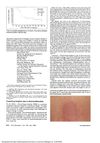
July 1990 in “Archives of Dermatology” This case report details a fixed-drug eruption in a woman linked to the use of dextromethorphan, marking it as a previously unreported skin reaction to this medication.
 13 citations
,
June 2020 in “International Journal of Dermatology”
13 citations
,
June 2020 in “International Journal of Dermatology” This review discusses erosive pustular dermatosis of the scalp, highlighting its wide variety of causes and multiple effective treatment options beyond high-potency topical steroids, and reports no new clinical results.
 April 2023 in “Journal of Investigative Dermatology”
 This study demonstrated that the Epidermal Biopotential Sensing System (EBSS) can measure digital biomarkers of pain in mice, suggesting potential applications in assessing pain and screening analgesics in populations with communication difficulties.
4 citations
,
August 2021 in “Pediatrics in review” This review explores disorders of sex development, emphasizing the need for a systematic, multidisciplinary approach and the benefits of genetic testing for better diagnosis and gender assignment planning, but it reports no new clinical findings.
This review found an increased prevalence of common skin disorders, such as infectious and inflammatory conditions, in patients with Down syndrome and highlighted the need for improved screening and management guidelines.
 April 2023 in “Journal of Investigative Dermatology”
 This study reports that improvements to the EczemaNet pipeline, incorporating pixel-level segmentation and data augmentation, enhanced the reliability and interpretability of assessing atopic dermatitis severity from digital images.
7 citations
,
January 2020 in “Dermatology online journal” In this case report, adult-onset porokeratotic eccrine ostial and dermal duct nevus improved with topical tazarotene treatment, as evidenced by dermatoscopic images.
164 citations
,
December 1984 in “Proceedings of the National Academy of Sciences” This study found that TCDD significantly reduced EGF receptor binding in various animal models, linked to toxic symptoms like weight loss and developmental delays, with receptor phosphorylation persisting several days.
 9 citations
,
March 2017 in “JAAD Case Reports”
9 citations
,
March 2017 in “JAAD Case Reports” This case report describes erosive pustular dermatosis of the scalp triggered by contact dermatitis from a glued-on hair piece, marking the first instance of this specific cause.
 2 citations
,
February 2024 in “Journal of the European Academy of Dermatology and Venereology”
2 citations
,
February 2024 in “Journal of the European Academy of Dermatology and Venereology” This study resulted in a draft version of the Patient‐Reported Impact of Dermatological Diseases measure, PRIDD, which includes 27 items refined from patient consensus and is now undergoing psychometric testing.
 4 citations
,
September 2021 in “Dermatopathology”
4 citations
,
September 2021 in “Dermatopathology” This study suggests that erosive pustular dermatosis of the scalp may be part of the spectrum of autoinflammatory dermatoses, rather than a unique skin disorder.