27 citations
,
February 1988 in “Journal of the American Academy of Dermatology” This case report describes a patient with ulerythema ophryogenes who had developmental and physical anomalies and showed no improvement with topical or oral isotretinoin treatments.
23 citations
,
January 1964 in “Archives of Dermatology” This report describes a child with ulerythema ophryogenes marked by eyebrow hair absence and progressive skin atrophy, whose condition did not improve despite elevated vitamin A levels via injections.
 35 citations
,
April 2014 in “American Journal of Medical Genetics”
35 citations
,
April 2014 in “American Journal of Medical Genetics” The study reported a significant genotype–phenotype correlation in prepubescent males with XLHED, particularly in the severity of skin and hair manifestations between those with different EDA mutations.
13 citations
,
July 2016 in “Indian Journal of Dermatology” This report describes two Saudi brothers with dermatopathia pigmentosa reticularis who exhibited normal hair shafts despite their condition.
This case report describes a six-year-old girl with hypertrichosis cubiti, characterized by excess terminal hair growth around the elbows, and notes treatment with over-the-counter depilatory creams and shaving to address aesthetic concerns.
 1 citations
,
January 2015 in “Actas dermo-sifiliográficas/Actas dermo-sifiliográficas”
1 citations
,
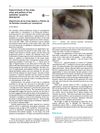
January 2015 in “Actas dermo-sifiliográficas/Actas dermo-sifiliográficas” Latanoprost eye drops caused excessive cheek hair growth and eyelash whitening in a woman.
264 citations
,
October 1958 in “Archives of Dermatology” This report describes a 1949 case of a young girl with a rare congenital ectodermal defect causing unique hair fragility, which had not been previously documented in the literature.
 74 citations
,
January 2006 in “The journal of investigative dermatology/Journal of investigative dermatology”
74 citations
,
January 2006 in “The journal of investigative dermatology/Journal of investigative dermatology” This study identified novel compound heterozygous mutations in the DSG4 gene in a Japanese patient with congenital hypotrichosis, suggesting overlap between localized autosomal recessive hypotrichosis and monilethrix.
January 2024 in “Revista del Centro Dermatológico Pascua” In this case report, a 24-year-old male with acquired distal trichorrhexis nodosa showed significant improvement after avoiding harmful hair treatments and using a repair shampoo alongside biotin and zinc supplements.
 July 2022 in “BMJ Case Reports”
 In this study, researchers identified and characterized three specific enzymes in root hair cells that play crucial roles in controlling root hair growth by affecting cell wall properties during expansion.
 September 2020 in “Journal of Health, Medicine and Nursing”
 This case report describes a 10-year-old twin boy with proximal hypospadias and undescended testis, highlighting the diagnostic and treatment evaluations for associated sex development disorders.
July 2021 in “British Journal of Dermatology” This report describes a boy with ectodermal dysplasias who was genetically diagnosed due to newly discovered TSPEAR gene variants, which have now been associated with this condition.
 January 2020 in “Acta dermato-venereologica”
 People with certain hair disorders may also have missing permanent teeth.
29 citations
,
June 2010 in “The Journal of Dermatology” This report documents a novel alanine to valine substitution in the GJB2 gene in a Japanese girl with severe keratitis–ichthyosis–deafness syndrome, suggesting a potential link to her severe recurrent infections and immunodeficiency.
8 citations
,
June 2016 in “Journal of Investigative Dermatology” A rare genetic deletion in the KRT1 gene causes unique skin symptoms in a family.
 January 2022 in “Revista Dermatológica Centro Uraga”
 This article reviews two cases of monilethrix in siblings, detailing their clinical and dermatoscopic characteristics, but reports no new findings.
35 citations
,
September 2003 in “Archives of dermatology” This study proposed that the tiger tail phenomenon in trichothiodystrophy hair is caused by regular undulations of hair fibers, altering the optical properties seen under polarized light.
46 citations
,
September 2007 in “Journal of Investigative Dermatology” 2 citations
,
March 2024 in “Pediatric Dermatology” This case report described two siblings with uncombable hair syndrome characterized by unique hair features, and identified a new pathogenic variant in the PADI3 gene (c.1374dup; p. Val459ArgfsTer15) not previously documented.
 December 2012 in “Canadian journal of ophthalmology”
 This case report describes a rare complication of eyelash transplantation, where it resulted in trichiasis and corneal surface damage, highlighting the need for preoperative counseling about potential ocular risks.
 2 citations
,
August 2012 in “Journal of the American Academy of Dermatology”
2 citations
,
August 2012 in “Journal of the American Academy of Dermatology” This correspondence describes two patients with both epidermolysis bullosa simplex, Dowling-Meara type, and loose anagen hair syndrome, an association not previously reported in the literature.
July 2026 in “Indian Journal of Dermatology Venereology and Leprology” 
This study identified a missense variant in the EDA gene of a male cat, which likely caused hypohidrotic ectodermal dysplasia, characterized by hair and teeth abnormalities; this represents the first report of such a genetic condition in cats.
 5 citations
,
July 2014 in “Actas dermo-sifiliográficas/Actas dermo-sifiliográficas”
5 citations
,
July 2014 in “Actas dermo-sifiliográficas/Actas dermo-sifiliográficas” Latanoprost eye drops caused excessive hair growth and eyelash whitening in a woman.
3 citations
,
August 2017 in “Clinical case reports” A rare skin condition causes red and dark patches on the face and limbs.
 9 citations
,
March 2017 in “JAAD Case Reports”
9 citations
,
March 2017 in “JAAD Case Reports” This case report describes erosive pustular dermatosis of the scalp triggered by contact dermatitis from a glued-on hair piece, marking the first instance of this specific cause.
October 2020 in “Pediatrics in Review” This case report describes a newborn diagnosed with dominant dystrophic epidermolysis bullosa due to a COL7A1 mutation, following the presentation of blisters that healed without further complications.

This study utilized polarized light microscopy to examine hair shafts in ten children with rare genetic disorders, such as Netherton syndrome and ectodermal dysplasia, providing valuable diagnostic insights into hair thickness, composition, and structural irregularities associated with these conditions.
 33 citations
,
January 2007 in “Pediatric dermatology”
33 citations
,
January 2007 in “Pediatric dermatology” This report describes a 3.5-year-old girl with argininosuccinicaciduria, highlighting congenital trichorrhexis nodosa as a notable feature associated with the disorder.
99 citations
,
October 2008 in “Journal of Investigative Dermatology” This study identified genetic mutations linked to congenital ichthyosis in families from the UAE and Turkey, revealing a connection between keratinization disorders and impaired filaggrin processing.