October 2010 in “eCommons (Cornell University)” This case report highlights that cutaneous epitheliotropic lymphoma in dogs can present with various skin lesions, such as depigmentation, making diagnosis challenging for veterinarians.
1 citations
,
April 2024 in “Clinical Medicine” This case report suggests that Rituximab and high-dose immunosuppressive therapy may be effective for treating severe cutaneous lupus erythematosus like TEN-like ACLE, leading to remission and recovery.
July 2024 in “Journal of Investigative Dermatology” In these two clinical trials, DS-2325a, a KLK5 inhibitor, was found to be generally safe and well tolerated in healthy volunteers, with mild and non-serious adverse events, suggesting its potential for further development as a treatment for Netherton Syndrome.
 3 citations
,
January 2016 in “Chemical sciences journal”
3 citations
,
January 2016 in “Chemical sciences journal” This study found that ethanol and petroleum ether extracts of Tridax procumbens roots demonstrated significant antibacterial activity against various bacterial strains compared to benzene extracts.
2 citations
,
January 1989 This article discusses the history and understanding of Tay syndrome, recognizing it as a distinct condition related to ichthyotic erythroderma, mental retardation, and brittle hair but reports no new clinical results.
 September 2025 in “PubMed”
 In this study, auricular electrostimulation effectively relieved dextran-induced pruritus in mice, comparable to loratadine treatment, and is attributed to down-regulating the H1R/TRPV1 signaling pathway and reducing inflammatory cells in the skin.
 7 citations
,
June 2011 in “Movement Disorders”
7 citations
,
June 2011 in “Movement Disorders” A specific gene mutation is linked to a hereditary form of dystonia that responds well to certain medications.
 3 citations
,
July 2018 in “Elsevier eBooks”
3 citations
,
July 2018 in “Elsevier eBooks” This case report describes an elderly man with erosive pustular dermatosis of the scalp, who improved with potent topical corticosteroids followed by maintenance with topical tacrolimus.
 2 citations
,
January 2014 in “Elsevier eBooks”
2 citations
,
January 2014 in “Elsevier eBooks” This review discusses drug-induced hypersensitivity syndrome and drug reaction with eosinophilia and systemic symptoms, highlighting clinical features, potential viral reactivations, and treatment, but reports no new clinical findings.
3 citations
,
September 2022 in “European Journal of Dermatology” This report identifies a novel splice-site variant in the LAMB3 gene linked to junctional epidermolysis bullosa, emphasizing the need for gene sequencing in diagnosing the disease.
3 citations
,
June 2004 in “Työväentutkimus Vuosikirja” This article reviews the roles of several signaling pathways and molecules, including FGFs, Hh, Notch, TGF, and Wnt, in the development of teeth and hair follicles, but reports no new findings.
 May 2025 in “Journal of Inflammation Research”
 In this case report, a 28-year-old Chinese man with severe dissecting cellulitis of the scalp experienced nodules resolution and hair regrowth after treatment with ixekizumab and tofacitinib, marking the first reported use of this drug combination for the condition.
 14 citations
,
July 2012 in “Journal of the American Academy of Dermatology”
14 citations
,
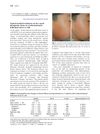
July 2012 in “Journal of the American Academy of Dermatology” This study found that topical tacalcitol improved roughness and scaling in erythromelanosis follicularis faciei et colli, although it was less effective for facial erythema.
 May 2022 in “Gastroenterology”
 This study investigated the possible role of neutrophil extracellular traps in contributing to fibrosis in stenotic Crohn's disease.
5 citations
,
April 2016 in “PubMed” This article discusses common skin side effects of EGFR inhibitors like cetuximab, noting their management remains based on clinical experience without strict therapy protocols, but provides no new clinical findings.
 August 2019 in “Journal of Invertebrate Pathology”
 This study observed that different alkaline buffers had a significant impact on the volume of liquid consumed by fall armyworm larvae, emphasizing the importance of measuring imbibed volumes to reduce dose errors in bioassays.
4 citations
,
January 2023 in “Journal of Clinical Investigation” This study identified a recurrent mutation in the endothelin receptor type A associated with mandibulofacial dysostosis with alopecia, and proposed a mechanism involving increased ligand affinity due to structural changes.
 3 citations
,
June 2015 in “Serbian Journal of Dermatology and Venereology”
3 citations
,
June 2015 in “Serbian Journal of Dermatology and Venereology” In this study, secondary syphilis presented diverse clinical manifestations, with syphilitic alopecia occurring only in HIV-positive patients, underscoring the importance of considering syphilis in differential diagnoses for vulnerable populations.
1 citations
,
April 2013 in “Journal of Investigative Dermatology” 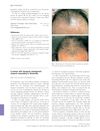 13 citations
,
February 2007 in “British Journal of Dermatology”
13 citations
,
February 2007 in “British Journal of Dermatology” EF and PXE not closely related.
66 citations
,
April 1989 in “Alcoholism Clinical and Experimental Research” This study found that the ethanol patch test effectively indicates the ALDH phenotype in healthy Japanese individuals, suggesting its usefulness for future research.
3 citations
,
January 2021 in “Molecular genetics & genomic medicine” In this study, novel mutations in the BTD gene were identified in a patient with profound biotinidase deficiency, highlighting the importance of biotinidase activity measurement and mutation analysis for early diagnosis.
 5 citations
,
September 2015 in “BMC Medical Genetics”
5 citations
,
September 2015 in “BMC Medical Genetics” In this study, individuals with a c.1072C > T mutation in the EDAR gene showed more hair shaft deformations compared to non-mutation carriers, highlighting EDAR's role in hair follicle development.
 2 citations
,
December 2019 in “International Journal of Medical Research and Review”
2 citations
,
December 2019 in “International Journal of Medical Research and Review” This study found that Tinea Corporis significantly impacts the quality of life of patients, with disease duration and body surface area involved being key factors.
 4 citations
,
September 2011 in “American Journal of Clinical Dermatology”
4 citations
,
September 2011 in “American Journal of Clinical Dermatology” This case series suggests that EE/CMA 0.03mg/2mg may help manage dermatological disorders related to androgen excess, as evidenced by symptomatic improvements in the four patients treated.
26 citations
,
March 2006 in “Endocrine, metabolic & immune disorders. Drug targets” This article discusses the functions of the enzyme 17beta-HSD10, including its role in steroid metabolism and potential links to Alzheimer's disease, but reports no new experimental findings.
22 citations
,
September 2014 in “JAMA dermatology” This study identified major criteria including ectodermal malformations for diagnosing ichthyosis with confetti, and revealed significant genetic variation in the disease locus within the general population.
 July 2018 in “Kidney international”
 This case study describes a 9-year-old girl with a homozygous EGFR gene mutation, presenting with tubulopathy and chronic dermatitis, whose ongoing symptoms and management offer insights into this rare genetic condition.
November 2020 in “Universal Journal of Pharmaceutical Research” In this study, tacrolimus-based treatment was found to result in fewer overall side effects compared to cyclosporine among Yemeni kidney transplant patients, although tacrolimus was associated with a higher incidence of diabetes.
25 citations
,
February 2021 in “Diabetes” This study found that Dock5 plays a crucial role in keratinocyte function and wound healing, with its expression reduced in diabetic models but improving healing when restored.