 January 2024 in “International Journal of Biological and Environmental Investigations”
 This study developed and validated a reliable RP-HPLC method for accurately quantifying dutasteride in pharmaceutical formulations and bulk pharmaceuticals using a Shiseido C18 analytical column, demonstrating precision, accuracy, and sensitivity across a concentration range of 10 to 22 ppm.
 November 2022 in “PLANT ARCHIVES”
 This study reported on 23 medicinal plant species used in Ben M'hidi, El-Tarf, Algeria, providing ethnobotanical insights into their traditional therapeutic applications.
 November 2023 in “Scholars journal of applied medical sciences”
 This study conducted in Rabat surveyed 100 individuals with afro-textured hair to identify plant-based treatments, finding twelve plant species purportedly effective in managing hair issues, with Ricinus communis, Cocos nucifera, and Aloe barbadensis being the most frequently cited.
 161 citations
,
August 2013 in “Journal of experimental botany”
161 citations
,
August 2013 in “Journal of experimental botany” This study found that specific ATP-competitive TOR inhibitors (asTORis) decrease root growth in Arabidopsis thaliana in a dose-dependent manner, similar to their effects on mammalian cells.
 112 citations
,
May 2019 in “Pharmacological Research”
112 citations
,
May 2019 in “Pharmacological Research” This review discusses the isolation, structure, and bioactivity of lignans and neolignans from 2016 to mid-2018, reporting no new clinical results but highlighting their potential protective properties against diseases such as cancer and neurodegeneration.
 32 citations
,
January 2021 in “Molecules”
32 citations
,
January 2021 in “Molecules” This review compiles studies on the antidiabetic potential of plants from the Middle East, particularly from the Asteraceae and Lamiaceae families, but reports no clinical results.
 24 citations
,
January 2020 in “International Journal of Molecular Sciences”
24 citations
,
January 2020 in “International Journal of Molecular Sciences” This review discusses the potential benefits of flavonoid-containing botanicals, such as Panax ginseng, in reducing hair loss and promoting hair growth, but reports no new experimental results.
 2 citations
,
May 2022 in “Ethnobotany research and applications”
2 citations
,
May 2022 in “Ethnobotany research and applications” This study documented the indigenous uses of 68 medicinal plant species for food and beverages across three ethnic communities in Southwest Pakistan, with implications for sustainable development and cross-cultural understanding.
 October 2025 in “International Journal For Multidisciplinary Research”
 In this study, researchers documented the use of 69 plant species across 38 families in traditional medicine by herbal practitioners in Raichur District, detailing their therapeutic properties for 22 ailments such as fever, epilepsy, and diabetes, though interest in traditional practices is declining.
 May 2024 in “International journal of nanomedicine”
 This review highlights the potential of extracellular vesicles derived from medicinal plants as therapeutics for diseases such as cancer and inflammation, suggesting they may enhance the clinical use of herbal preparations, despite the challenges posed by extract complexity and individual variability.
 7 citations
,
July 2014 in “BMJ case reports”
7 citations
,
July 2014 in “BMJ case reports” This article reviews the rare skin disorder ichthyosis with confetti, highlighting the potential for future therapies using revertant stem cells, and reports no new clinical results.
 3 citations
,
May 2024 in “Journal of Drug Delivery and Therapeutics”
3 citations
,
May 2024 in “Journal of Drug Delivery and Therapeutics” This review examines the therapeutic potential of Aftimoon (Cuscuta reflexa), focusing on its pharmacological properties and traditional uses in Unani medicine for various ailments, and highlighting its range of biological activities, including antioxidant and anti-inflammatory effects.
 1 citations
,
October 2022
1 citations
,
October 2022 This study assessed the potential for Ocean Thermal Energy Conversion power in Fiji, finding higher power output and efficiency during summer due to greater temperature differences between surface and deep sea waters.
 October 2025 in “Interdiciplinary Journal and Hummanity (INJURITY)”
 This study characterized bioactive compounds in extracts from six Kalimantan herbal plants, confirming traditional medicinal uses with findings such as triterpenoids and several potent compounds with antimicrobial and cardiovascular benefits, laying groundwork for potential therapeutic applications and conservation efforts.
 January 2023 in “Brazilian Journals Editora eBooks”
 HPLC may detect prediabetes and diabetes earlier than Immunoturbidimetry because it shows higher A1c levels.
 17 citations
,
April 2021 in “Clinical Phytoscience”
17 citations
,
April 2021 in “Clinical Phytoscience” This review discusses the ethnobotanical uses and phytochemistry of Plumbago zeylanica L., highlighting its potential pharmacological benefits for conditions such as diabetes and cardiovascular disorders, but reports no new experimental findings.
 3 citations
,
March 2021 in “International journal of pharmaceutical sciences review and research”
3 citations
,
March 2021 in “International journal of pharmaceutical sciences review and research” This review discusses the chemical constituents and diverse pharmacological activities of Glycyrrhiza glabra (liquorice) but reports no new clinical results, emphasizing its potential for developing new therapeutic formulations.
 August 2025 in “Current Botany”
 This study suggests that Acrotrema arnottianum, a herb used in traditional medicine, contains biologically active metabolites like squalene and α-Tocopherol. It showed antibacterial effects against Staphylococcus aureus and antifungal properties against Candida albicans, while demonstrating antioxidant activity.
 120 citations
,
April 2009 in “Food Chemistry”
120 citations
,
April 2009 in “Food Chemistry” This review examines the pharmacological evidence and bioactive compounds in Hibiscus plants, supporting their potential importance for developing treatments for chronic and degenerative diseases, though more research is needed.
 January 2024 in “Middle East Journal of Applied Science & Technology”
 This study formulated and evaluated a polyherbal body lotion using neem, tulsi, and aloe vera extracts, finding it met satisfactory physicochemical standards and was well received by users for skin smoothness and hydration without causing allergies.
 42 citations
,
January 2024 in “Frontiers in Endocrinology”
42 citations
,
January 2024 in “Frontiers in Endocrinology” This review discusses polycystic ovary syndrome treatments, focusing on the potential benefits and safety of herbs and phytochemicals, and reports no new clinical results.
 9 citations
,
September 1999 in “Journal of the European Academy of Dermatology and Venereology”
9 citations
,
September 1999 in “Journal of the European Academy of Dermatology and Venereology” This study found that cutaneous ulcers caused by interferon are not associated with the medication's dosage.
 January 2024 in “Journal of Pharmacognosy and Phytochemistry”
 This study demonstrated that aqueous and hydroethanolic extracts of Catharanthus roseus and Schwenckia americana showed no acute oral toxicity at the tested dose in rats, although histological changes in kidney and liver tissues were observed.
 75 citations
,
November 2016 in “Medicines”
75 citations
,
November 2016 in “Medicines” This review discusses the properties and therapeutic potentials of beta-sitosterol, highlighting a need for more detailed studies on its mechanisms and long-term effects in humans; it reports no new results.
 18 citations
,
March 2024 in “Frontiers in Pharmacology”
18 citations
,
March 2024 in “Frontiers in Pharmacology” This review highlights that the NLRP3 inflammasome is a promising therapeutic target for cerebral ischemia-reperfusion injury and discusses recent advancements in using natural plant products to modulate this pathway and reduce inflammation.
 85 citations
,
April 2007 in “Dermatologic Clinics”
85 citations
,
April 2007 in “Dermatologic Clinics” This article reviews drug-induced hair changes, highlighting that while many drugs are occasionally linked to hair loss, this connection has been conclusively established for only a few, and such hair loss is typically reversible.
 31 citations
,
January 1981 in “Pharmacology & Therapeutics”
31 citations
,
January 1981 in “Pharmacology & Therapeutics” In this study, 13-cis-5S*,8S*-epidioxy-5,8-dihydroretinoic acid was found to be significantly more cytotoxic to cancer cell lines than other retinoic acid analogs evaluated.
 13 citations
,
January 2018 in “International Journal of Dermatology”
13 citations
,
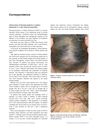
January 2018 in “International Journal of Dermatology” This clinical study on fibrosing alopecia in a pattern distribution among a Latin American population reports no new results but addresses this specific condition in its demographic context.
9 citations
,
September 2010 in “Dermatologic therapy” This study found that combined therapy with cetirizine and topical steroids stabilized inflammation in most patients with lichen planus pilaris, though one patient experienced cardiac arrhythmia.
 7 citations
,
April 2021 in “Dermatology and Therapy”
7 citations
,
April 2021 in “Dermatology and Therapy” This review identifies several off-label uses of H-1 antihistamines in dermatology beyond itch and urticaria control, though the evidence is weak and further trials are needed.