 May 2021 in “Journal of Advances in Internal Medicine”
 This case report describes a 13-year-old with DSD raised as female, exhibiting hoarseness and clitoral enlargement, with hormonal assessments not indicating common related deficiencies.
 June 2023 in “JAAD Case Reports”
 This article reviews the epidemiology of desmoplastic melanoma and reports no new clinical findings, emphasizing higher risks in chronically sun-exposed older males.
37 citations
,
August 2011 in “Journal of Bone and Mineral Research” This study reported a case of hereditary vitamin D–resistant rickets caused by a single heterozygous missense mutation in the VDR gene, showing dominant-negative effects and reduced response to 1,25-dihydroxyvitamin D3.
 November 2022 in “Journal of Investigative Dermatology”
 This study found that the cytoplasmic dynein component Dynlt3 is essential for effective melanosome transport and transfer in mouse melanocytes, linking melanosome positioning and acidity to the Wnt/β-catenin signaling pathway.
148 citations
,
May 2008 in “The journal of investigative dermatology/Journal of investigative dermatology” This study found that mice lacking the vitamin D receptor (VDR) developed skin tumors more rapidly than those with normal VDR activity, regardless of 1,25-dihydroxyvitamin D(3) presence.
39 citations
,
April 2019 in “The journal of immunology/The Journal of immunology” This study found that Malt1, particularly its protease activity, plays a crucial role in maintaining Treg cell function and homeostasis, with its inactivation leading to autoimmune diseases and altered immune responses in mice.
 November 2022 in “Journal of the Endocrine Society”
 This case report highlights a novel NR5A1 gene variant associated with a severe 46,XY disorder of sex development, stressing the importance of genetic screening in similar cases.
August 2019 in “Carolina Digital Repository (University of North Carolina at Chapel Hill)” This study indicates that MAGE-11 modulates androgen receptor transcriptional activity through F-box interactions, independent of the activation function 2 pathway, revealing a novel mechanism for androgen receptor regulation.
227 citations
,
January 1998 in “Journal of biological chemistry/The Journal of biological chemistry” This study suggests that the residues Val-889 and Arg-752 in the androgen receptor steroid binding domain are crucial for the intermolecular interaction necessary for receptor dimerization and function.
 September 2022 in “Annals of medicine and surgery”
 This case report discusses the diagnostic challenges and management options for three siblings with 46, XY DSD due to type 2 5-α reductase deficiency, highlighting the genetic basis and impact on their quality of life.
 July 2023 in “Developmental medicine and child neurology/Developmental medicine & child neurology”
 This study found that patients with Bachmann-Bupp syndrome treated with DFMO showed improvements in hair growth, muscle tone, and development.
 December 2023 in “Redox biology”
 In this study, DMC selectively eliminated senescent cells in old mice, prevented hair loss, improved motor coordination, and reduced senescence-associated secretory factors, suggesting its potential as a senolytic treatment.
The digital system for measuring melasma shows promise but needs more development for better accuracy and automation.
 8 citations
,
July 1990 in “Archives of Dermatology”
8 citations
,
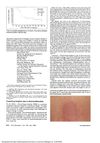
July 1990 in “Archives of Dermatology” This case report details a fixed-drug eruption in a woman linked to the use of dextromethorphan, marking it as a previously unreported skin reaction to this medication.
25 citations
,
January 1983 in “Archives of dermatology” This article reviews the early establishment of dermatology as a specialty in the U.S. and documents the initial descriptive errors in understanding Darier's disease, offering no new clinical data.
2 citations
,
June 2013 in “Journal of Clinical Pathology” This article reviews the role of LMNA gene mutations, particularly in Hutchinson–Gilford progeria syndrome, but does not report new experimental findings.
 133 citations
,
May 2016 in “Cell Host & Microbe”
133 citations
,
May 2016 in “Cell Host & Microbe” In this study, human dermal fibroblasts were identified as natural host cells that support productive Merkel cell polyomavirus infection, and the MEK antagonist trametinib was introduced as an effective inhibitor to control the virus.
 April 2018 in “Journal of Investigative Dermatology”
 In this study, the authors identified a role for hair follicles in regulating the formation and sympathetic innervation of arrector pili muscles, influencing hair follicle stem cell activity and potentially explaining hair loss associated with beta-blockers and androgenic alopecia.
16 citations
,
August 2012 in “The journal of investigative dermatology/Journal of investigative dermatology” This study found that MED1 plays a role in maintaining keratinocyte quiescence and hair follicle stem cell populations, as its absence in mice led to increased keratinocyte proliferation and reduced stem cell numbers.
 20 citations
,
May 2013 in “International Journal of Molecular Medicine”
20 citations
,
May 2013 in “International Journal of Molecular Medicine” This study identified a novel missense MAFB variant in a family with some unaffected members, suggesting incomplete penetrance and the potential influence of modifier genes, epigenetic mechanisms, or environmental factors on MCTO phenotype.
17 citations
,
January 2010 in “PubMed” CD10 helps distinguish between basal cell carcinoma and benign hair follicle tumors.
 June 2026 in “Digital Commons - PCOM (Philadelphia College of Osteopathic Medicine)”
 This study observed that a 24-hour pre-treatment with MitoQ significantly protected H9c2 myoblasts from doxorubicin-induced damage while enhancing doxorubicin's effectiveness in prostate cancer cells, outperforming dexrazoxane's effects without compromising the anti-cancer efficacy.
May 2004 in “Journal of steroid biochemistry and molecular biology/The Journal of steroid biochemistry and molecular biology” This study identified interactions between Vitamin D and Msx1 regulation pathways, noting that Msx1 overexpression decreases Vitamin D receptor expression in odontoblastic cells.
7 citations
,
February 2012 in “Journal of cutaneous pathology” This case report presents unique histopathological findings in skin lesions of hereditary mucoepithelial dysplasia that have not been previously documented.
 September 2024 in “Journal of Inflammation Research”
 Results are not reported in this abstract, which outlines research investigating why diabetic mice experience suppressed hair follicle stem cell activation, potentially contributing to chronic diabetic wounds.
 October 2022 in “Medičnì perspektivi”
 This article discusses two cases of follicular dyskeratosis (Darier-White disease), highlighting its rare occurrence, genetic basis, and the challenges in diagnosis and treatment; it presents no new experimental results.
 June 2023 in “British journal of dermatology/British journal of dermatology, Supplement”
 In this case study, a 19-month-old infant with palmoplantar keratoderma and nail dystrophy was found to have a desmoplakin gene mutation, leading to cardiomyopathy by age 7, illustrating diagnostic challenges and the potential link between skin, dental, and cardiac anomalies.
 3 citations
,
July 2021 in “Cutis”
3 citations
,
July 2021 in “Cutis” This case report described a 62-year-old woman with dermatomyositis whose multiple subcutaneous nodules persisted despite treatment with prednisone and methotrexate, prompting further dermatological evaluation.
1 citations
,
April 2024 in “Animal Genetics” This study described an Appenzeller Mountain Dog with clinical signs of an NSDHL defect, discovering a large heterozygous de novo deletion spanning the entire NSDHL gene through whole genome sequencing.
15 citations
,
November 2009 in “Journal of diabetes and its complications” This case highlights the potential link between type 1 diabetes, pernicious anemia, and alopecia areata universalis, suggesting clinicians should monitor for pernicious anemia in such patients.