3 citations
,
January 2022 in “Anais Brasileiros De Dermatologia” This study suggests that pediatric androgenetic alopecia is often associated with metabolic syndrome risk factors, highlighting the importance of early diagnosis for potential future health complications.
 3 citations
,
January 2019 in “Dermatology and therapy”
3 citations
,
January 2019 in “Dermatology and therapy” This study found that standardized scalp massages may help stabilize or regrow hair in individuals with androgenic alopecia, as perceived by the participants themselves.
 3 citations
,
June 1999 in “Seminars in Cutaneous Medicine and Surgery”
3 citations
,
June 1999 in “Seminars in Cutaneous Medicine and Surgery” This narrative review discusses recent advances in hair transplantation techniques for treating female pattern androgenetic alopecia and emphasizes the importance of careful patient selection and surgical planning; it reports no new clinical results.
 2 citations
,
May 2018 in “Journal of The American Academy of Dermatology”
2 citations
,
May 2018 in “Journal of The American Academy of Dermatology” This study examined 15 female patients with hypothyroidism to investigate the characterization of their alopecia and ruled out other causes, using medical histories, and clinical, trichoscopic, and histologic findings.
 2 citations
,
June 1997 in “The American Journal of Cosmetic Surgery”
2 citations
,
June 1997 in “The American Journal of Cosmetic Surgery” This article discusses methods for camouflaging surgical sites after hair transplant procedures and presents no new clinical findings.
 1 citations
,
October 2013 in “BMJ”
1 citations
,
October 2013 in “BMJ” This case study reports a man with rapid hair thinning, whitening, and sparse beard, linked to an increased proportion of hair follicles in catagen or telogen phase and peribulbar lymphocytic infiltrate.
 1 citations
,
October 2002 in “Dermatologic Surgery”
1 citations
,
October 2002 in “Dermatologic Surgery” This review summarizes expert opinions on the use of approved pharmacologic treatments alongside hair transplantation, highlighting their potential to enhance hair density and regrowth speed while reducing further hair loss, but reports no new clinical trial results.

This article reports that PRP therapy shows promise as a safe and effective non-surgical treatment for hair loss, suitable for those with early to moderate androgenetic alopecia.
 June 2026 in “The Journal of Cosmetic Medicine”
 This narrative review reports that scalp micropigmentation offers immediate cosmetic improvements in hair density appearance, but does not promote actual hair regrowth and results vary based on the operator's skill.

This review of 24 studies examined hair transplantation in women and found that while both genders experience significant psychosocial impacts from hair loss, women often face greater stigma and present different thinning patterns, requiring tailored surgical techniques and considerations.
 July 2024 in “Journal of Dermatological Treatment”
 In this case report, a 6-year-old boy with hidrotic ectodermal dysplasia 2 caused by GJB6 mutations showed no significant hair improvement with age, despite treatment with botanical extracts and Minoxidil.
 April 2023 in “Voprosy kurortologii fizioterapii i lechebnoĭ fizicheskoĭ kultury”
 This study reported that 19.8% of patients experienced telogen hair loss after COVID-19, with most cases occurring 3 to 6 months post-recovery, and noted a rapid progression in patients with androgenetic alopecia, as well as cases of alopecia areata and cicatricial alopecia linked to COVID-19.
 April 2023 in “Journal of Cutaneous and Aesthetic Surgery”
 In this study, researchers analyzed the occipital donor area for hair transplantation among men aged 50–55 with androgenetic alopecia and found that while most subjects met standard safe donor area criteria, individual variations suggest a conservative approach to donor area selection.
 January 2023 in “Springer eBooks”
 Most older adults experience pattern hair loss due to shrinking hair follicles, with men and women showing different balding patterns.
 August 2022 in “RECISATEC”
 This article discusses androgenetic alopecia, its progression, signs of hyperandrogenism, and impacts on quality of life, without presenting new clinical findings.
 May 2020 in “Hair transplant forum international”
 This study found that, among Indian men aged 50-55 with androgenetic alopecia, 78% of occipital donor areas fitted standard safe donor area criteria, but 22% did not, indicating a need for tailored selection in hair transplants.
April 2015 in “Our Dermatology Online” This report presents a case of acrodermatitis enteropathica in a 22-year-old female, highlighting the absence of underlying comorbid conditions.
January 2009 in “La ley penal: revista de derecho penal, procesal y penitenciario” This review discusses the multifaceted etiology of androgenetic alopecia and reports no new clinical results; the authors emphasize the potential benefits of combining different therapeutic modalities.
 April 1998 in “Journal of women's health”
 This article discusses expert responses to hair loss in women but reports no new research findings.
This article reviews how environmental factors and aging contribute to skin and hair changes, including wrinkling, dryness, pigmentation changes, and hair thinning, but reports no new research findings.

This article discusses androgenetic alopecia, emphasizing its prevalence, characteristics, and the importance of prompt diagnosis and treatment but reports no new clinical results.
November 2009 in “Hair transplant forum international” This piece presents no new research findings; it briefly mentions opinions on Female Pattern Hair Loss and the importance of increasing awareness.
 21 citations
,
March 2015 in “Journal of The American Academy of Dermatology”
21 citations
,
March 2015 in “Journal of The American Academy of Dermatology” In this study, five out of six patients treated with vemurafenib for metastatic melanoma experienced hair loss, which improved after topical steroid treatment.
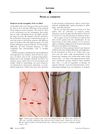 19 citations
,
December 2008 in “Journal of The American Academy of Dermatology”
19 citations
,
December 2008 in “Journal of The American Academy of Dermatology” This study suggests that yellow dots observed in scalp videodermoscopy are not highly specific to alopecia areata, as they appear in various types of alopecia.
The authors discussed the potential benefits of Urtica dioica and Serenoa repens for hair health, but emphasized that more concrete evidence and standardized formulations are necessary for reliable therapeutic use.
 1 citations
,
January 2009 in “Journal of Clinical Dermatology”
1 citations
,
January 2009 in “Journal of Clinical Dermatology” This study reports that telogen effluvium prevalence after childbirth may be higher in women who are multiparous, have had a cesarean section, experienced greater weight gain, or gave birth after 38 weeks.
This article responds to "The Assessment and Treatment of Geezers" by highlighting that some individuals protest against perceived self-importance and verbosity despite fitting the geezer definition.
 33 citations
,
April 2009 in “Clinical and Experimental Dermatology”
33 citations
,
April 2009 in “Clinical and Experimental Dermatology” This study observed that psychological factors and serum levels of zinc, folate, and vitamin B12 may contribute to the development of trichodynia.
 30 citations
,
May 1991 in “Psychosomatics”
30 citations
,
May 1991 in “Psychosomatics” This review examines alopecia as a side effect of psychotropic medications, noting that it is typically reversible after stopping the drug, but it reports no new results.
 23 citations
,
April 2006 in “Skin Research and Technology”
23 citations
,
April 2006 in “Skin Research and Technology” This study observed that hair density and growth rates vary by location and age, and the presence of thin hairs predominates in younger women with mild patterned hair loss.