 June 2023 in “Romanian Medical Journal”
 In this case study, a 53-year-old female with multiple autoimmune symptoms was diagnosed with Mixed Connective Tissue Disease, confirmed by specific antibodies, and showed significant clinical improvement after one year of treatment.
August 1986 in “Lung India” The researchers reported that finasteride prevents further hair loss in males with androgenetic alopecia by promoting hair growth, which helps maintain scalp coverage, but it is not effective for females.
 378 citations
,
November 2011 in “Human reproduction update”
378 citations
,
November 2011 in “Human reproduction update” This review discusses the epidemiology, causes, diagnosis, and management of hirsutism in women, noting that effective treatment requires addressing the root cause as well as the hair growth.
 41 citations
,
April 2010 in “Gender Medicine”
41 citations
,
April 2010 in “Gender Medicine” This review discusses the causes, clinical features, diagnostic approach, and treatment options for hirsutism in women, but reports no new findings.
 1 citations
,
March 2024 in “Skin research and technology”
1 citations
,
March 2024 in “Skin research and technology” In this study, a modified Xception deep learning model achieved a 92% accuracy rate in diagnosing hair and scalp disorders, significantly outperforming other models, suggesting AI could improve dermatological diagnostics' accuracy and accessibility.
This study highlights the complexity of diagnosing scalp fungal infections, emphasizing how clinical evaluation, trichoscopy, and cultural samples are essential in distinguishing tinea capitis from similar conditions like piedra, seborrheic dermatitis, and psoriasis, due to overlapping symptoms like scaling and hair changes.
1 citations
,
January 2021 This study explored non-invasive methods for monitoring low molecular weight biomarkers on the skin's surface, concluding that certain amino acid ratios, such as Phe/Trp, could serve as potential indicators of skin inflammation and cancer.
 39 citations
,
June 1982 in “The BMJ”
39 citations
,
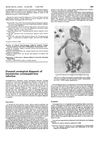
June 1982 in “The BMJ” Blood tests confirmed a baby in the womb had a CMV infection.
3 citations
,
August 2024 in “Applied Sciences” In this study, researchers developed a machine learning model that accurately diagnosed scalp conditions like fine dandruff and perifollicular erythema with 75% and 82% accuracy, respectively, and created a user-friendly web platform for scalp health self-assessment, which achieved high user satisfaction.
32 citations
,
July 2017 in “Molecular diagnosis & therapy” MicroRNA-21 could help diagnose and treat skin fibrosis.
 2 citations
,
January 2009 in “Journal of the Royal Society of Medicine”
2 citations
,
January 2009 in “Journal of the Royal Society of Medicine” This article reviews depictions of baldness in art and notes its symbolic connections to depression, with no new research findings presented.
December 1990 in “PubMed” This article discusses the role of androgens in causing hirsutism and male pattern baldness in women and emphasizes the need for antiandrogen treatment to manage these conditions, without reporting new clinical results.
 September 2025 in “Tijdschrift voor Geneeskunde”
 In this study, a 15-year-old girl presented with symptoms suggesting thyrotoxicosis, and through various diagnostic tests, silent thyroiditis was ultimately diagnosed after negative scintigraphy, highlighting the importance of thorough differential diagnosis in thyroid disorders.
4 citations
,
July 2023 in “Frontiers in Microbiology” HGF combined with ADA is highly accurate for diagnosing tuberculous pleural effusion, especially in younger females.
 2 citations
,
June 2017 in “Journal of The American Academy of Dermatology”
2 citations
,
June 2017 in “Journal of The American Academy of Dermatology” This article discusses the uncertainty regarding distinct skin findings and cardiometabolic profiles among PCOS subtypes and reports no new clinical data.
 June 2025 in “International Journal of Environmental Sciences”
 In this study, researchers found that serum levels of integrin, CLEC10A, and interleukin-42 significantly differed between PCOS patients treated with infertility drugs and untreated PCOS patients when compared to healthy controls, suggesting these biomarkers could help differentiate treatment status in PCOS.
January 2026 in “Dermatologic Therapy” This review discusses female pattern hair loss as an early marker of hormonal imbalance and evaluates hormonal and lifestyle interventions, but reports no new clinical results.
 12 citations
,
October 1996 in “Dermatologic Clinics”
12 citations
,
October 1996 in “Dermatologic Clinics” This review outlines diagnostic possibilities for diffuse, nonscarring hair loss in women and reports no new clinical findings.
 1 citations
,
September 2015 in “Clinics in Dermatology”
1 citations
,
September 2015 in “Clinics in Dermatology” This article provides a diagnostic guide for clinicians to differentiate between various hair shaft disorders by using a structured question-by-question approach but does not report new clinical findings.
 1 citations
,
November 1998 in “Journal of Small Animal Practice”
1 citations
,
November 1998 in “Journal of Small Animal Practice” This article presents a diagnostic case in the Journal of Small Animal Practice and reports no new research findings.
33 citations
,
February 2011 in “International Journal of Dermatology” This study observed that orange spots and dystrophic hairs on trichoscopy may aid in diagnosing scalp sarcoidosis.
1 citations
,
September 2021 in “Biomedical & Pharmacology Journal” This study found that the reticulocyte hemoglobin content (CHr) most frequently indicated iron deficiency in female patients with diffuse non-scarring hair loss.
35 citations
,
May 2002 in “Journal of the European Academy of Dermatology and Venereology” This review highlights that current diagnostic and treatment methods for chronic pelvic pain syndrome lack robust evidence, suggesting a need for further research.
 30 citations
,
January 2019 in “Clinical Endocrinology”
30 citations
,
January 2019 in “Clinical Endocrinology” This study observed that serum AMH concentration and LH/FSH ratio showed comparable diagnostic value for PCOS among infertile women, though neither is adequate alone for diagnosis.
 19 citations
,
July 2013 in “The obstetrician & gynaecologist”
19 citations
,
July 2013 in “The obstetrician & gynaecologist” This review discusses diagnostic criteria for polycystic ovary syndrome and highlights the challenges and risks of misdiagnosing women with other hyperandrogenism causes; it reports no clinical results.
 15 citations
,
October 2018 in “Reproductive Biomedicine Online”
15 citations
,
October 2018 in “Reproductive Biomedicine Online” This study suggests that the anogenital distance measure AGDAC may moderately discriminate the presence of polycystic ovarian syndrome and could be a useful clinical tool.
2 citations
,
October 2019 in “The Egyptian Journal of Hospital Medicine” This study found that anti-Müllerian hormone (AMH) showed high sensitivity and specificity as a diagnostic marker for polycystic ovary syndrome in the studied population, suggesting its promise as an objective diagnostic tool.
1 citations
,
January 2023 in “Annals of Indian Academy of Neurology” This case report describes a middle-aged woman whose scalp condition, cutis verticis gyrata, was an early sign of systemic amyloidosis that went undiagnosed until after she experienced a stroke.
 February 2026 in “Mendeley Data”
 This study, accepted for publication in the Journal of the American Academy of Dermatology, discusses the potential link between early androgenetic alopecia, diabetes mellitus, and cardiovascular disease risks, exploring its role as an indicator in a cross-sectional analysis.
 February 2026 in “Mendeley Data”
 This study observed that early androgenetic alopecia could potentially serve as an indicator for diabetes mellitus and might be linked to cardiovascular risks, as reported in a cross-sectional analysis.