 September 2020 in “Adnan Menderes Üniversitesi Sağlık Bilimleri Fakültesi Dergisi”
 This review investigates the relationship between certain gene polymorphisms associated with obesity (FTO and MC4R) and Polycystic Ovarian Syndrome, reporting no new results but suggesting a potential genetic link.
4 citations
,
July 2021 in “Frontiers in Cell and Developmental Biology” This study demonstrates that the transcription factor DLX5 can promote hair follicle stem cell differentiation through regulating the c-MYC/miR-29c-3p/NSD1 axis.
January 2021 in “Asian Journal of Pharmaceutical and Clinical Research” This study examined the effectiveness of FT-Raman spectroscopy for detecting polymorphism in Lamivudine and Finasteride, highlighting its advantages over other methods due to its capability to provide sharp, well-resolved spectral bands and reduced sampling issues.
 April 2016 in “The Journal of Sexual Medicine”
 This research overview discusses Post-Finasteride Syndrome, presenting data from an FDA database, but it does not report any new clinical findings.
April 2019 in “Journal of Investigative Dermatology” Targeting immune pathways like JAK/STAT may help treat frontal fibrosing alopecia.
 2 citations
,
November 2022 in “Biosensors”
2 citations
,
November 2022 in “Biosensors” This study introduced a new spectrofluorometric method using a synthesized organic fluorophore to effectively analyze darolutamide and thalidomide in pharmaceutical preparations and biofluids.
 4 citations
,
January 2019 in “Skin appendage disorders”
4 citations
,
January 2019 in “Skin appendage disorders” This study found that Follicular Maps, derived from trichoscopic images, remained consistent over time and unaffected by hair cycling or noncicatricial alopecia, offering a precise tool for diagnosing and monitoring hair and scalp conditions.
August 2023 in “Journal of Investigative Dermatology” In this meta-analysis, researchers found that oral dutasteride may stabilize or improve frontal fibrosing alopecia in patients, but results varied widely, and further controlled studies are needed to confirm its effectiveness as a treatment option.
 12 citations
,
August 2011 in “European Journal of Endocrinology”
12 citations
,
August 2011 in “European Journal of Endocrinology” This study found that anti-Müllerian hormone (AMH) is a valuable primary variable for classifying functional androgenization, especially in distinguishing ovarian-related groups, and supports the novel stratification system.
 26 citations
,
August 2016 in “Actas Dermo-Sifiliográficas”
26 citations
,
August 2016 in “Actas Dermo-Sifiliográficas” This study found that men with frontal fibrosing alopecia were more likely to have facial papules, androgenetic alopecia, and body hair loss compared to women, with the average patient age being higher than in other series, potentially explaining these differences.
 215 citations
,
March 2011 in “Clinical Cancer Research”
215 citations
,
March 2011 in “Clinical Cancer Research” This study found that sorafenib was active against desmoid tumors, with 25% of patients achieving a partial response and 70% maintaining stable disease.
 17 citations
,
June 1996 in “The Journal of Steroid Biochemistry and Molecular Biology”
17 citations
,
June 1996 in “The Journal of Steroid Biochemistry and Molecular Biology” In this study, FCE 28260 showed greater potency than finasteride in inhibiting 5α-reductase enzymes and reducing prostate DHT levels in rats.
 January 2022 in “Дерматологія та венерологія”
 This paper presents two cases of frontal fibrosing alopecia in postmenopausal women, noting challenges in monitoring due to the invasive nature of the diagnostic process.
 16 citations
,
February 2010 in “Journal of the European Academy of Dermatology and Venereology”
16 citations
,
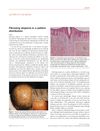
February 2010 in “Journal of the European Academy of Dermatology and Venereology” This article is a letter to the editor about fibrosing alopecia in a pattern distribution and reports no new research findings.
 8 citations
,
December 2020 in “Skin appendage disorders”
8 citations
,
December 2020 in “Skin appendage disorders” This study observed eyebrow regrowth in 7 patients with frontal fibrosing alopecia treated with low-dose oral minoxidil, suggesting it may be a promising treatment option, especially in early disease stages.
 7 citations
,
February 2016 in “Dermatology and therapy”
7 citations
,
February 2016 in “Dermatology and therapy” This study found that t-flavanone may promote hair growth in people with androgenic alopecia by enhancing hair anchoring strength and upregulating desmoglein expression in hair follicles over 30 weeks.
46 citations
,
November 2014 in “Journal of Cutaneous Pathology” This study describes the diverse histopathological patterns and clinical features observed in patients with folliculotropic mycosis fungoides, emphasizing the importance of accurate recognition to avoid diagnostic errors.
28 citations
,
June 1995 in “The Journal of Dermatology” This study reports that flaky skin mice exhibit skin and nail features that closely resemble human psoriasis vulgaris, suggesting they may serve as a natural model for this condition.
15 citations
,
January 2018 in “Journal of Cutaneous Medicine and Surgery” This case report presents a 6-year-old boy with both folliculotropic mycosis fungoides and primary follicular mucinosis, providing insights on differentiating the two conditions in pediatric patients.
June 2020 in “International Journal of Women’s Dermatology” This case report highlights the importance of considering frontal fibrosing alopecia in young women, emphasizing early diagnosis to preserve hair and limit inflammation.
11 citations
,
January 1999 in “Dermatology”  April 2022 in “JAAD International”
 This study suggests that vitamin D deficiency is likely not involved in the development of frontal fibrosing alopecia, as patients showed similar vitamin D levels to those with female pattern hair loss.
1 citations
,
June 2024 in “Skin Research and Technology” This study found that secretory proteins in DFCM play crucial roles in regulating nerve restoration by forming significant protein interaction networks during the wound repair process.
January 2025 in “Analytical Methods” This study reports the development of a fluorescent ionic liquid that shows high sensitivity and selectivity for detecting dextran sulfate sodium, with potential applications in clinical diagnostics and environmental monitoring.

According to this review, frontal fibrosing alopecia in men exhibits unique clinical features and is often misdiagnosed, underscoring the need for validated diagnostic criteria and treatment evaluation.
 3 citations
,
February 2022 in “Cureus”
3 citations
,
February 2022 in “Cureus” This study observed an alopecia syphilitica-like pattern of hair loss in a woman with frontal fibrosing alopecia, suggesting it may be another atypical presentation of the condition.
 8 citations
,
March 2015 in “Neuromuscular Disorders”
8 citations
,
March 2015 in “Neuromuscular Disorders” This study found that adult patients with Myotonic Dystrophy type 1 exhibited a higher prevalence of various morphofunctional, inflammatory, and proliferative skin disorders compared to healthy controls.
 March 2025 in “Journal of Clinical Medicine”
 This review discusses the unique clinical features, challenges in diagnosis, and treatment protocols of frontal fibrosing alopecia in men, noting the overlap with other types of alopecia and the need for further studies.
 1 citations
,
May 2014 in “European Journal of Inflammation”
1 citations
,
May 2014 in “European Journal of Inflammation” This study found that a topical lotion containing minoxidil, hydrocortisone butyrate, and 17α-estradiol improved or stabilized frontal fibrosing alopecia in 35 out of 40 women over 36 months.