June 2023 in “Journal of Biosciences and Health” This study found that all tested cats and 86.66% of dogs were carriers of dermatophytes like Microsporum canis, with cats showing higher prevalence, indicating these asymptomatic animals may significantly contribute to the spread of dermatophytosis and dermatomycoses.
 September 2024 in “Seven Editora eBooks”
 In this study, researchers described dermatophylosis in sheep from Northeast Brazil, observing sporadic cases marked by alopecic and crusty skin lesions, affecting both adult males and females primarily in April, June, and November.
February 2013 in “Archives of Disease in Childhood Education & Practice” This text describes kerion, a severe form of tinea capitis, and emphasizes the difficulty of diagnosis and the need for oral antifungal treatment, but reports no new clinical results.
 24 citations
,
September 1996 in “Mycoses”
24 citations
,
September 1996 in “Mycoses” This study found that androgenic steroids, particularly androstenedione and androstanedione, significantly reduced the growth of certain dermatophytes, suggesting hormonal influence on fungal infections in hair follicles.
1 citations
,
June 2024 in “Access Microbiology” This study found that certain non-dermatophytic moulds, specifically *Absidia* sp., *Cladosporium tenuissimum*, and *Aspergillus welwitschiae*, can cause skin symptoms such as discoloration and lesions in albino mice, suggesting potential virulence due to enzyme activity.
 21 citations
,
February 2009 in “Journal of the American Academy of Dermatology”
21 citations
,
February 2009 in “Journal of the American Academy of Dermatology” This study presents three cases where tinea capitis in children mimicked cicatricial alopecia and explores host and fungal factors that may influence the disease's presentation and treatment.

In this expert consensus, the authors aimed to address the challenges of diagnosing and treating uncommon dermatophytoses due to their distinct characteristics and lack of standardized protocols, by providing scientific guidance on their epidemiology, clinical features, diagnosis, and treatment.
July 2026 in “International Journal of Advanced Biochemistry Research” This study found that a herbal spray for treating bovine dermatophytosis was safe and economical, though conventional antifungal therapy had a higher cure rate.
February 2026 in “Scientific Messenger of LNU of Veterinary Medicine and Biotechnology” This review discusses the diagnosis and treatment of dermatophytosis in cats, highlighting the susceptibility of Persian and young cats and the use of antifungal agents and new therapies.
 19 citations
,
August 2010 in “Journal der Deutschen Dermatologischen Gesellschaft”
19 citations
,
August 2010 in “Journal der Deutschen Dermatologischen Gesellschaft” This review discusses plant extracts for dermatological use, highlighting evidence that some can reduce edema in chronic venous insufficiency or help treat actinic keratoses, but it reports no new clinical results.
1 citations
,
October 2010 in “JDDG Journal der Deutschen Dermatologischen Gesellschaft” This review discusses the effectiveness of various plant extracts, including Vitis vinifera and Aesculus hippocastanum, in treating dermatological conditions like venous insufficiency and actinic keratoses but reports no new clinical results.
 156 citations
,
September 2014 in “British journal of dermatology/British journal of dermatology, Supplement”
156 citations
,
September 2014 in “British journal of dermatology/British journal of dermatology, Supplement” This guideline review discusses updated evidence-based recommendations for managing tinea capitis, with a focus on accurate diagnosis, effective treatment, and prevention strategies, but reports no new clinical results.
 48 citations
,
March 1997 in “Veterinary Dermatology”
48 citations
,
March 1997 in “Veterinary Dermatology” This report describes a paraneoplastic alopecia in four cats associated with internal malignancy, confirming previous findings of a syndrome linking ventral alopecia and metastatic carcinomas.
45 citations
,
March 1998 in “Journal of the American Academy of Dermatology” This report describes two cases of Majocchi's granuloma in immunocompromised patients, highlighting the importance of considering this condition in such populations.
44 citations
,
January 1957 in “Public Health Reports (1896-1970)” This study found that dermatophytes, which can cause ringworm, were isolated from 20% of animal hair specimens, indicating animals may play a role in spreading infections to humans.
 41 citations
,
September 2007 in “Pediatric emergency care”
41 citations
,
September 2007 in “Pediatric emergency care” This review discusses the challenges in diagnosing tinea capitis and highlights the need for laboratory confirmation and systemic treatment due to the limited effectiveness of topical antifungals; no new clinical results are presented.
 38 citations
,
July 2010 in “Clinical, cosmetic and investigational dermatology”
38 citations
,
July 2010 in “Clinical, cosmetic and investigational dermatology” This review discusses systemic antifungal treatments for tinea capitis in children, noting that newer agents like terbinafine and itraconazole require shorter courses than the traditional griseofulvin, but may be more costly.
 28 citations
,
March 2010 in “Clinics in dermatology”
28 citations
,
March 2010 in “Clinics in dermatology” This review details historical advancements in understanding and treating superficial fungal infections, with notable milestones in identifying causative agents and developing effective treatments, but it reports no new findings.
 28 citations
,
January 2000 in “Medical Mycology”
28 citations
,
January 2000 in “Medical Mycology” This article reviews the impact of natural fungal pathogens on laboratory animal research and reports no new results, calling attention to infection risks with dermatophytes, Candida, and pneumonia in immunocompromised rodents.
27 citations
,
April 2012 in “Pediatrics in review” This article reviews approaches to diagnosing and treating dermatophytosis and pityriasis versicolor, noting a significant change in the epidemiology of tinea capitis and highlighting the limitations of certain diagnostic techniques.
23 citations
,
September 1997 in “Veterinary dermatology” This study found that topical mupirocin resulted in excellent or good treatment responses for feline acne in 24 out of 25 cats, despite some having concurrent dermatophyte or yeast involvement.
 22 citations
,
December 2003 in “Veterinary clinical pathology”
22 citations
,
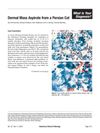
December 2003 in “Veterinary clinical pathology” This case study reported a diagnosis of dermatophytic pseudomycetoma in a Persian cat with dermal nodules, highlighting potential heritable predisposition and suggesting systemic antifungal therapy for fair prognosis.
22 citations
,
June 1991 in “Clinical Therapeutics” This study found that once-daily oxiconazole cream effectively treats tinea infections, achieving at least 80% cure rates, and shows comparable efficacy to other antifungal creams with similar tolerability.
17 citations
,
October 2015 in “PubMed” This review discusses the diagnosis and characteristics of dermatophyte infections and offers no new research findings, emphasizing the importance of microscopy and culture for accurate identification before treatment.
 16 citations
,
January 2010 in “Indian Journal of Dermatology, Venereology and Leprology”
16 citations
,
January 2010 in “Indian Journal of Dermatology, Venereology and Leprology” This review discusses the role of skin manifestations as early markers and prognostic indicators of HIV infection in children but reports no new clinical results.
 14 citations
,
January 2008 in “Medical mycology”
14 citations
,
January 2008 in “Medical mycology” This study reported intra-familial transmission of Arthroderma benhamiae among Canadian porcupines in a Japanese zoo, with genetic sequences previously undocumented in Japan or the GenBank database.
14 citations
,
January 1991 in “PubMed” This study reports that once-daily oxiconazole cream effectively achieves mycologic and clinical cures for various fungal infections, with success rates of at least 80% in patients.
 10 citations
,
January 2016 in “Dermatology online journal”
10 citations
,
January 2016 in “Dermatology online journal” This article highlights that a low suspicion for tinea capitis in adults with scaling and hair loss may delay diagnosis and treatment, urging confirmation through KOH, fungal culture, or biopsy.
10 citations
,
October 1981 in “Archives of Dermatology” This case report describes a 36-year-old man with tinea incognito manifesting as asymptomatic, flat patches of alopecia, which did not improve with standard treatments.
 7 citations
,
May 2012 in “Actas Dermo-Sifiliográficas”
7 citations
,
May 2012 in “Actas Dermo-Sifiliográficas” This review discusses the historical and current epidemiological trends of tinea capitis in Spain and warns about a potential resurgence due to increased anthropophilic species if not properly managed; it reports no new clinical data.