 28 citations
,
November 2013 in “The FASEB journal”
28 citations
,
November 2013 in “The FASEB journal” In this study, a low-methionine diet significantly improved the health and physical traits of cystathionine β-synthase-deficient mice, contrasting with negative effects on mice with partial deficiency.
October 2023 in “Journal of cystic fibrosis”  October 2022 in “Gadua Journal of Pure and Allied Science”
 In this study, Trichophyton tonsurans and Microsporum canis were identified as the primary causes of tinea capitis, with terbinafine treatment showing the highest cure rate. Non-commercial kits surpassed real-time PCR commercial kits in specificity and sensitivity for diagnosis.
1 citations
,
November 2007 in “Neuro-chirurgie/Neurochirurgie” This study found that cyproterone acetate treatment in late-pubertal trans-girls was safe, well-tolerated, and induced mild feminizing changes, with more pronounced effects when combined with estrogens.
 11 citations
,
September 2011 in “British Journal of Dermatology”
11 citations
,
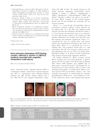
September 2011 in “British Journal of Dermatology” New ABCA12 gene mutations were linked to a skin condition with scaling and hair loss, and a treatment helped with hair loss in a related case.
26 citations
,
January 1993 in “Dermatology” This report describes a new case of isolated trichothiodystrophy with characteristic brittle hair and suggests a simplified classification scheme for understanding sulfur-deficient hair disorders.
1 citations
,
May 2004 in “Biochemical and Biophysical Research Communications” This study identified nine novel KRTAP5 family genes associated with human hair formation, demonstrating preferential expression in hair roots and suggesting their role in hair development.
![Synthesis and Structural Characterization of a New Dinuclear Platinum(III) Complex, [Pt2Cl4(NH3)2{μ-HN=C(O)Bu^t}2]](/images/assets/fcbeee85-f5bd-406e-936d-9134a0f200d4/small/36266.jpg) 2 citations
,
November 2022 in “Acta crystallographica. Section B, Structural science, crystal engineering and materials./Acta crystallographica. Section B, Structural science, crystal engineering and materials”
2 citations
,
November 2022 in “Acta crystallographica. Section B, Structural science, crystal engineering and materials./Acta crystallographica. Section B, Structural science, crystal engineering and materials” This study reports the synthesis and structural characterization of a novel dinuclear platinum(III) complex with potential antitumor and catalytic activity.
 May 2024 in “British journal of dermatology/British journal of dermatology, Supplement”
 The researchers reported increased ubiquitination of proteins such as the insulin receptor in CYLD cutaneous syndrome skin tumors, suggesting that CYLD dysfunction may affect protein secretion and signaling processes.
 March 2024 in “International Journal of Dermatology”
 In this case report, a 40-year-old male with alopecia universalis and twenty-nail dystrophy showed significant nail improvement and partial hair regrowth after six months of baricitinib treatment, improving his quality of life.

In this case study, researchers reported the first documented instance of malignant transformation of congenital triangular alopecia into basal cell carcinoma in a 48-year-old woman, underscoring the importance of assessing long-standing alopecic areas for malignancy.
 March 2026 in “The Indian Journal of Animal Sciences”
 This study on Indian dromedary camel breeds investigated the KRTAP7 protein, finding all four breeds shared an identical gene sequence, with 13 phosphorylation and glycosylation sites influencing hair characteristics, alongside predicted interactions with other biosynthesis-related proteins.
 October 2024 in “Journal of the Endocrine Society”
 This study examined uncharacterized CYP21A2 gene variants related to non-classic congenital adrenal hyperplasia and found that several mutations reduce enzyme activity, which may help improve diagnostic and treatment strategies.
 January 2019 in “Open access journal of mycology & mycological sciences”
 This article discusses tinea capitis, highlighting its causes, symptoms, diagnostic methods, and the importance of selecting treatment based on the causal agent for effective outcomes; it reports no new clinical results.
 August 2026 in “International Journal of Developmental Neuroscience”
 In this report, researchers describe a 13-month-old with neurodevelopmental disorder NEDESBA, confirming a TRAPPC4 gene mutation as the cause after excluding biotinidase deficiency, highlighting the importance of molecular testing for accurate diagnosis in overlapping metabolic and genetic conditions.
 January 2025 in “SKIN The Journal of Cutaneous Medicine”
 In this analysis of the BRAVE-AA trials, a significant number of patients with severe alopecia areata treated with baricitinib reached complete or nearly complete scalp coverage (SALT score ≤10 or ≤5) over 52 weeks, particularly among those with less severe baseline characteristics.
 1 citations
,
March 2022 in “Berkala Ilmu Kesehatan Kulit dan Kelamin/Berkala ilmu kesehatan kulit dan kelamin (Periodical of dermatology and venerology)”
1 citations
,
March 2022 in “Berkala Ilmu Kesehatan Kulit dan Kelamin/Berkala ilmu kesehatan kulit dan kelamin (Periodical of dermatology and venerology)” This case analysis found that trichoscopy is a valuable tool for diagnosing and monitoring treatment progress in tinea capitis by distinguishing between Microsporum and Trichophyton etiologies.
20 citations
,
February 1968 in “Journal of Histochemistry & Cytochemistry” This study reports that citrulline, uniquely found in the inner root sheath of hair follicles, can be specifically detected with the carbamido diacetyl reaction, resulting in a bright orange color.
7 citations
,
April 2015 in “Journal of biological chemistry/The Journal of biological chemistry” This study reports the development of a novel protocol to purify human TRPV3 ion channels, revealing functional properties and differences in ligand interactions, enabling further structural and functional research.
15 citations
,
June 2016 in “Computers in Biology and Medicine” This study's simulation found that Ascorbyl Tetraisopalmitate penetrates more efficiently through the skin's stratum corneum than via the infundibulum, following different pathways and dynamics in each membrane.
49 citations
,
May 1974 in “Biochimica et Biophysica Acta (BBA) - Protein Structure” Transamidases are present in the epidermis but their exact role is unclear.
 143 citations
,
October 2008 in “Journal of The American Academy of Dermatology”
143 citations
,
October 2008 in “Journal of The American Academy of Dermatology” This study found that comma hairs are a distinctive feature of tinea capitis caused by Microsporum canis, distinguishing it from alopecia areata, which is characterized by exclamation mark hairs.
 August 2018 in “Journal of the American Academy of Dermatology”
 Tofacitinib is a potential alternative treatment for alopecia totalis, especially in patients with a shorter duration of the condition and more preserved hair follicles, but the overall response rate is low.
 September 2023 in “SKIN The Journal of Cutaneous Medicine”
 This case report documented a 74-year-old female with alopecic patches and other skin issues during talquetamab therapy for multiple myeloma, suggesting that the drug may cause skin-related adverse effects due to reactivity to GPRC5D-expressing structures.
1 citations
,
June 2011 in “Journal of Dermatological Case Reports” This case report describes a 38-year-old patient with trichomycosis axillaris, successfully treated with shaving, 3% erythromycin cream, and clotrimazole powder.
14 citations
,
September 1983 in “Acta Dermato Venereologica” This study found that daily topical application of citral increased sebaceous gland lobules and cell hyperplasia in male rats after three months.
 October 2024 in “Journal of the Endocrine Society”
 This study found that certain CYP21A2 mutations significantly reduce enzyme activity, contributing to non-classic congenital adrenal hyperplasia phenotypes, which may aid in enhancing diagnosis and treatment strategies.
 2 citations
,
April 2024 in “Dermatology Practical & Conceptual”
2 citations
,
April 2024 in “Dermatology Practical & Conceptual” This study found that Janus Kinase inhibitors, tofacitinib and baricitinib, showed effectiveness and safety in treating severe alopecia areata in a real-world setting, with optimal tolerability noted in younger individuals.
 1 citations
,
November 2023 in “Journal of the European Academy of Dermatology and Venereology”
1 citations
,
November 2023 in “Journal of the European Academy of Dermatology and Venereology” Baricitinib helps with early hair regrowth in people with alopecia areata.