39 citations
,
May 2006 in “Molecular Plant-Microbe Interactions” This study suggests that fusaric acid at nontoxic concentrations may activate signal transduction in plants which could aid in the plant-defense responses against Fusarium spp.
 March 2026 in “Frontiers in Pharmacology”
 The study concluded that the Exprecell™ device for preparing anticoagulant-free f-PRF increases volume yield and simplifies the process while maintaining biological activity comparable to conventional methods, suggesting potential clinical utility.
2 citations
,
June 2024 in “Skin Appendage Disorders” This study identifies specific trichoscopic features such as empty follicles and perifollicular erythema in Caucasians with frontal fibrosing alopecia, which may assist in diagnosis and monitoring, but stresses the need for further research due to limited demographic data.
 September 2017 in “Journal of Dermatology & Cosmetology”
 This study reports a case of frontal fibrosing alopecia associated with hepatitis C treatment involving interferon and ribavirin.
1 citations
,
March 2012 in “Actas dermo-sifiliográficas/Actas dermo-sifiliográficas” Dermoscopy helps diagnose frontal fibrosing alopecia by identifying specific scalp features.
 103 citations
,
June 2018 in “International Journal of Molecular Sciences”
103 citations
,
June 2018 in “International Journal of Molecular Sciences” This review discusses the applications and research on fibroblast growth factors, including their use in wound healing, diabetes, and cancer, but it reports no new clinical results.
January 2012 in “Chinese Clinical Oncology” This study found that for metastatic colorectal cancer patients, substituting calcium folinate with disodium folinate in combination with fluorouracil and oxaliplatin showed similar effectiveness and safety as the mFOLFOX6 regimen.
January 2024 in “Updates in clinical dermatology” Frontal fibrosing alopecia is a scarring hair loss condition mainly affecting postmenopausal women, with unclear causes.
 20 citations
,
January 2016 in “Intractable & Rare Diseases Research”
20 citations
,
January 2016 in “Intractable & Rare Diseases Research” In this clinical experience, treating frontal fibrosing alopecia with oral finasteride, hydroxychloroquine, tacrolimus, and excimer laser was associated with optimal results in patients with active inflammation.
 April 2026 in “Zenodo (CERN European Organization for Nuclear Research)”
 In this study, Dodatek A operationalizes the Functional Androgen Axis framework by defining three system-level indices and an efficiency metric to describe androgen function, incorporating key methodological improvements and acknowledging significant limitations for future empirical validation.
 1 citations
,
December 2022 in “Archives of Dermatological Research”
1 citations
,
December 2022 in “Archives of Dermatological Research” This study compared fluid PRF and PRP for treating atrophic acne scars and found PRF to be more effective, particularly when combined with needling. Both treatments improved scars, but PRF showed higher therapeutic response, suggesting it as a superior alternative for acne scar treatment.
 July 2023 in “Journal of Education, Health and Sport”
 This literature review reports that micro-needle radiofrequency is increasingly recognized in aesthetic medicine as a safe, effective treatment for various skin conditions, but further research is needed to optimize treatment parameters for the best outcomes.
January 2013 in “Scholarworks (University of Massachusetts Amherst)” This dissertation reveals that FERONIA, a cell wall-binding receptor kinase, plays a crucial role in regulating plant functions such as sugar signaling, pollen tube reception, and RAC/ROP-mediated auxin signaling.
This study reported that prompt diagnosis and treatment with 5-alpha-reductase inhibitors and topical immunomodulators are key to mitigating the effects of frontal fibrosing alopecia and preventing permanent hair loss.
 2 citations
,
January 2022 in “bioRxiv (Cold Spring Harbor Laboratory)”
2 citations
,
January 2022 in “bioRxiv (Cold Spring Harbor Laboratory)” This study found that low temperatures and nitrogen deficiency trigger root hair elongation through a molecular mechanism involving the receptor kinase FERONIA and the TOR Complex 1.
29 citations
,
February 2011 in “PloS one” This study found that blocking corticotropin-releasing factor receptors with astressin-B promoted hair regrowth and prevented alopecia in a mouse model of stress-induced hair loss.
 24 citations
,
September 2015 in “JAAD case reports”
24 citations
,
September 2015 in “JAAD case reports” This case report describes a patient with frontal fibrosing alopecia experiencing significant hair regrowth and reversal of cutaneous atrophy after treatment with the 5α-reductase inhibitor finasteride.
 August 2017 in “Journal of Pharmacy Practice and Research”
 This study details a method for assessing the risk of modifications to pharmaceutical frame formulations by assigning a risk priority number using Failure Modes Effects Analysis, which estimates the severity and probability of changes impacting the formulation.
7 citations
,
September 2024 in “PLANT PHYSIOLOGY” This study in Arabidopsis thaliana found that exposure to volatile compounds from Penicillium aurantiogriseum promotes root hair growth through signaling involving RALF22, ethylene, auxin, and photosynthesis, and that RALF22 plays a crucial role in the plants' response to these compounds.
 April 2023 in “Journal of Investigative Dermatology”
 This study found that recombinant type III collagen may aid skin aging management by promoting fibroblast proliferation and migration, with a modest impact on inflammatory marker IL-6, though it did not significantly affect TNF-a secretion in vitro.
1 citations
,
September 2025 in “Frontiers in Immunology” This study found that FRβ knockout mice exhibited autoimmune symptoms and slower tumor growth compared to wild type mice, suggesting that the FRβ receptor may play a role in regulating immune responses in tumors and autoimmune conditions.
 39 citations
,
July 2015 in “British Journal of Dermatology”
39 citations
,
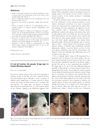
July 2015 in “British Journal of Dermatology” This article discusses the pseudo 'fringe sign' in frontal fibrosing alopecia, highlighting that it is not solely related to traction, and it reports no new clinical results.
51 citations
,
September 2013 in “JEADV. Journal of the European Academy of Dermatology and Venereology/Journal of the European Academy of Dermatology and Venereology” This study found that fractional radiofrequency microneedle treatment was safe and effective for improving acne scars in Asians, with minimal adverse effects reported at 6-month follow-up.
 November 2025 in “Cosmetics”
 This study evaluated a hair mask containing rice germ oil GX-N and ferulic acid on damaged hair and found that rice germ oil GX-N improved hair characteristics after bleaching, UV, and heat exposure, but adding ferulic acid did not provide extra benefits.
 1 citations
,
May 2024 in “Dermatology and Therapy”
1 citations
,
May 2024 in “Dermatology and Therapy” This review article examines the current understanding of frontal fibrosing alopecia, noting its prevalence in different demographics and the roles of genetic and environmental factors in its pathogenesis, while highlighting that treatment approaches remain varied and lack standardization.
 2 citations
,
April 2023 in “Cutis”
2 citations
,
April 2023 in “Cutis” This systematic review discusses the treatment characteristics and outcomes for frontal fibrosing alopecia specifically in Black patients with skin of color, addressing a gap in clinical evidence due to underrepresentation in studies.
 30 citations
,
December 2017 in “Journal of The American Academy of Dermatology”
30 citations
,
December 2017 in “Journal of The American Academy of Dermatology” This correspondence discusses proposed updates to the diagnostic criteria for frontal fibrosing alopecia, emphasizing the importance of differentiating it from other types of alopecia.
1 citations
,
July 2016 in “Dermatologic surgery” September 2023 in “Journal of the American Academy of Dermatology” This study examined the application of new clinical guidelines for diagnosing frontal fibrosing alopecia in 18 men, highlighting that current diagnostic criteria may often overlook early beard involvement and sideburn recession.
September 2023 in “World Rabbit Science” In this study using Angora rabbits, researchers found that the FRZB gene inhibits hair follicle development by modulating the Wnt/β-catenin signaling pathway, affecting the expression of various genes related to this pathway and altering cell proliferation and apoptosis.