 June 2004 in “Dermatologic Surgery”
 This study outlines a technique for hair transplantation that maintains natural hair flow and density by mimicking natural hair direction and angle without accelerating hair loss in the recipient area.
18 citations
,
January 2015 in “Journal of medical genetics” This review discusses the genetic basis of woolly hair syndrome and its potential link to heart disorders, highlighting recent discoveries of new molecular pathways and suggesting possible future treatment options.
 3 citations
,
May 2020 in “bioRxiv (Cold Spring Harbor Laboratory)”
3 citations
,
May 2020 in “bioRxiv (Cold Spring Harbor Laboratory)” In this study, researchers identified loss of function variants in the HR gene as likely causes of the distinct roaning hair coat seen in lykoi cats.
 6 citations
,
June 1981 in “PubMed”
6 citations
,
June 1981 in “PubMed” This article reviews previously reported cases of whisker hair in individuals who develop severe androgenic alopecia and offers a hypothesis concerning its eventual fate, without presenting new findings.
 7 citations
,
January 2012 in “International Journal of Trichology”
7 citations
,
January 2012 in “International Journal of Trichology” A man with Woolly Hair Syndrome had very curly, fragile hair, and doctors used a special scalp examination to diagnose him without invasive tests.
 19 citations
,
October 1985 in “British Journal of Dermatology”
19 citations
,
October 1985 in “British Journal of Dermatology” This review proposes a new approach for categorizing and diagnosing unruly hair forms, building on previous literature and clinical experience, without presenting new clinical results.
March 2018 in “Journal of Experimental Biology” This study found that the curl in hair is due to the arrangement of different cell types, with shorter paracortical cells inside the curve and longer orthocortical cells outside.
56 citations
,
June 2010 in “Clinical and experimental dermatology” In this study, coudability hairs were identified as a useful marker for assessing disease activity in patients with alopecia areata and may serve as an alternative to the hair-pull test.
 6 citations
,
February 2016 in “American Journal of Dermatopathology”
6 citations
,
February 2016 in “American Journal of Dermatopathology” This case study reports on an 11-year-old boy with woolly hair nevus, featuring twisted hair shafts and an abnormal hair cuticle, alongside epidermal nevi on his face and back.
 September 2021 in “Mağallaẗ al-Muẖtar li-l-ʿulūm”
 This report describes a case of two sisters with kinky, tangled hair diagnosed using trichoscopic and microscopic methods; they were treated with topical minoxidil.
2 citations
,
March 2010 in “European journal of dermatology/EJD. European journal of dermatology” This case report describes a 5-year-old girl with trichorrhexis nodosa and highlights the presence of isolated curly hairs on her scalp despite hair loss over four months.
 10 citations
,
December 2021 in “Frontiers in cell and developmental biology”
10 citations
,
December 2021 in “Frontiers in cell and developmental biology” This study used single-cell RNA sequencing to map the cellular composition of sheep hair follicles, revealing differentiation pathways and potential molecular mechanisms for wool curvature, which may inform sheep breeding.
 12 citations
,
November 1987 in “Pediatric dermatology”
12 citations
,
November 1987 in “Pediatric dermatology” This report identified longitudinal grooves in the hair shafts of four children, diagnosing them with uncombable-hair syndrome.
 1 citations
,
January 2016 in “Journal of cosmetology & trichology”
1 citations
,
January 2016 in “Journal of cosmetology & trichology” Trichoscopy helped diagnose and treat a child's fungal scalp infection by spotting specific hair shapes.
12 citations
,
January 2013 in “Indian dermatology online journal” This case report presents a patient with woolly hair and associated symptoms, including keratosis pilaris, nail dystrophy, increased interdental spaces, and recurrent bullous impetigo, observing a combination not previously reported.
 1 citations
,
April 2016 in “Actas Dermo-Sifiliográficas”
1 citations
,
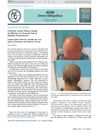
April 2016 in “Actas Dermo-Sifiliográficas” Wearing a wig caused a woman's skin condition to worsen due to pressure from the wig's fasteners.
35 citations
,
September 2003 in “Archives of dermatology” This study proposed that the tiger tail phenomenon in trichothiodystrophy hair is caused by regular undulations of hair fibers, altering the optical properties seen under polarized light.
 7 citations
,
November 2014 in “Histochemistry and Cell Biology”
7 citations
,
November 2014 in “Histochemistry and Cell Biology” This study found that mutant mice with the we/we wal/wal genotype exhibit significant defects in hair shaft structure and epidermis stratification, correlating with postnatal alopecia symptoms.
9 citations
,
May 2021 in “JEADV. Journal of the European Academy of Dermatology and Venereology/Journal of the European Academy of Dermatology and Venereology” This study suggests that topical minoxidil may be a promising treatment for isolated autosomal recessive woolly hair due to LIPH mutations, although effective treatments are not yet established.
 108 citations
,
March 2011 in “Archives of Dermatology”
108 citations
,
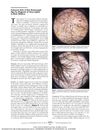
March 2011 in “Archives of Dermatology” Corkscrew hair may be a new sign for quickly diagnosing scalp fungus in black children.
January 2022 in “The Pan African medical journal” This article discusses the rare condition of hypertrichosis, highlighting a case of a 10-year-old boy with congenital hair growth and emphasizing the need for patient support due to limited treatment options.
2 citations
,
May 2022 in “International journal of trichology” This article reviews the condition plica neuropathica, including its manifestations, potential causes, and treatment, but it does not provide new clinical findings.
 5 citations
,
January 2010 in “The anatomical record”
5 citations
,
January 2010 in “The anatomical record” This study assessed hair whorl characteristics in domestic dogs and found that simple whorls predominate, with tufted whorls more common in specific regions like elbows and chests, influenced by factors such as coat traits and source.
September 2016 in “Journal of dermatological science” This study suggested that differences in hair follicle development, indicated by the frequency of underdeveloped hairs, significantly contribute to the variation in hair loss severity among Japanese individuals with the LIPH c.736T>A mutation.
 9 citations
,
January 1980 in “Dermatology”
9 citations
,
January 1980 in “Dermatology” This report suggests that peripilar hair casts, potentially linked to modern hair styling or mild trichotillomania, may be more prevalent than currently reported.
1 citations
,
June 1998 in “Journal of Forestry Research” Mammalian hair scales change from smooth to wavy due to friction.
 2 citations
,
March 2005 in “Journal of the American Academy of Dermatology”
2 citations
,
March 2005 in “Journal of the American Academy of Dermatology” This study found that using an overnight peel treatment for 3 months increased wrinkle spacing, leading to an average reduction in wrinkles of 39% in 67% of participants.
 May 2024 in “Frontiers in medicine”
 In this study, a 3-year-old Japanese child with autosomal recessive woolly hair was found to have a distinctive irregular and rough cuticle on the hair shaft, along with a homozygous pathogenic LIPH variant, suggesting a critical role for genetic analysis in understanding rare hair conditions.
2 citations
,
August 1993 in “Archives of Dermatology” This case report documents the first instance of acquired uncombable hair syndrome in a 39-year-old woman, characterized by diffuse alopecia and minimal upper lip hirsutism.
28 citations
,
March 2014 in “Biological reviews/Biological reviews of the Cambridge Philosophical Society” This study introduces the multiple papillary centres model, offering a new explanation for hair twisting by combining known hair morphology features with differential growth rates caused by dermal papillae.