 February 2026 in “Chinese Medicine”
 Natural products might help treat hair greying.
 December 2025 in “International Journal For Multidisciplinary Research”
 This study examined the hair structure of five Muridae species to provide insights into their distinct pelage characteristics.
 August 2025 in “JURNAL PEMBELAJARAN DAN BIOLOGI NUKLEUS”
 This study conducted in Batam City found a 10.79% prevalence of alopecia among 417 captured bats across seven species, with higher rates in fragmented urban forests associated with anthropogenic pressures, highlighting the influence of habitat conditions on bat health.
 September 2024 in “Cureus”
 This case report describes a woman who experienced worsened breast implant illness symptoms following a COVID-19 infection and vaccination, which improved after implant removal, even though numerous screenings had been inconclusive prior to explantation.
 March 2024 in “Research Square (Research Square)”
 In this study, researchers discovered that the MafB gene, which is important for macrophage differentiation, shows high expression in the pancreas and is influenced by sex steroids, with varied expression patterns in hamster tissues and during reproductive phases.
 November 2023 in “Frontiers in cell and developmental biology”
 This source reviews mechanisms and existing treatments for hair aging, highlighting factors like oxidative stress and DNA repair defects that affect hair follicle and stem cell function, and discusses research limitations and future directions in the field.
 November 2023 in “Klìtinna ta organna transplantologìâ”
 This study reviews the regenerative potential and clinical applications of exosomes derived from mesenchymal stem cells in conditions like COVID-19, alopecia, skin aging, and osteoarthritis, highlighting their role as a promising tool in regenerative medicine.
 November 2023 in “Martor”
 This study explored the role of magic in traditional and modern Romanian societies, revealing that both rural and urban communities turn to magical rituals and witchcraft to address various misfortunes and needs, with the COVID-19 pandemic enhancing this reliance despite technological advancements.
 April 2023 in “Tikrit journal of pharmaceutical sciences”
 This study reported that 75.9% of participants aged 20-50 in Tikrit, Iraq, had used herbal treatments at least once, primarily for issues like hair loss, hemorrhoids, and gastritis, with the hope of finding effective alternatives to conventional medicine.
 March 2023 in “East African scholars journal of medical sciences”
 This review examines metformin use in PCOS treatment, noting that while non-randomized studies show improvements, randomized controlled trials suggest benefits are limited and highlight lifestyle changes as potentially more effective.
 September 2020 in “Journal of the turkish academy of dermatology”
 In this study, 13.3% of dermatology patients reported using traditional and complementary medicine, with herbal remedies being the most common method, especially among middle-aged university graduates.
 February 2020 in “Scholars international journal of traditional and complementary medicine”
 This article explores Ayurvedic approaches to treating hair disorders and provides no new clinical results, highlighting practices like using herbal treatments for hair loss and greying.
This study found that Biofield Energy Healing Treatment significantly increased the proliferation of human hair follicle dermal papilla cells in vitro, suggesting potential as a hair growth enhancer.
 December 2018 in “Zenodo (CERN European Organization for Nuclear Research)”
 This study found that topical application of a Biofield Energy Healing-treated mixture of herbal extracts in mice increased hair growth and melanogenesis compared to untreated extracts.

This study found that Biofield Energy Healing Treatment on a herbal mixture increased hair growth and melanogenesis in mice compared to an untreated group.
 December 2018 in “The Journal of medical research”
 In this study, the researchers observed that Biofield Energy Healing Treatment significantly increased hair follicle cell proliferation in human dermal papilla culture, suggesting potential as a hair growth enhancer.
 May 2018 in “Actas Dermo-Sifiliográficas”
 This study validated a Spanish version of the Hair Specific Skindex 29 scale for assessing quality of life in women with female androgenetic alopecia, showing similar psychometric properties to the original.
 May 2018 in “European Journal of Dermatology”
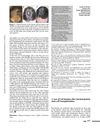
 Adjusting the medication tacrolimus resolved a boy's red nail beds after a stem cell transplant.
 January 2018 in “Springer eBooks”
 This abstract describes the use of lasers in hair transplantation for creating recipient sites and enhancing hair growth but reports no new findings.
 January 2018 in “Clinical dermatology open access journal”
 In this study, the researchers observed that Biofield Energy Treated herbal extracts enhanced hair growth and melanogenesis in C57BL/6 mice, suggesting its potential as a hair growth enhancer.
 January 2018 in “Open access journal of pharmaceutical research”
 In this study, researchers found that Biofield Energy Healing Treatment significantly increased the proliferation of human hair follicle dermal papilla cells in vitro, suggesting potential hair growth benefits.
 June 2013 in “D-Scholarship@Pitt (University of Pittsburgh)”
 This article discusses the development of an interactive workbook by OCCAM to help cancer patients communicate their use of complementary and alternative medicine with healthcare providers and reports no clinical results.
 December 2011 in “Drug Research”
 The document shows the state of pharmaceutical patents as of 1999, focusing on treatments for various diseases.
 October 2004 in “Australian Prescriber”
 This article discusses the role of lifestyle changes and medication like metformin in managing insulin resistance and cardiovascular risk in women with polycystic ovary syndrome but reports no new clinical results.
 October 2004 in “Australian Prescriber”
 This discussion reviews the lack of long-term clinical studies on metformin's cardiovascular benefits in women with polycystic ovary syndrome, advocating for lifestyle changes to improve insulin sensitivity.
 October 2004 in “Australian Prescriber”
 This article discusses the management of long-term cardiovascular risks in women with polycystic ovary syndrome and suggests that lifestyle changes may be more effective than metformin in reducing the incidence of type 2 diabetes.
 October 2004 in “Australian Prescriber”
 This article discusses the long-term cardiovascular risks associated with polycystic ovary syndrome and highlights the greater effectiveness of lifestyle changes compared to metformin in preventing type 2 diabetes, but provides no new clinical outcomes.
 October 2004 in “Australian Prescriber”
 This review discusses the management of long-term risks in women with polycystic ovary syndrome, recommending lifestyle changes to improve insulin sensitivity over relying solely on metformin, and reports no new clinical results.
 October 2004 in “Australian Prescriber”
 This article discusses the role of insulin resistance in cardiovascular risk and suggests that lifestyle changes may be more beneficial than metformin in managing polycystic ovary syndrome; it reports no new clinical results.
 October 2004 in “Australian Prescriber”
 This abstract reviews the management of polycystic ovary syndrome and highlights the potential benefits of lifestyle changes over metformin in reducing type 2 diabetes risk, yet reports no new clinical outcomes.