 8 citations
,
May 2021 in “Journal of the European Academy of Dermatology and Venereology”
8 citations
,
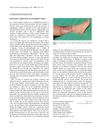
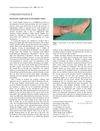
May 2021 in “Journal of the European Academy of Dermatology and Venereology” This case report describes a 23-year-old male patient with nail discoloration that may be associated with COVID-19, suggesting possible microvascular damage.
 8 citations
,
May 2018 in “Primary Care: Clinics in Office Practice”
8 citations
,
May 2018 in “Primary Care: Clinics in Office Practice” This review details common symptoms of rheumatic diseases and how to differentiate them from other conditions based on patient history and physical examination.
 4 citations
,
October 2012 in “Expert Review of Dermatology”
4 citations
,
October 2012 in “Expert Review of Dermatology” Dermoscopy greatly improves melanoma diagnosis and reduces unneeded surgeries.
 2 citations
,
August 2022 in “Cutis”
2 citations
,
August 2022 in “Cutis” This article suggests that nail abnormalities might occur temporarily after COVID-19 vaccination, but they are self-limiting and should not deter individuals from getting vaccinated.
research Skin
2 citations
,
January 2011 in “Elsevier eBooks” This review discusses approaches to diagnosing and managing cutaneous manifestations of lupus erythematosus and reports no new clinical results.
 1 citations
,
May 2026 in “Nature Communications”
1 citations
,
May 2026 in “Nature Communications” This study demonstrated that CD19-CAR T cell therapy may promote structural regeneration in the skin of systemic sclerosis patients, as evidenced by histological improvements and fibroblast population changes, suggesting its potential for tissue remodeling in fibrotic diseases.
 1 citations
,
November 2025 in “Journal of Korean Medical Association”
1 citations
,
November 2025 in “Journal of Korean Medical Association” This review describes nail changes linked to various non-infectious skin diseases, highlighting how these alterations can help diagnose and manage conditions like psoriasis and lupus by noting specific and overlapping nail characteristics.
 1 citations
,
October 2023 in “Romanian Journal of Morphology and Embryology”
1 citations
,
October 2023 in “Romanian Journal of Morphology and Embryology” This review analyzed 109 articles to classify skin lesions associated with COVID-19 and their frequency during the disease, but found no conclusive evidence on long-term persistence of specific types due to rarity.
 1 citations
,
July 2005 in “Drugs and the pharmaceutical sciences”
1 citations
,
July 2005 in “Drugs and the pharmaceutical sciences” Targeting drugs to hair follicles can treat skin conditions, but reaching deep follicle areas is hard and needs more research.
 1 citations
,
May 2002 in “British Journal of Dermatology”
1 citations
,
May 2002 in “British Journal of Dermatology” This article provides an overview of hair density, hair diameter, and the prevalence of female pattern hair loss but reports no new clinical findings.
 January 2026 in “Forum Dermatologicum”
 This study observed that 2.5% of patients with mycosis fungoides or Szary syndrome experienced alopecia, predominantly within skin lesions, with scalp metastases from other cancers also potentially causing hair loss, highlighting the diagnostic value of trichoscopy in differentiating alopecia types.
 January 2026 in “Acta Dermatovenerologica Alpina Pannonica et Adriatica”
 In this case report, a 62-year-old woman with suspected discoid lupus erythematosus experienced worsening skin and hair symptoms despite treatment with topical corticosteroids, immunomodulatory therapy, and hydroxychloroquine, leading to her referral to a tertiary dermatology center.
 November 2025 in “Clinical Cosmetic and Investigational Dermatology”
 In this case study, a 46-year-old woman with tattoos and a history of hypothyroidism developed autoimmune-like symptoms, highlighting the importance of distinguishing ASIA syndrome from other immune disorders and assessing potential adjuvant exposure.
 March 2023 in “Revista română de reumatologie”
 This article reviews the classification and treatment of cutaneous manifestations in systemic lupus erythematosus, highlighting the importance of monitoring for disease progression and reports no new clinical results.
 January 2023 in “Acta dermatovenerologica Alpina, Pannonica et Adriatica (Tiskana izd.)”
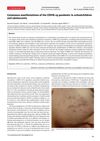
 This review details skin conditions in children and adolescents related to the SARS-CoV-2 pandemic, emphasizing mask-related acne and various cutaneous manifestations linked to infection and vaccination, with most being mild or nonspecific.
 January 2022 in “Dermatology Review”
 This study found that patients with chronic kidney disease-associated pruritus had elevated serum levels of interleukin 31, suggesting a possible role of this cytokine in the condition.
 January 2019 in “Medicine Science | International Medical Journal”
 This study found that specific skin lesions are common indicators of pediatric rheumatologic diseases, potentially aiding dermatologists and rheumatologists in diagnosis when biopsies are challenging.
 March 2014 in “Journal of The American Academy of Dermatology”
 The document lists various dermatology topics, treatments, and diagnostic methods.
 May 2002 in “British Journal of Dermatology”
 A pregnant woman's skin condition improved after giving birth, possibly due to high estrogen levels during pregnancy.
 May 2002 in “British Journal of Dermatology”
 This brief article is a response from the authors about hair density, hair diameter, and female pattern hair loss, and it reports no new clinical findings.
 14 citations
,
June 2018 in “JAMA Dermatology”
14 citations
,
June 2018 in “JAMA Dermatology” This Viewpoint discusses the utility of dermoscope in routine practice and how familiarity with dynamic vs static trichoscopy may address its limitations, but it reports no new clinical findings.
 July 2024 in “International Journal of Dermatology Venereology and Leprosy Sciences”
 This review highlights the increasing use of trichoscopy, a noninvasive and well-tolerated diagnostic tool, to aid in the accurate diagnosis and management of various pediatric hair and scalp conditions, such as alopecia and other abnormalities.
 August 2018 in “Journal of the American Academy of Dermatology”
 Reflectance confocal microscopy helped diagnose and manage a woman's hair loss without needing a biopsy.
 August 2017 in “Journal of evolution of medical and dental sciences”
 In this study, researchers evaluated trichoscopy in diagnosing non-scarring alopecia and found diagnostic value in observing diverse hair diameters in androgenetic alopecia, black dots and broken hairs in alopecia areata, and empty follicles in telogen effluvium, supporting trichoscopy's utility in differentiating alopecia types.
 1 citations
,
January 2016 in “Journal of cosmetology & trichology”
1 citations
,
January 2016 in “Journal of cosmetology & trichology” Trichoscopy helped diagnose and treat a child's fungal scalp infection by spotting specific hair shapes.
January 2026 in “Indian Journal of Paediatric Dermatology” This study found trichoscopy to be a quick and effective method for diagnosing and monitoring tinea capitis in children, with improvements in trichoscopic features observed by week 2 and full recoveries confirmed mycologically by week 8.
41 citations
,
January 1981 in “Journal of Clinical Medicine” In this study, trichoscopy highlights that hair diameter variability, vellus hairs, and the peripilar sign are key indicators for diagnosing androgenetic alopecia.
March 2026 in “Mendeley Data” This abstract presents supplementary materials illustrating trichoscopy in alopecia areata and scarring alopecia using different dermoscopy techniques but reports no clinical findings.
 6 citations
,
November 2008 in “Hair transplant forum international”
6 citations
,
November 2008 in “Hair transplant forum international” This article reviews the development of trichophytic closure techniques in hair restoration surgery aimed at reducing donor site scarring, but it does not report new clinical outcomes.
2 citations
,
October 2019 in “Dermatologic Therapy” This study suggests using a handheld dermatoscope may allow for simple and efficient differentiation of eruptive vellus hair cysts by detecting vellus hair shafts, as demonstrated in a familial case involving five women.