 1 citations
,
January 2017 in “Springer eBooks”
1 citations
,
January 2017 in “Springer eBooks” This review discusses the role of flavonoids and Nod factors in the symbiosis between legumes and rhizobia and reports no new results; the authors argue this knowledge could enhance sustainable agriculture.
 1 citations
,
January 2016 in “Springer briefs in molecular science”
1 citations
,
January 2016 in “Springer briefs in molecular science” This chapter reviews the chemistry and potential benefits of plant-based hair dyes in cosmetics, but it reports no new clinical results.
 July 2026 in “bioRxiv (Cold Spring Harbor Laboratory)”
 In this study, researchers found that the efflux of calcium in root hairs of Arabidopsis thaliana, particularly through the ER-localized ACA2 and ACA7, is crucial for modulating cytoplasmic calcium signals and enabling proper root hair growth, with disruptions leading to impaired elongation.
 June 2026 in “bioRxiv (Cold Spring Harbor Laboratory)”
 In this study, researchers used embryonic chicken skin as a model to show that perturbing calcium signaling can induce feather bud formation in areas that typically do not form them, highlighting developmental bioelectricity as a crucial yet underexplored layer in tissue patterning.
 June 2026 in “Gümüşhane Üniversitesi Fen Bilimleri Enstitüsü Dergisi”
 This study observed that biodegradable PVA/agar films with incorporated Achillea millefolium L. essential oil, especially at 1% (v/v), demonstrated good mechanical performance and selective antibacterial activity against E. coli, suggesting their potential as wound dressings.
 May 2026 in “Repository of the University of Ljubljana (University of Ljubljana)”
 This study analyzed the composition and cost of 50 cosmetic body scrubs for keratosis pilaris, finding that chemical exfoliants with glycolic acid may reduce symptoms by enhancing skin shedding and reducing water loss, but further clinical studies are needed to confirm their effectiveness.
 May 2026 in “Commagene Journal of Biology”
 This review found that anti-aging peptides show promise in cosmeceuticals due to their targeted actions to rejuvenate skin, but challenges like peptide stability, penetration, and limited clinical data limit their current effectiveness.
 May 2026 in “Research Square”
 This research reports that the polyG fragment within the Hoxc13 protein alters its gene regulatory functions, which could have influenced mammalian hair evolution by affecting pathways related to hair follicle development.
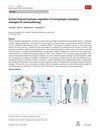
This review highlights that surface mechanical regulation can program macrophage behavior through specific mechanical cues on material surfaces, potentially advancing immunotherapies and regenerative medicine by enabling precise control over macrophage functions.
 April 2026 in “AMEI's Current Trends in Diagnosis & Treatment”
 This review discusses the symptoms, causes, and treatment options for polycystic ovary syndrome and reports no new results; the authors highlight the role of lifestyle changes, medications, and fertility treatments.
 March 2026 in “Calcified Tissue International”
 This review discusses the complex role of the EDA pathway in vertebrate skeletal development, emphasizing its interaction with other morphogenic pathways to influence skeletal diversity, but reports no new experimental results.
 January 2026 in “Frontiers in Pharmacology”
 This review highlights the potential of wedelolactone from the plant Wedelia Chinensis, summarizing its reported pharmacological effects, including anti-inflammatory, antiviral, antibacterial, antitumor, anti-osteoporosis activities, and organ protection based on existing in vitro and in vivo research findings.
 January 2026 in “International journal of research and scientific innovation”
 In this laboratory study, researchers developed a multifunctional organic hair cream with various natural extracts, finding that the cream with 15% extracts demonstrated higher physical stability, hair strength, and antimicrobial activity compared to lower concentration samples and synthetic alternatives.
 January 2026 in “Cirugía Plástica .”
 This study reviewed preclinical evidence suggesting that topical glutamic acid can enhance hair regrowth and skin healing in burn-induced alopecia, highlighting its potential as a simple, low-cost treatment option that warrants further clinical trials.
 December 2025 in “INSTITUTE OF MOLECULAR BIOLOGY & BIOTECHNOLOGIES TRANSACTIONS”
 This study highlights the significant ethnomedicinal potential of Asteraceae species used in traditional medicine, particularly for treating inflammatory and skin-related diseases.
 December 2025 in “Aesthetic Cosmetology and Medicine”
 This study emphasizes the need for personalized hair care strategies based on in-depth diagnostics, taking into account scalp type, environmental factors, and the microbiome, suggesting that this holistic approach could improve hair condition.
 November 2025 in “Quality in Sport”
 This study reviews natural hair and scalp care methods, highlighting the importance of plant-derived ingredients and scalp type diagnostics for effective trichological management and optimal hair health.
 October 2025 in “Current Pharmaceutical Research”
 This study evaluated a new herbal shampoo made from traditional plants and found it to have effective cleansing properties, moderate foam stability, and environmental safety, suggesting it as a favorable natural alternative to synthetic shampoos.
 August 2025 in “International Journal of Research Publication and Reviews”
 In this review, researchers compiled and analyzed existing data on the traditional uses, chemical components, and biological activities of the plant Eclipta alba, commonly utilized in Ayurvedic and Unani medicine for treating various ailments including liver disorders, hair loss, and skin conditions.
 July 2025 in “Scientific Reports”
 In this study, peptide nanofiber gels RG and RJ significantly accelerated the healing of deep second-degree burn wounds in vivo, with greater wound closure rates and enhanced tissue regeneration compared to controls, attributed to increased angiogenesis and reduced systemic inflammation.

This study found that treating male rats with human hair follicle stem cells improved memory function impaired by streptozotocin and increased both neurotrophic and inflammatory markers, suggesting potential neuroprotective effects in this model.
 May 2025 in “International Journal for Research in Applied Science and Engineering Technology”
 This study reviewed the effectiveness and quality assessment of herbal shampoos made with traditional medicinal herbs, reporting that they offer a sustainable, eco-friendly, and safe way to promote hair and scalp health, aligning with contemporary wellness trends.
 April 2025 in “Indian Journal of Pharmaceutical Education and Research”
 This study highlights the potential of nanofibers in cosmeceuticals, reporting that nanofiber facial masks outperform regular masks in cleansing, and notes their exploratory use in anti-acne patches for enhanced acne management.
 April 2025 in “Journal of the Association for Research in Otolaryngology”
 In this study, researchers observed that inhibiting myosin light chain kinase in hair cells reduced stiffness and oscillation in bullfrog hair bundles and increased hearing thresholds in mice.
 January 2025 in “Institutional Repositories DataBase (IRDB)”
 This study observed that topical application of maslinic acid stimulated hair growth in mice comparably to minoxidil, possibly through the Wnt/β-catenin pathway and involving ciliary gene activity, highlighting increased levels of trichogenic gene expression and protein levels.
This study analyzes the application of a new hair serum incorporating natural ingredients like Aloe vera and ginger, finding it potentially beneficial for managing hair frizz, improving smoothness, and preventing damage without significant adverse reactions.
 January 2025 in “American Journal of Translational Research”
 In this study, Erianin was found to significantly suppress alopecia areata in a mouse model by inhibiting effector T cell function, reversing systemic symptoms, and promoting hair growth.
This review highlights the therapeutic potential of Hibiscus rosa-sinensis, detailing its significant medicinal value for treating various conditions such as wounds, infections, and diabetes, attributed primarily to its bioactive compounds like flavonoids and tannins.
 December 2024 in “Asian Journal of Pharmaceutical and Clinical Research”
 This study reviews the performance and safety of synthetic medications like minoxidil and finasteride compared to herbal remedies such as saw palmetto for treating alopecia, highlighting the need for more research to better understand their therapeutic roles and optimize patient care.
This review of existing literature reports that photobiomodulation shows high effectiveness and safety in treating dermatological conditions like acne, psoriasis, and alopecia, though standardized clinical trials are needed to further validate its therapeutic benefits.