 15 citations
,
November 2009 in “Clinical and Experimental Dermatology”
15 citations
,
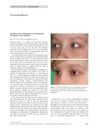
November 2009 in “Clinical and Experimental Dermatology” This case study describes a 16-year-old girl with alopecia areata affecting her eyelashes and eyebrows, who showed very limited response to treatment with topical mometasone furoate and subsequent partial hair loss upon stopping the treatment.
 56 citations
,
August 2020 in “American Journal of Clinical Dermatology”
56 citations
,
August 2020 in “American Journal of Clinical Dermatology” This study concluded that the ClinRO and PRO measures, along with their photoguides, offer clear and meaningful assessments for patients with alopecia areata concerning eyebrow, eyelash, and nail appearance, as well as eye irritation.
 3 citations
,
May 2011 in “International Journal of Dermatology”
3 citations
,
May 2011 in “International Journal of Dermatology” In this study, using a 16G epidural needle for preparing the recipient area in hair implantation minimized grafts popping out and resulted in a natural-looking hairline with satisfactory graft survival.
This study developed a novel protocol that demonstrated improved localized delivery of minoxidil to eyebrow application sites with minimal runoff, compared to a control formulation.
January 2026 in “Updates in clinical dermatology” This chapter provides dermatologists with an overview of scalp and eyebrow camouflage products, techniques, and procedures, including topical products, hair prostheses, and cosmetic tattoos, to better manage hair loss encounters outside traditional medical care, as noted by the authors.

In this study, a strong positive correlation was found between clinician-reported and patient-reported measures for assessing eyebrow and eyelash hair loss in patients with severe alopecia areata, indicating high agreement during treatment with baricitinib over 52 weeks.
69 citations
,
April 2010 in “Clinical ophthalmology” This article reviews the use of bimatoprost for eyelash hypotrichosis and reports its effectiveness in promoting eyelash growth but highlights uncertain efficacy in cases of eyelash alopecia areata.
 May 2022 in “Hair transplant forum international”
 This study concluded that hair transplants including the parietal eminence area can enhance aesthetic balance and provide indirect cosmetic benefits, even when the vertex is left untreated due to limited donor availability.
 July 2023 in “Annals of King Edward Medical University”
 This randomized clinical trial compared bimatoprost 0.03% solution and mometasone furoate 0.1% cream for treating alopecia areata in 60 patients, finding that mometasone furoate led to better hair regrowth, while both treatments showed significant effectiveness.
January 2009 in “Journal of Tissue Engineering and Reconstructive Surgery” This study found that using small-unit hair transplantation with a No.16 hollow needle, followed by minoxidil, was effective for treating alopecia or low eyebrow density in 25 patients.
April 2010 in “PubMed Central” This abstract discusses the FDA approval of Latisse (bimatoprost) for increasing eyelash growth in patients with eyelash hypotrichosis and highlights its efficacy while noting unresolved effectiveness in certain conditions and potential side effects.
1 citations
,
December 2019 in “Clinical ophthalmology” This study found that bimatoprost eye drops increased eyelash length, thickness, pigmentation, and the number of eyelashes per follicle in rabbits, without causing inflammation.
 September 2023 in “Clinical anatomy”
 This study examined the subcutaneous structures in forehead creases using cadavers and observed that dense fibrous structures connecting the dermis to the frontalis muscle, as well as specific epidermal and dermal characteristics, may contribute to the formation of these creases.
 October 2022 in “Facial Plastic Surgery Clinics of North America”
 This article highlights key considerations for hair restoration surgery, noting that surgeons must account for differences in esthetic ideals, hair characteristics, and healing properties across different ethnic groups to achieve optimal outcomes.
 2 citations
,
February 2016 in “British Journal of Dermatology”
2 citations
,
February 2016 in “British Journal of Dermatology” This study found that topical bimatoprost significantly improved eyelash growth in individuals with idiopathic and chemotherapy-induced eyelash hypotrichosis compared to a vehicle treatment.
 October 2025 in “Indian Dermatology Online Journal”
 In this case report, an elderly woman was diagnosed with tinea capitis and eyebrow involvement, which was initially misdiagnosed as alopecia areata, illustrating the importance of trichoscopy in correctly identifying this infection even in uncommon sites like the eyebrow.
 May 2023 in “Dermatology and therapy”
 This study aims to provide a practical guide for managing common causes of madarosis, highlighting the need to identify underlying causes to ensure effective treatment for eyelash and eyebrow loss.
172 citations
,
December 1994 in “The Journal of Dermatologic Surgery and Oncology” This study introduces a hair transplantation method combining elliptical excision and micrografting, suggesting it provides significant cosmetic improvements for androgenetic alopecia.
October 2025 in “The Laryngoscope” In this study, hairline lowering using the Endotine Forehead-mini showed significant, sustained improvement in facial harmony with a reduction in the upper facial third ratio; however, 26% of patients experienced complications, including transient alopecia and the need for additional surgery.
 2 citations
,
January 2014 in “Archives of Aesthetic Plastic Surgery”
2 citations
,
January 2014 in “Archives of Aesthetic Plastic Surgery” The authors concluded that total hairline correction, which addresses multiple areas beyond the frontotemporal recess, is more effective in improving aesthetic facial balance for women with M-shaped or rectangular hairlines.
 September 2022 in “Journal of The American Academy of Dermatology”
 This study found that baricitinib was effective in regrowing eyebrow and eyelash hair in patients with severe alopecia areata, with similar improvements observed in both clinician-reported and patient-reported measures.
 2 citations
,
April 2018 in “Journal of Cosmetic Dermatology”
2 citations
,
April 2018 in “Journal of Cosmetic Dermatology” This study found that hair shaft exit angles in patients undergoing strip hair restoration increased after the tumescence injection and further increased after strip excision.
 April 2016 in “British Journal of Dermatology”
 Eyelashes are important for looks and eye protection, and more people are treating sparse eyelashes; more research is needed to understand eyelash biology and improve treatments.
1 citations
,
January 2014 in “Indian journal of dermatology, venereology, and leprology” Papular mucinosis can cause eyebrow hair loss, but treatment can lead to regrowth.
 20 citations
,
November 2009 in “European Journal of Dermatology”
20 citations
,
November 2009 in “European Journal of Dermatology” This study found that topical latanoprost was not effective in treating alopecia areata in eyebrows and eyelashes.
6 citations
,
August 2005 in “Facial Plastic Surgery Clinics of North America” This article discusses techniques to avoid common signs of facial rejuvenation surgery and reports no new clinical results; it emphasizes preventing recognizable outcomes like unnatural hairlines and ear deformities.
 1 citations
,
January 2015 in “Actas dermo-sifiliográficas/Actas dermo-sifiliográficas”
1 citations
,
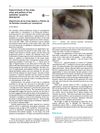
January 2015 in “Actas dermo-sifiliográficas/Actas dermo-sifiliográficas” Latanoprost eye drops caused excessive cheek hair growth and eyelash whitening in a woman.
September 2024 in “Journal of the American Academy of Dermatology” Eyebrow and eyelash regrowth usually matches scalp hair response in alopecia areata patients treated with baricitinib.
 69 citations
,
April 2010 in “Dermatologic Surgery”
69 citations
,
April 2010 in “Dermatologic Surgery” This review discusses the safety and efficacy of bimatoprost ophthalmic solution 0.03% for enhancing eyelash growth by influencing the eyelash hair cycle and follicles, and it reports no new results.
 October 2024 in “Journal of Cutaneous and Aesthetic Surgery”
 The authors suggest that during hair transplantation for hair loss, the parietal eminence area should be prioritized along with the mid-scalp to address future noticeable thinning, especially since this area often becomes more conspicuous over time.