37 citations
,
October 2014 in “JAMA dermatology” This case report describes a woman with alopecia universalis, resistant to multiple treatments, who experienced successful hair regrowth with adalimumab, suggesting potential mechanisms for future investigation.
 1 citations
,
April 2019 in “Journal of Investigative Dermatology”
1 citations
,
April 2019 in “Journal of Investigative Dermatology” This study examined the safety and efficacy of dupilumab in adolescents with moderate-to-severe atopic dermatitis, finding that it was well tolerated and significantly improved symptoms over 52 weeks, with its safety profile similar to that in adults.
 1 citations
,
October 2021 in “Deleted Journal”
1 citations
,
October 2021 in “Deleted Journal” This case report details a 46-year-old woman with severe atopic dermatitis and alopecia areata universalis who experienced renewed hair growth and improved skin symptoms after starting dupilumab therapy.
This study observed that patients using dupilumab for atopic dermatitis or chronic rhinosinusitis with nasal polyps may experience new-onset or worsening paradoxical alopecia areata, potentially due to unopposed Th1/Th17 immune activity following Th2 pathway blockade.
 May 2026 in “SHILAP Revista de lepidopterología”
 In this case report, a 7-year-old girl with severe alopecia areata and high baseline IgE levels achieved complete hair regrowth after 48 weeks of dupilumab therapy, with observed decreases in IgE levels and no significant adverse effects beyond a mild initial allergic reaction.
 January 2025 in “Recent Patents on Anti-Cancer Drug Discovery”
 In this study, neoadjuvant treatment with durvalumab combined with albumin-bound paclitaxel and carboplatin in patients with driver gene-negative stage III NSCLC showed a 65% objective response rate and was associated with high pathological response rates and improved immune function, with most adverse events being mild.
 September 2024 in “Cureus”
 This case report describes how changing treatment from adalimumab to guselkumab successfully controlled both pustulotic arthro-osteitis and paradoxical skin reactions in a patient with palmoplantar pustulosis.
 February 2026 in “Journal of Drugs in Dermatology”
 This case study reports on a 13-year-old male with alopecia totalis who experienced successful hair regrowth after being treated with dupilumab, an interleukin-4 and IL-13 antagonist, suggesting its potential utility in managing alopecia areata in pediatric patients with comorbid atopic dermatitis.
 October 2024 in “Canadian Journal of Health Technologies”
 This CADTH recommendation advises that Olumiant should be publicly reimbursed for treating severe alopecia areata in adults, provided conditions such as a 50% scalp hair loss and specific prescribing criteria are met.
 3 citations
,
December 2021 in “Dermatology reports”
3 citations
,
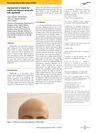
December 2021 in “Dermatology reports” This study presents a reported case where dupilumab treatment for atopic dermatitis led to improvement in alopecia universalis.
3 citations
,
September 2021 in “JAAD case reports” This review discusses the increased autoimmune events associated with the use of denosumab, a biologic agent for managing postmenopausal osteoporosis and skeletal complications from malignancy, but reports no new data.
September 2024 in “Вопросы современной педиатрии” This study reported that dupilumab led to significant reduction in skin rash severity and complete hair regrowth in an 11-year-old boy with severe alopecia areata and atopic dermatitis.
 3 citations
,
May 2015 in “Journal of The American Academy of Dermatology”
3 citations
,
May 2015 in “Journal of The American Academy of Dermatology” Adalimumab significantly improves quality of life for patients with moderate to severe hidradenitis suppurativa.
33 citations
,
January 2019 in “Acta Dermato Venereologica” This case report suggests potential effectiveness of dupilumab for alopecia areata, though hair regrowth may result from indirect effects on inflammation in atopic dermatitis.
9 citations
,
July 2016 in “JAAD case reports” This study found that biologic therapies, particularly anti-TNF-alpha agents, have been linked to increased cases of alopecia areata in patients treated for autoimmune disorders.
 August 2023 in “Clinical and experimental dermatology and therapies”
 This study observed mixed responses to dupilumab in patients with both atopic dermatitis and alopecia areata, suggesting a potential role for Th2 axis dysregulation in alopecia areata.
25 citations
,
May 2019 in “Biologics” In this case report, a 28-year-old woman developed a rash on her face and neck after receiving a dupilumab injection for atopic dermatitis.
 March 2021 in “International Journal of Clinical Dermatology & Research”
 Dupilumab can help regrow hair in alopecia areata but stopping it may cause hair loss again.
December 2025 in “Skin Health and Disease” This case report details the development of a psoriasiform rash and inflammatory alopecia in a 29-year-old man with severe atopic dermatitis following dupilumab treatment. The authors observed hair regrowth and eczema control after discontinuing dupilumab and beginning treatment with abrocitinib.
May 2026 in “SKIN The Journal of Cutaneous Medicine” This case report presents the first known instance of bimekizumab improving psoriatic scarring alopecia, suggesting potential benefits of dual IL-17A/IL-17F blockade for this rare and challenging condition, warranting further investigation.
1 citations
,
January 2025 in “International Journal of Dermatology” This study found that in patients with alopecia areata and atopic dermatitis, 61.5% showed improvement with dupilumab treatment, but 38.5% experienced worsened or new-onset alopecia areata, with higher baseline IgE levels linked to better responses.
 May 2025 in “The Journal of Rheumatology”
 In this case report, two patients with polyautoimmunity and difficult-to-treat lupus erythematosus experienced significant symptom improvement after adding anifrolumab to their regimen, suggesting its potential as an effective add-on therapy for refractory cutaneous symptoms in autoimmune conditions characterized by elevated interferon alpha activity.
1 citations
,
August 2021 in “Journal of Investigative Dermatology” ASLAN004 was safe and well-tolerated, supporting further development for treating certain diseases.
 26 citations
,
July 2019 in “JAAD Case Reports”
26 citations
,
July 2019 in “JAAD Case Reports” This study reports two cases of hair loss outcomes in patients using dupilumab for atopic dermatitis, with one showing improvement in alopecia universalis and another experiencing worsening of alopecia totalis.
February 2025 in “Diagnostics” In this study, JAK inhibitors significantly improved outcomes for patients with both atopic dermatitis and alopecia areata, while dupilumab was linked to worsening alopecia in some cases.
 2 citations
,
July 2023 in “Journal of cosmetic dermatology”
2 citations
,
July 2023 in “Journal of cosmetic dermatology” In this study, JAK inhibitors like baricitinib and ruxolitinib were found to be more effective and caused fewer discontinuations due to adverse events in adults with alopecia areata compared to therapies like dupilumab and apremilast, highlighting the need for more high-quality comparative trials.
12 citations
,
July 2012 in “Journal of cutaneous medicine and surgery” This study reported that adalimumab was well tolerated in patients with severe alopecia areata but did not lead to significant hair regrowth.
 November 2023 in “The journal of investigative dermatology/Journal of investigative dermatology”
 In this study, topical application of adipose stem cell exosomes was found to reduce facial redness in atopic dermatitis patients treated with dupilumab, while improving skin hydration and decreasing inflammation markers over 12 weeks.
 May 2025 in “The Journal of Rheumatology”
 In this case report, two patients with coexisting systemic lupus erythematous and neuromyelitis optica spectrum disorder achieved remission of SLE activity using an anti-CD19 monoclonal antibody.