September 2022 in “European Journal of Dermatology” This study identified a novel pathogenic splice-site variant of the LAMB3 gene in patients with junctional epidermolysis bullosa, highlighting the importance of gene sequencing for diagnosis.
250 citations
,
November 2003 in “The Journal of Cell Biology” This study found that BMP receptor IA is crucial for hair progenitor cell differentiation in mice, and its sequential inhibition and activation are necessary to generate a functioning hair shaft.
In this study, researchers observed that oncogenic HrasG12V in single murine epidermal cells leads to an initial increase in progenitor cell renewal, but ultimately results in balanced cell fate choices that limit clone growth.
 93 citations
,
May 2010 in “European Journal of Cancer”
93 citations
,
May 2010 in “European Journal of Cancer” This phase II trial found that BI 2536 demonstrated limited antitumor activity across five solid tumor types, with no confirmed objective responses observed.
December 2021 in “Figshare” This study found that BBS7 is crucial for maintaining Shh signaling and periodontal ligament homeostasis, with occlusal hypofunction leading to its downregulation and impacting cell migration and angiogenesis.
9 citations
,
October 2017 in “Frontiers in plant science” This study found that the peach gene CTG134 mediates auxin-ethylene crosstalk, affecting root hair growth and hormone-regulated processes in plants.
January 2008 in “HAL (Le Centre pour la Communication Scientifique Directe)” This study identified complex regulatory elements and interactions involving the Hr gene and HR protein that are crucial for hair follicle formation and cycling in mammals.
1 citations
,
October 2022 in “Biomedicines” This study found that Prdm1 is crucial for whisker development in mice, affecting multiple signaling pathways and possibly playing a role in primates' evolutionary loss of vibrissae.
January 2014 in “eScholarship (California Digital Library)” This dissertation reports that Lrig1 and Lgr6 mark distinct stem cell populations in mouse hair follicles, playing roles in tissue regeneration and tumor development, with Lgr6 regulating Wnt signaling and restraining epidermal lineage commitment.
41 citations
,
February 2005 in “Experimental Cell Research” This study suggests that the MAEG protein may facilitate epithelial–mesenchymal interactions during hair follicle development by binding to RGD-binding integrins like α8β1.
125 citations
,
February 2007 in “The EMBO Journal” Fgfr2b helps maintain healthy skin and prevent cancer.
1 citations
,
January 2015 in “The Journal of Dermatology” This letter to the editor presents a case of non-Herlitz junctional epidermolysis bullosa associated with a COL17A1 mutation and reports no new clinical findings.
10 citations
,
December 2021 in “Frontiers in Cell and Developmental Biology” This study suggests that BBS7 is crucial for maintaining Sonic hedgehog signaling activity, which is essential for periodontal ligament homeostasis under occlusal hypofunction conditions.
43 citations
,
January 1999 in “Endocrinology” This study found that cortisol increases mac25/IGFBP-rP1 expression in osteoblast-enriched cells from fetal rat calvariae, indicating transcriptional regulation which may influence IGF and insulin effects in bone.
 January 2024 in “Wiadomości Lekarskie”
 This study reports that Abelson Interactor 1 (ABI1) regulates androgen receptor transcription in prostate cancer, identifying it as a potential target for new therapies addressing treatment resistance.
 September 2025 in “Journal of Cosmetic Dermatology”
 In this study, the use of rb‐bFGF in hair transplantation significantly increased follicle survival, reduced hair loss, improved patient satisfaction, and decreased complications compared to controls, in patients with androgenetic alopecia over a 12-month period.
 February 2022 in “Research Square (Research Square)”
 This study demonstrated that LGR5 is a marker of hair follicle stem cells across species using a transgenic pig model and noted similarities and differences in expression patterns compared to humans.
December 2021 in “OPAL (Open@LaTrobe) (La Trobe University)” This study found that BBS7 is crucial for maintaining Sonic hedgehog signaling activity and periodontal ligament homeostasis, with changes in gene expression observed in occlusal hypofunctional PDL.
This study identified a 14,883 bp genomic deletion affecting the Plcd1 and Vill genes as likely responsible for the abnormal phenotype observed in snthr-1Bao mice.
 June 2023 in “British Journal of Dermatology”
 In this case report, researchers described a female child with total alopecia due to a mutation in the SNRPE gene, emphasizing the need for updated genetic testing as knowledge advances to avoid diagnostic delays in hereditary nonsyndromic hypotrichosis.
 April 1981 in “Pediatric research”
 This study found that abnormal liver and kidney copper metabolism in Br females had no clinical effects, whereas defective brain copper metabolism in Br males was clinically significant.
 59 citations
,
April 2016 in “Cell Reports”
59 citations
,
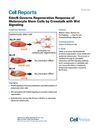
April 2016 in “Cell Reports” This study demonstrated that EdnrB signaling promotes melanocyte stem cell proliferation and differentiation, enhancing hair and epidermal melanocyte regeneration, especially under conditions of active Wnt signaling.
 September 2021 in “Research Square (Research Square)”
 This study reports that despite rescuing neurulation and skin barrier defects, Grhl3 gene overexpression in mice leads to hearing impairment, hair loss, and other developmental abnormalities, highlighting low tolerance for Grhl3 dysregulation.
11 citations
,
April 2021 in “Cancers” This study identified a small molecule that activates GLI1, suppressing neuroblastoma cell growth, which may aid in developing new treatments for high-risk neuroblastoma cases.
324 citations
,
May 2002 in “Oncogene” April 2010 in “Cancer Research” This study found significant upregulation of IDO-1 and IDO-2 in human basal cell carcinomas, suggesting that IDO production may confer immune privilege characteristics to the tumors, potentially impacting their growth.
7 citations
,
May 2022 in “Cancers” This study found that UC.145 influences DKK1 methylation and Wnt signaling in gastric cancer, with implications for patient survival and its potential as a predictive biomarker.
 May 2026 in “Discover Oncology”
 This review discusses the role of LGR4 in tumors, highlighting its involvement in cancer progression, metastasis, and chemotherapy resistance, as well as its regulatory effects on tumor stem cell self-renewal and stem cell characteristics, based on multiple recent studies.
 20 citations
,
September 2010 in “Cell Cycle”
20 citations
,
September 2010 in “Cell Cycle” This study reports that in MRL mice, loss of p53 does not impair ear regeneration, suggesting p21's potential role in this process may involve the Tgfb/Smad pathway.
 July 2025 in “Scientific Reports”
 In this study, researchers identified six novel prognostic biomarkers for bladder cancer and developed a predictive model that effectively stratifies patients into high-risk and low-risk groups based on immune cell infiltration differences and gene expression.