 1 citations
,
August 2024 in “Polymers”
1 citations
,
August 2024 in “Polymers” This review discusses recent advances in protein immobilization on bacterial cellulose for various biomedical uses and reports no new clinical results.
2 citations
,
September 2022 in “Annals of Oncology” This study observed that MIRV improved gastrointestinal symptoms and other quality of life measures in patients with platinum-resistant ovarian cancer compared to chemotherapy.
July 2024 in “Journal of Investigative Dermatology” INTASYL is a promising, adaptable RNAi technology for treating skin cancers.
60 citations
,
October 2020 in “Nature Communications” This study found that small molecule AP-1 inhibitors may selectively target SMO inhibitor-resistant basal cell carcinoma cells characterized by specific markers, potentially enhancing combinatorial cancer therapies.
August 2025 in “JAAD International” Bicalutamide may reduce hair shedding in women but needs longer trials to confirm its effectiveness.
 15 citations
,
January 2023 in “Biomaterials Research”
15 citations
,
January 2023 in “Biomaterials Research” This review explores the application and implications of 3D bioprinting in plastic surgery but reports no new clinical results, emphasizing its potential benefits and challenges for future research.
 7 citations
,
March 2019 in “Dermatologic surgery”
7 citations
,
March 2019 in “Dermatologic surgery” In this randomized trial, bimatoprost 0.01% significantly improved eyebrow hair density and diameter in patients with eyebrow hypotrichosis compared to a placebo, with minimal adverse effects, suggesting it is an effective and safe treatment option.
28 citations
,
October 2023 in “Trends in biotechnology” 1 citations
,
October 2023 in “European Journal of Dermatology” This study found that combining hair transplantation with platelet-rich plasma treatment significantly improved hair regeneration, reduced hair loss, and minimized skin lesion areas in patients with androgenic alopecia compared to hair transplantation alone, suggesting enhanced treatment efficacy.
 13 citations
,
July 1996 in “Annals of Internal Medicine”
13 citations
,
July 1996 in “Annals of Internal Medicine” This article reports the first case of group B streptococcal meningitis in an HIV-positive patient who had previously undergone a splenectomy.
 January 2016 in “대한피부과학회지”
 This case report describes two patients experiencing a bortezomib-induced skin eruption as multiple plaques on the trunk, with the lesions resolving spontaneously in about a week.
2 citations
,
December 2024 in “Journal of Photochemistry and Photobiology B Biology” This study suggests that pulsed wave photobiomodulation could be a promising treatment for androgenetic alopecia by enhancing dermal papilla cell function through specific light parameters, particularly frequency.
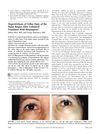 15 citations
,
March 2004 in “American Journal of Ophthalmology”
15 citations
,
March 2004 in “American Journal of Ophthalmology” This case report found that topical bimatoprost in a female Hispanic patient with glaucoma led to increased hair growth and pigmentation in the malar region, which resolved after discontinuing use and epilation.
 33 citations
,
December 2012 in “NMR in Biomedicine”
33 citations
,
December 2012 in “NMR in Biomedicine” This study reports that microencapsulation of therapeutic cells with contrast agents enables visualization across multiple imaging modalities, potentially improving cellular immunoprotection and tracking after transplantation.
This review highlights the potential analytic interference of high-dose biotin with immunochemical tests, which may lead to diagnostic errors and suggests pausing biotin consumption before laboratory testing.
49 citations
,
August 2022 in “Materials Today Bio” This review discusses 3D bioprinting methods for urological diseases, noting its potential to create functional organs for transplantation despite challenges in replicating organ complexity and material limitations.
 November 2009 in “Regenerative Medicine”
 This industry report describes several new collaborations and licensing agreements in the field of regenerative medicine, focusing on stem cell technologies, and reports no new clinical results.
 May 2023 in “Brazilian Journal of Animal and Environmental Research”
 In this study, photobiomodulation therapy using EccoVet® equipment was applied to a canine patient with alopecia, leading to noticeable hair regrowth after just one session and complete improvement after five, highlighting its potential as a fast, non-invasive treatment for canine alopecia.
![Discovery of 7-Methoxy-6-[4-(4-Methyl-1,3-Thiazol-2-yl)-1H-Imidazol-5-yl]-1,3-Benzothiazole (TASP0382088): A Potent and Selective Transforming Growth Factor-β Type I Receptor Inhibitor as a Topical Drug for Alopecia](/images/assets/9620bd26-3366-4f2a-bcac-f511697bbc41/small/35997.jpg) 6 citations
,
January 2013 in “Chemical & pharmaceutical bulletin/Chemical and pharmaceutical bulletin”
6 citations
,
January 2013 in “Chemical & pharmaceutical bulletin/Chemical and pharmaceutical bulletin” In this study, TASP0382088 showed potent selective inhibition of the ALK5 receptor, significantly reducing Smad2 phosphorylation in mouse skin following topical application.
May 2026 in “SKIN The Journal of Cutaneous Medicine” This case report presents the first known instance of bimekizumab improving psoriatic scarring alopecia, suggesting potential benefits of dual IL-17A/IL-17F blockade for this rare and challenging condition, warranting further investigation.
This study developed a novel FRET-based 3D in vitro breast tumor model that can non-invasively evaluate drug-induced effects, showing its potential as an intermediary screening platform for cancer drugs.
39 citations
,
May 2015 in “Advanced drug delivery reviews” This review discusses skin tissue engineering and highlights the potential role of microRNAs in improving bioengineered skin equivalents, concluding that further exploration of microRNA targets could address unmet clinical needs.
May 2025 in “Journal of the American Academy of Dermatology” Bicalutamide shows promise for treating female hair loss.
SMP creates illusion of full hair, addressing various issues and bringing happiness to those with thinning hair.
 7 citations
,
December 2017 in “Open Access Macedonian Journal of Medical Sciences”
7 citations
,
December 2017 in “Open Access Macedonian Journal of Medical Sciences” This abstract outlines the historical development and medical validation of artificial hair implants, particularly the approval and improvement of the Biofibre® implant technique in Europe and Australia, and highlights its advantages as the latest advancement in hair restoration treatments.

This study developed and tested continuous implanters for dermal papilla cell aggregates, finding that the bar-cartridge type implanter is the most effective design for continuous cell implantation in androgenetic alopecia research.
June 2020 in “Zenodo (CERN European Organization for Nuclear Research)” In this study, the authors observed that controlled microflora in gnotobionts leads to delayed maturation of T-dependent lymphocytes in the thymus, affecting cellular immunity reactions.
 February 2025 in “Journal of Nanobiotechnology”
 This study developed a microneedle system using black phosphorus nanosheets and baicalin for treating androgenetic alopecia, finding it effectively enhanced drug penetration and follicular targeting while showing synergistic efficacy and safety in preclinical tests, including in vivo model efficacy against testosterone-induced hair loss.
3 citations
,
April 2021 in “Oncology Times” This study reports that sacituzumab govitecan achieved a 33.3% overall response rate in patients with metastatic triple-negative breast cancer who had prior treatments, with a median response duration of 7.7 months.