9 citations
,
June 2024 in “BMC Genomics” This study identified genetic variations associated with black and white wool color in Gangba sheep, enhancing understanding of wool color genetics and aiding selective breeding for specific wool colors in Tibetan sheep.
September 1973 in “Primates”  19 citations
,
August 2011 in “Facial Plastic Surgery Clinics of North America”
19 citations
,
August 2011 in “Facial Plastic Surgery Clinics of North America” This article discusses the use of hair transplantation as a reconstructive method to restore hair in various areas affected by defects, highlighting its advantages in providing natural-looking restoration.
This study found that a data-driven model using XGBoost effectively predicts individualized responses to minoxidil for androgenetic alopecia, outperforming traditional methods in accuracy and reliability.
5 citations
,
October 2023 in “International Journal on Recent and Innovation Trends in Computing and Communication” In this study, researchers developed a novel image processing method using a multi-class support vector machine that achieved an 89.3% accuracy in classifying alopecia areata and related conditions, outperforming existing models in classification accuracy.
 4 citations
,
October 2009 in “Skin research and technology”
4 citations
,
October 2009 in “Skin research and technology” This study found that tristimulus colorimetry is a sensitive and quantitative method for projecting hair growth rates in depilated mice, and it observed that 890 nm LED irradiation promotes hair regrowth.
 April 2024 in “Pharmacoepidemiology and drug safety (Print)”
 This study found that using at least one ICD-10 code for alopecia in Medicaid claims data accurately identified alopecia in women of childbearing age, with positive predictive values between 95.3% and 100% across various algorithms tested.
18 citations
,
February 2017 in “Molecular Medicine Reports” This study found that the Notch signaling pathway is suppressed in basal cell carcinomas and highly expressed in hair follicles, suggesting it might be a target for treatment strategies.
December 2022 in “JEADV Clinical Practice” In this study, researchers found that using a handheld digital microscope, hair diameter was a better determinant of perceived alopecia severity in androgenetic alopecia than hair density.
July 2025 in “Journal of Investigative Dermatology” Complex basal cell carcinomas need personalized treatment due to unique genetic mutations.
 3 citations
,
June 2023 in “Advanced Materials”
3 citations
,
June 2023 in “Advanced Materials” This study reported that a self-pumping organohydrogel dressing equipped with hydrophilic fractal microchannels significantly increased exudate drainage efficiency and enhanced burn wound healing in mice, reducing dermal cavity size and accelerating blood vessel and hair follicle regeneration compared to commercial dressings.
 July 2023 in “Journal of Cosmetic Dermatology”
 This study investigated AGA professionals' perspectives and found that 42% were misled by commercial influences, underestimated these biases' extent, and faced ethical challenges in treatment due to societal pressures and misinformation, highlighting a need for evidence-based guidance and research scrutiny tools.
3 citations
,
June 2023 in “Frontiers in Medicine” This study constructed a model using serum levels of BMP2, CD8A, PRF1, and XCL1 as a non-invasive biomarker to accurately predict recurrence in patients with alopecia areata.
 3 citations
,
October 2010 in “Dermatologic Surgery”
3 citations
,
October 2010 in “Dermatologic Surgery” The new surgical technique for vitiligo is effective, safe, and cost-efficient.
26 citations
,
October 2020 in “Biomedicines” This review discusses the applications and potential of Bioengineered Artificial Skin Substitutes in cosmetics and pharmacology research, with no new clinical findings reported.
May 2007 in “Archives of Plastic Surgery” This study found that the Frechet flap technique provided aesthetically satisfactory outcomes for correcting the central slot defect created by scalp reduction surgery in the observed patients.

This study found that the attractiveness of women's faces had a significant but weak effect on negative emotions among participants, while website background color influenced positive emotions with green being preferred.
86 citations
,
January 2020 in “British Journal of Dermatology” This study developed the Alopecia Areata Investigator Global Assessment (AA-IGA) to measure scalp-hair loss in alopecia areata patients, incorporating perspectives of both patients and clinicians to define treatment success.
 December 2025 in “Zenodo (CERN European Organization for Nuclear Research)”
 This paper identifies Galeal Tension-Induced Follicular Hypoxia as a mechanism for male pattern baldness, proposing a new therapeutic protocol targeting underlying physiological failures rather than just symptoms.
 51 citations
,
May 2019 in “Biomaterials”
51 citations
,
May 2019 in “Biomaterials” This study developed a method for generating germ-like tissues called bbHFGs, which efficiently promoted hair follicle formation in mice, potentially advancing hair regenerative medicine applications.
 58 citations
,
April 2012 in “Journal of the American Academy of Dermatology”
58 citations
,
April 2012 in “Journal of the American Academy of Dermatology” Graft-versus-host disease is a complication where donor immune cells attack the recipient's body, often affecting the skin, liver, and gastrointestinal tract.
23 citations
,
December 2008 in “Pediatric neurology” This study reports two new cases of Gomez-Lopez-Hernandez syndrome and suggests that trigeminal anesthesia and/or partial scalp alopecia may be key criteria for diagnosis.
 1 citations
,
September 2017
1 citations
,
September 2017 This study found that the combination of Stemoxydine® and Resveratrol improved hair density in women with Female Pattern Hair Loss.
 August 2010 in “Journal of The American Academy of Dermatology”
 This educational activity reports no new research findings; it aims to help physicians assess and improve their clinical skills through self-evaluation and continued medical education.
This study suggests that estimating autism likelihood as early as one month after birth may enable more precise early intervention for children with developmental support needs, potentially improving diagnosis, workflows, and reducing service wait times.
2 citations
,
May 2022 in “The journal of immunology/The Journal of immunology” In vivo using the C3H mouse model, this study observed that BST2 expression occurs before hair loss in alopecia areata and is followed by an increase in epidermal γδ T cell numbers.
 May 2015 in “Actas Dermo-Sifiliográficas”
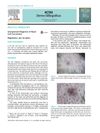
 A young man was unexpectedly diagnosed with basal cell carcinoma after a scalp examination and confocal microscopy.

This study evaluated AI chatbots' responses to scabies-related questions, finding DeepSeek had the highest accuracy despite higher hallucination rates, while ChatGPT-5.2 provided more readable and reliable information, highlighting variability and the need for cautious use of AI in health queries.
46 citations
,
December 2018 in “Biomedical Optics Express” In this study, researchers observed that Raman spectroscopy effectively differentiates basal cell carcinoma from normal skin structures by analyzing biochemical markers, suggesting its potential as a surgical guidance tool for cancer margin resection during Mohs surgery.