 4 citations
,
November 2021 in “Journal of Cosmetic Dermatology”
4 citations
,
November 2021 in “Journal of Cosmetic Dermatology” The researchers reported that QR678 Neo® combined with intralesional steroids significantly improved hair regrowth and patient satisfaction in treating alopecia areata compared to steroids alone.
 1 citations
,
April 2019 in “Acta Medica Philippina”
1 citations
,
April 2019 in “Acta Medica Philippina” This review discusses emerging evidence on azathioprine's efficacy and safety for severe alopecia areata, reporting sustained response in many patients but emphasizing the need for controlled trials.
December 2024 in “PubMed” In a case-series study, researchers reported significant hair regrowth in Alopecia Areata patients after three months of treatment with a topical preparation called Freezia cream, which was developed by specialized medical professionals and approved by the Iraqi Ministry of Health.
 August 1995 in “Journal of The European Academy of Dermatology and Venereology”
 New therapy helps treat hair loss.
 April 2016 in “Journal of The American Academy of Dermatology”
 Ixekizumab is effective and safe for patients who did not improve with etanercept treatment for psoriasis.
 April 2019 in “The journal of investigative dermatology/Journal of investigative dermatology”
 This study evaluated current treatments for pediatric alopecia areata and found that high potency topical steroids had the strongest supporting evidence, with promising results also observed for anthralin ointment and other treatments in lower-grade studies.
 11 citations
,
August 2007 in “Bioorganic & Medicinal Chemistry Letters”
11 citations
,
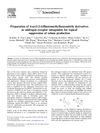
August 2007 in “Bioorganic & Medicinal Chemistry Letters” This study found that among the tested analogs, compound 4e was the most effective in inhibiting wax esters in vivo in the Golden Syrian hamster ear model.
52 citations
,
December 2014 in “Journal of Dermatological Science” Apremilast may help treat hair loss in alopecia areata.
 June 2025 in “Deleted Journal”
 In this case report, two Persian cats with Lynxacarus radovskyi fur mites and symptoms like mild alopecia and pruritus fully recovered after receiving selamectin spot-on treatment monthly for three months.
12 citations
,
January 2013 in “Indian Journal of Dermatology” This case report on a 13-year-old boy with monilethrix observed slight improvement after a two-month trial of oral N-acetyl cysteine, but overall hair density did not improve further.
 19 citations
,
July 2020 in “Journal of drug delivery science and technology”
19 citations
,
July 2020 in “Journal of drug delivery science and technology” This study found that nano-sized minoxidil formulations significantly increased skin penetration and follicular drug delivery for alopecia areata treatment, compared to conventional ethanol-based solutions, and demonstrated effective controlled release over six hours.
3 citations
,
November 2024 in “Clinical Research” This article discusses the immune mechanisms involved in alopecia areata, focusing on T-cell activity and cytokine-driven JAK signaling, but reports no new clinical results.
November 2025 in “SKIN The Journal of Cutaneous Medicine” This study evaluated the long-term safety of ritlecitinib in adolescents with alopecia areata and found it to be well-tolerated without new safety concerns over approximately five years, with common adverse events including positive SARS-CoV-2 tests, acne, headache, and nasopharyngitis.
 2 citations
,
May 2021 in “Clinical Pharmacology in Drug Development”
2 citations
,
May 2021 in “Clinical Pharmacology in Drug Development” This phase 1 study reported that after administering supratherapeutic doses of cortexolone 17α‐propionate, a topical antiandrogen intended for hair loss treatment, there was no effect on the QTc interval, indicating no measurable cardiac safety concerns in the concentration range tested.
 August 2018 in “Journal of The American Academy of Dermatology”
 Ozenoxacin 1% cream is an effective and safe treatment for impetigo in children and adults.
This study found that niosomal aminexil was more clinically effective for hair growth than conventional aminexil solutions, and that niosomes facilitated aminexil penetration through rat skin without propylene glycol.
![Synthesis, Biological Evaluation, and Molecular Docking of 4-Amino-2H-benzo[h]chromen-2-one Analogs Containing the Piperazine Moiety](/images/assets/2ecf4eed-7dbe-4f1a-83db-739625546cdd/small/31808.jpg) 7 citations
,
August 2019 in “Bioorganic & medicinal chemistry”
7 citations
,
August 2019 in “Bioorganic & medicinal chemistry” This study identified novel 4-Amino-2H-benzo[h]chromen-2-one analogs as potent androgen receptor antagonists that show strong antiproliferative activity against prostate cancer cells, suggesting them as potential lead compounds for therapy development.
 July 2026 in “Zenodo (CERN European Organization for Nuclear Research)”
 In this study, in silico analysis identified Saponin Re and Emodin as promising candidates for topical treatment of androgenetic alopecia, with Biochanin A having the most favorable safety profile among the tested compounds.
 24 citations
,
July 1983 in “Clinical and Experimental Dermatology”
24 citations
,
July 1983 in “Clinical and Experimental Dermatology” Tigason improved hair growth in a boy with monilethrix without side effects.
 July 2003 in “Pediatrics in review”
 This article reviews 12 newly approved drugs with pediatric indications from 2001, discussing their clinical importance for general pediatricians, but reports no new clinical results.
 July 2026 in “Zenodo (CERN European Organization for Nuclear Research)”
 This study evaluated Korean herbal compounds in silico and identified Biochanin A, Saponin Re, and Emodin as potential topical treatments for androgenetic alopecia, each with specific safety and efficacy considerations.
2 citations
,
October 2025 in “Frontiers in Medicine” This study found that deuruxolitinib may effectively improve hair regrowth and patient satisfaction in moderate to severe alopecia areata, but careful monitoring is needed due to manageable side effects and concerns about long-term safety.
4 citations
,
December 2014 in “Dermatologica sinica/Zhōnghuá pífūkē yīxué zázhì” In this study, the 308-nm excimer lamp was reported to be a safe alternative treatment for alopecia areata, with a 41.1% overall response rate and a 50% response rate in severe cases.
January 2026 in “Al-Azhar Assiut Medical Journal” In this study, intralesional pentoxifylline was found to be an effective and well-tolerated treatment for alopecia areata, showing significant improvements in hair loss with minimal side effects and a low recurrence rate among the 50 patients tested over 12 weeks.
January 2025 in “Reactions Weekly” November 2024 in “Reactions Weekly” May 2023 in “Reactions Weekly”  7 citations
,
October 2024 in “Frontiers in Immunology”
7 citations
,
October 2024 in “Frontiers in Immunology” In this study, researchers prepared a humanized CXCL12 antibody for alopecia areata treatment, finding it significantly delayed disease onset in mice and reduced immune cell activation, suggesting potential as an immune modulatory therapy.
 April 2026 in “microPublication”
 In this study, researchers explored whether minoxidil, a common treatment for androgenetic alopecia, may have estrogenic activity and found preliminary evidence suggesting it could act as a partial agonist of Estrogen Receptor α (ERα).
July 2026 in “Journal of the American Academy of Dermatology”