August 2005 in “The Journal of Cell Biology” This abstract provides a graphic illustrating that mice lacking the Sgk3 gene exhibit thin coats and abnormal hair, suggesting a role for Sgk3 kinase in hair follicle growth, but reports no new experimental findings.
122 citations
,
June 1998 in “PubMed” This study found that sensory and sympathetic innervation in the mystacial pads of mice is governed by a balance of neurotrophin signaling, highlighting the roles of NGF/trkA and NT-3/trkC pathways.
 115 citations
,
October 2003 in “Journal of Neuroscience”
115 citations
,
October 2003 in “Journal of Neuroscience” This study found no evidence supporting the hypothesis that Aβ afferents sprout into the superficial laminas of the spinal cord after nerve injury in rats.
114 citations
,
January 2016 in “Current topics in developmental biology/Current Topics in Developmental Biology” This review discusses the diverse roles of Frizzled proteins in developmental and homeostatic processes and reports no new experimental findings.
46 citations
,
January 1991 in “Tissue and Cell” This study observed that during male silkmoth development, trichogen cells in olfactory sensilla undergo significant membrane recycling, contributing to sensillum structure formation in a precisely timed series of stages.
43 citations
,
November 1988 in “The Journal of Comparative Neurology” This study examined the sensory innervation of hair follicles in the furry skin of rat hindlimbs, finding significant differences among hair types in their innervation patterns and densities.
3 citations
,
October 2023 in “Journal of Pain” In this exploratory study of trigeminal neuralgia patients undergoing microvascular decompression surgery, differential protein expression in plasma and cerebrospinal fluid was observed between responders and non-responders, suggesting potential biomarkers to predict surgical success and providing insights into the mechanisms of pain relief.
1 citations
,
October 2015 in “OakTrust (Texas A&M University Libraries)” This study found that harp seal vibrissal innervation studies focusing only on lateral vibrissae may overestimate total innervation by about 20%, highlighting the importance of considering the entire snout.
319 citations
,
November 2005 in “Proceedings of the National Academy of Sciences” This study suggests that hair follicle stem cells from transgenic mice can improve nerve regeneration and function, highlighting their potential as an autologous source for regenerative medicine.
110 citations
,
January 1983 in “Brain Research Reviews” This study found that the vermilion border and mucosa of the monkey lip have a dense sensory innervation, which correlates with their known tactile sensitivity.
57 citations
,
November 2011 in “The Journal of Dermatology” This study found that transplanting human hair follicle pluripotent stem cells can promote the recovery of sciatic nerve function in a mouse model of nerve impingement.
 46 citations
,
July 2007 in “Journal of comparative neurology”
46 citations
,
July 2007 in “Journal of comparative neurology” This study found that Florida manatees have unique types of specialized nerve endings in their vibrissae, which assist in their sensory and manipulative functions in aquatic environments.
44 citations
,
January 2015 in “Development” This study reports that human epidermal neural crest stem cells from hair follicles can be quickly differentiated into highly pure human Schwann cells without genetic manipulation, suggesting their potential for therapeutic applications.
41 citations
,
April 2009 in “Journal of comparative neurology” In this study, researchers observed that P2X3-immunoreactive fibers extensively innervate the epidermis of rats, suggesting a primary role in detecting noxious stimuli in cutaneous tissue.
 7 citations
,
July 2012 in “Regenerative Medicine”
7 citations
,
July 2012 in “Regenerative Medicine” This article summarizes recent highlights in regenerative medicine research but reports no new experimental findings.
4 citations
,
January 2026 in “Micro” This review introduces a framework to integrate bioinspired conductive materials and advanced 3D/4D printing in regenerative medicine for dynamic, responsive tissue regeneration, emphasizing the potential of smart scaffolds to adapt to physiological cues.
September 2016 in “Journal of dermatological science” This study found that hair-follicle-associated-pluripotent (HAP) stem cells can be cryopreserved for future use in nerve and spinal cord repair, with human trials being planned.
 87 citations
,
August 2017 in “Scientific Reports”
87 citations
,
August 2017 in “Scientific Reports” This study found that PCL-based nanofiber scaffolds enhanced cell proliferation and extracellular matrix deposition, suggesting they show promise as a cell delivery system for improving skin wound healing.
October 2025 in “Portuguese National Funding Agency for Science, Research and Technology (RCAAP Project by FCT)” This study details that worldwide about 2% of the population identified as transgender in 2024 and highlights significant mental health improvements with gender-affirming medical interventions, such as decreased depression and gender dysphoria, and enhanced quality of life.
January 2007 in “The FASEB journal” In this study, keratin hydrogels derived from human hair were found to significantly enhance nerve regeneration in a mouse model, acting effectively as scaffolds by influencing Schwann cell behavior.
 27 citations
,
September 1992 in “The Lancet”
27 citations
,
September 1992 in “The Lancet” ICL is a condition with low CD4+ T cells like AIDS but not caused by HIV, and normal CD4+ T cell counts may vary between men and women.
August 2026 in “Australasian Journal of Dermatology” This study observed that in a real-world pediatric setting, Janus kinase inhibitors led to improvements in scalp, eyebrow, and eyelash involvement in children with alopecia areata, with a generally favorable tolerability profile, though baseline imbalances and non-randomized treatment allocation limit causal conclusions and drug comparisons.
October 2025 in “International Journal of Dermatology” In this study, 49% of patients with alopecia areata achieved a significant response to baricitinib, with a lower baseline severity, shorter disease duration, and longer treatment duration identified as significant predictors of treatment success.
February 2025 in “International Journal of Impotence Research”  September 2022 in “Archivio italiano di urologia, andrologia”
 This study found that five years after prostatic surgery for male lower urinary tract symptoms associated with benign prostatic obstruction, 12% of patients required a second surgery, with prior prostatitis identified as a significant risk factor for reintervention.
 375 citations
,
February 2006 in “Journal of Cell Science”
375 citations
,
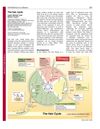
February 2006 in “Journal of Cell Science” This article reviews the stages and regulation of the hair cycle, highlighting molecular regulators involved, but it does not present new research findings.
250 citations
,
November 2003 in “The Journal of Cell Biology” This study found that BMP receptor IA is crucial for hair progenitor cell differentiation in mice, and its sequential inhibition and activation are necessary to generate a functioning hair shaft.
 128 citations
,
September 2013 in “Journal of Clinical Epidemiology”
128 citations
,
September 2013 in “Journal of Clinical Epidemiology” This study developed a framework to handle missing participant data in systematic reviews for continuous outcomes, finding varied impacts on confidence in effect estimates across reviewed cases.
 103 citations
,
January 2006 in “Journal of Cell Science”
103 citations
,
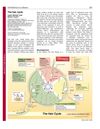
January 2006 in “Journal of Cell Science” This review summarizes the major events and regulators of the hair cycle in mammals but reports no new experimental results; it emphasizes the complex regulation of stem cell activation and differentiation during hair growth.
58 citations
,
January 2010 in “Arthritis Care & Research” In this study, hydroxychloroquine use was associated with a delayed onset of integument damage in SLE patients, while higher disease activity over time predicted quicker damage development.