 20 citations
,
November 2012 in “Journal der Deutschen Dermatologischen Gesellschaft”
20 citations
,
November 2012 in “Journal der Deutschen Dermatologischen Gesellschaft” This review examines psychosomatic hair diseases, discussing their classification, implications, and the need for tailored psychosomatic therapy, without reporting new clinical results.
 14 citations
,
November 2020 in “International Journal of Molecular Sciences”
14 citations
,
November 2020 in “International Journal of Molecular Sciences” This review article summarizes the potential role of advanced medical therapies—using genes, cells, and/or tissue engineering—in treating various types of alopecia, by examining clinical research, basic studies, and ongoing trials.
 10 citations
,
January 2009 in “Elsevier eBooks”
10 citations
,
January 2009 in “Elsevier eBooks” This review discusses the structure, functions, and growth cycle of human hair, emphasizing its reduced growth and protective roles, and reports no new research findings.
 3 citations
,
October 1993 in “The Journal of Dermatology”
3 citations
,
October 1993 in “The Journal of Dermatology” This article reviews the diagnosis and treatment of clinical hair loss without providing new clinical results.
 3 citations
,
July 1997 in “Current problems in dermatology”
3 citations
,
July 1997 in “Current problems in dermatology” This article reviews 25 years of hair restoration advancements, highlighting the shift towards techniques that emphasize naturalness and undetectability, and reports no new research findings.
 1 citations
,
January 2025 in “Aging and Disease”
1 citations
,
January 2025 in “Aging and Disease” The study emphasizes that telomere shortening is identified as the sole cause of aging among the twelve hallmarks and suggests that increasing telomere and rDNA array length in adult stem cells might effectively reverse aging and extend lifespan.
 1 citations
,
August 2018 in “bioRxiv (Cold Spring Harbor Laboratory)”
1 citations
,
August 2018 in “bioRxiv (Cold Spring Harbor Laboratory)” This study reports that a novel gain-of-function mutation in TMEM173, combined with polymorphisms in TMEM173 and IFIH1, results in a distinct clinical phenotype with features of SAVI, including alopecia and photosensitivity.
 1 citations
,
June 1938 in “New England journal of medicine/The New England journal of medicine”
1 citations
,
June 1938 in “New England journal of medicine/The New England journal of medicine” Hair analysis can offer clues about a person, but individual differences limit making precise identifications.
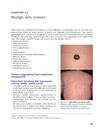
This chapter classifies various benign skin tumors and discusses their characteristics, treatment indications, and potential for recurrence, but reports no new clinical findings.
 October 1890 in “Science”
 Pilocarpin can cause hair regrowth and color change in some cases but not in others, and it may have side effects in animals.
 September 2014 in “Springer eBooks”
 This review discusses how sex hormone levels and local steroid synthesis influence gender differences in aging skin, reporting no new clinical results.
 83 citations
,
August 2014 in “PLoS ONE”
83 citations
,
August 2014 in “PLoS ONE” This study suggests that Demodex mites might universally inhabit adult humans, with a phylogenetic analysis indicating potential undiscovered lineages of the D. brevis species based on geographic differences.
 1 citations
,
November 2016 in “Congenital Anomalies”
1 citations
,
November 2016 in “Congenital Anomalies” This review examines the impact of biotin, vitamin B12, and zinc on male reproduction, emphasizing their role in spermatogenic failure, but reports no new clinical results.
 June 2020 in “International journal of medical science and clinical invention”
 This review discusses the uses of Achillea millefoilum described by Ibn Rushd, finding scientific support for its applications in treating alopecia and skin disorders.
 February 2026 in “Zenodo (CERN European Organization for Nuclear Research)”
 This study identified specific trichoscopic signs of secondary post-traumatic cicatricial alopecia in patients with mine-explosive injuries and burns and evaluated the effectiveness of hair transplantation procedures combined with PRP therapy, finding an average hair survival rate of 84.1% one year post-surgery.
 February 2026 in “Zenodo (CERN European Organization for Nuclear Research)”
 This study observed that trichoscopic examination revealed specific signs of secondary post-traumatic cicatricial alopecia in patients with mine-explosive injuries and burns, and reported an 84.1% hair survival rate following transplantation and PRP therapy, with marked improvements in scalp condition after 12 months.
July 2022 in “Journal of Cosmetic Dermatology” This study found that in patients with frontal fibrosing alopecia, combining topical tacrolimus with isotretinoin is more effective after four weeks of treatment compared to tacrolimus with finasteride, though both regimens offered some benefit.
89 citations
,
April 2023 in “Forensic Science International Genetics” This review summarizes advancements in forensic DNA phenotyping for appearance, ancestry, and age prediction from crime scene samples, reporting no new research findings but highlighting areas needing further research and validation.
65 citations
,
January 2012 in “International Journal of Trichology” This case report describes two patients with trichotillomania who were successfully treated with N-acetylcysteine, suggesting it as a potential new management option, though further studies are needed.
38 citations
,
March 2021 in “JAMA Dermatology” This cross-sectional survey study found that stigmatizing attitudes toward people with alopecia are present in various social and professional settings, with stigma levels varying by alopecia severity and perceptions of its medical nature.
November 2025 in “Indian Journal of Dermatology” This study reports a rare cluster of four patients with ectodermal dysplasia, highlighting its typical dental and dermatological manifestations and the necessity of multidisciplinary management.
 July 2024 in “Journal of Dermatological Treatment”
 In this case report, a 6-year-old boy with hidrotic ectodermal dysplasia 2 caused by GJB6 mutations showed no significant hair improvement with age, despite treatment with botanical extracts and Minoxidil.
June 2024 in “Regenerative Therapy” This review highlights the potential of exosomes as a novel therapeutic approach for skin diseases and aging, due to their stability, transportability, and ability to carry various bioactive compounds to target cells.
April 2024 in “Journal of clinical medicine” This review discusses various therapeutic options for frontal fibrosing alopecia and highlights the need for more research, as existing data are largely retrospective and lack precise treatment guidelines.
 February 2022 in “Scientia Pharmaceutica”
 This study validated that six out of seven tested topical formulations for alopecia are compatible for 6-month use, suggesting they may be practical for compounding pharmacies.
 February 2026 in “Zenodo (CERN European Organization for Nuclear Research)”
 This source highlights the growing trend towards natural, cruelty-free beauty products as everyday choices by 2026, with the Indian brand Soulflower noted for its affordable, eco-conscious essential oils, soaps, and haircare, offering a 10% discount via their SKV10 coupon code.
 February 2026 in “Zenodo (CERN European Organization for Nuclear Research)”
 This research doesn't report specific experimental results but presents Soulflower's 2026 offerings of natural, toxin-free, and cruelty-free beauty and wellness products, with details of a promotional coupon for savings on essential oils, soaps, and haircare solutions.
36 citations
,
August 2012 in “Dermatology online journal” This review discusses methods to hide or reduce the appearance of hair loss using hair prostheses and camouflaging agents, and reports no new clinical results.
 26 citations
,
July 2019 in “Dermatology and Therapy”
26 citations
,
July 2019 in “Dermatology and Therapy” This article discusses genetic hair disorders in children, outlining diagnostic approaches and highlighting the significance of distinguishing isolated hair defects from those associated with syndromes, but it reports no new clinical results.
9 citations
,
May 2014 in “BMC medical genetics” In this case report, the authors suggest that a novel enhancer element's translocation near the TRPS1 gene may contribute to the TRPS phenotype, expanding understanding of the syndrome's genetic basis.