 20 citations
,
February 2023 in “American Journal of Clinical Dermatology”
20 citations
,
February 2023 in “American Journal of Clinical Dermatology” In this study, 40.9% of patients taking 4 mg baricitinib and 21.2% taking 2 mg achieved significant hair regrowth over 52 weeks, indicating potential long-term benefits for adults with severe alopecia areata without introducing new safety concerns.
5 citations
,
May 2024 in “Journal of Allergy and Clinical Immunology Global” In this case study, a 29-year-old male with severe atopic dermatitis and alopecia universalis experienced an excellent response to treatment with upadacitinib, indicating it may be a promising option for similar patients.
 18 citations
,
April 2001 in “Bioorganic & Medicinal Chemistry Letters”
18 citations
,
April 2001 in “Bioorganic & Medicinal Chemistry Letters” This study identified the N-(iodopropenyl) derivative 13 as a promising candidate for development as a radioiodinated androgen receptor ligand due to its binding affinity.
2 citations
,
February 2023 in “Actas Dermo-Sifiliográficas” Baricitinib effectively improved both atopic dermatitis and alopecia areata symptoms in a patient.
This review discusses various herbal and pharmaceutical products, including their purported uses and possible interactions, but reports no new research findings.
October 2024 in “BMJ Case Reports” This case report describes a patient with both rheumatoid arthritis and alopecia areata who showed improvement in both conditions after treatment with baricitinib monotherapy, highlighting the importance of personalized treatment approaches in managing co-occurring autoimmune diseases.
June 2025 in “British Journal of Dermatology” This study surveyed Irish dermatologists and found that while JAK inhibitors show promising efficacy for alopecia areata, there is significant variation in practice due to the lack of specific guidelines and long-term safety data for these treatments.
 December 2023 in “Journal of Cosmetic Dermatology”
 This study found that baricitinib, taken for 24 weeks, significantly reduced alopecia severity in patients with moderate-to-severe alopecia areata, with 50% showing marked improvement and overall favorable safety and efficacy reported.
 February 2024 in “Journal of the European Academy of Dermatology and Venereology”
 In this study, baricitinib for severe alopecia areata showed sustained efficacy over 104 weeks, with most Week-52 responders maintaining significant hair regrowth and some mixed responders improving further with long-term treatment.
 2 citations
,
April 2023 in “JEADV. Journal of the European Academy of Dermatology and Venereology/Journal of the European Academy of Dermatology and Venereology”
2 citations
,
April 2023 in “JEADV. Journal of the European Academy of Dermatology and Venereology/Journal of the European Academy of Dermatology and Venereology” This systematic review evaluated the safety of JAK-inhibitors for alopecia areata, finding that most adverse events were mild and systemic formulations were well-tolerated; however, increased rates of certain infections and laboratory abnormalities were noted, with isolated severe cases but no fatal outcomes.
 1 citations
,
December 2014 in “Klinik Psikofarmakoloji Bülteni-Bulletin of Clinical Psychopharmacology”
1 citations
,
December 2014 in “Klinik Psikofarmakoloji Bülteni-Bulletin of Clinical Psychopharmacology” This study reports that a 15-year-old with trichotillomania showed improvement with aripiprazole treatment, though no consensus on treatment exists in the literature.
4 citations
,
June 2020 in “Processes” This study suggests that G. sibiricum has potent aldose reductase inhibitory activity, primarily due to kaempferol rhamnosides, and may be further explored as a natural treatment for diabetes-related complications.

This review analyzed clinical trials and guidelines on 5-α-reductase inhibitors (5-ARIs) and found these drugs significantly improve urinary symptoms in BPH and stabilize hair loss in androgenic alopecia, but may cause sexual dysfunction and gynecomastia.
 1 citations
,
September 2022 in “Journal of The American Academy of Dermatology”
1 citations
,
September 2022 in “Journal of The American Academy of Dermatology” In this analysis of two trials, baricitinib showed eyebrow and eyelash regrowth in severe alopecia areata patients with greater than 20% scalp hair loss at Week 36, compared to placebo.
129 citations
,
January 2004 in “Journal of medicinal chemistry” This study synthesized nonsteroidal ligands as second-generation androgen receptor agonists and identified three compounds with significant anabolic activity and moderate to minimal androgenic activity in vivo.
 December 2006 in “The Brown University Psychopharmacology Update”
 This review discusses various psychiatric treatments including antipsychotics, insomnia medication, and mood stabilizers, but reports no new clinical results; the authors comment on existing findings and approvals.
This study found that the optimized AR antagonist compound 39 showed potent hair growth activity with improved safety in mice, suggesting potential for better topical treatments for androgenetic alopecia.
 14 citations
,
August 2009 in “Cancer epidemiology”
14 citations
,
August 2009 in “Cancer epidemiology” This study found that AHCC significantly reduced alopecia caused by Ara-C in neonatal rats and improved liver function affected by 6-MP and MTX in mice.
 13 citations
,
November 2012 in “PubMed”
13 citations
,
November 2012 in “PubMed” This study found that in men with sexual dysfunction, use of 5ARI may reduce sexual drive and spontaneous erections without worsening pre-existing erectile or ejaculatory issues.
 January 2025 in “Journal of Cutaneous Immunology and Allergy”
 In this study, the researchers reported that baricitinib improved hair loss in a real-world setting for Japanese adults with alopecia areata, with a 64.7% success rate at 60 weeks, though prolonged episodes reduced efficacy. Common side effects were acne and mildly decreased renal function.
January 2017 in “Journal of Drug Research in Ayurvedic Sciences” This study conducted a detailed examination of Terminalia arjuna flowers, suggesting their potential use in establishing botanical standards for identification and standardization in Ayurvedic medicine.
November 2025 in “JEADV Clinical Practice” In this retrospective cohort study, patients using leflunomide for primary autoimmune conditions showed a decreased risk of developing alopecia areata, while those using methotrexate, cyclosporine, and rituximab had an increased risk.
 September 2024 in “Journal of the American Academy of Dermatology”
 In this study, patients with severe alopecia areata treated with baricitinib over 152 weeks experienced sustained patient-reported improvements in scalp, eyebrow, and eyelash hair regrowth, with higher responders observed in the 4mg dose group compared to the 2mg group.
 2 citations
,
April 2023 in “Expert Review of Clinical Immunology”
2 citations
,
April 2023 in “Expert Review of Clinical Immunology” This review details how baricitinib successfully demonstrated significant hair regrowth in clinical trials for severe alopecia areata, now leading to its approval as the first systemic therapy for the condition, while also highlighting the importance of assessing individual risk factors for adverse events.
1 citations
,
May 2025 in “Journal of the European Academy of Dermatology and Venereology” This review by Aceituno et al. found that both baricitinib and ritlecitinib demonstrate strong efficacy for severe alopecia areata, with meaningful hair regrowth by Week 24, but notes limitations like differing trial sizes and potential effect size overestimations.
 January 2017 in “Brazilian Journal of Pharmaceutical Sciences”
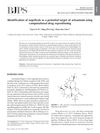
 This study identified neprilysin as a potential target of the pharmacological agent arteannuin, which may guide future research into its clinical applications, although experimental verification is needed.
July 2026 in “International Journal of Drug Delivery Technology” In this case report, a 14-year-old girl developed azathioprine-induced anagen effluvium, highlighting it as a rare but reversible side effect with prompt drug withdrawal leading to significant hair regrowth.
 7 citations
,
August 2023 in “Journal of the American Academy of Dermatology”
7 citations
,
August 2023 in “Journal of the American Academy of Dermatology” This source reports that the approval of baricitinib and ritlecitinib, which are JAK inhibitors, has marked a significant advancement in treating severe alopecia areata (AA), and suggests that additional treatments with new mechanisms may further improve patient outcomes in the future.
 1 citations
,
June 2020 in “Annals of the rheumatic diseases”
1 citations
,
June 2020 in “Annals of the rheumatic diseases” In this study, 93% of patients with inflammatory arthritis remained on the adalimumab biosimilar ABP 501 for 24 weeks after switching from the originator, with some switching back due to adverse reactions or reduced effectiveness.
 January 2018 in “Springer eBooks”
 PDE inhibitors, especially PDE4 inhibitors like apremilast, are effective for certain inflammatory skin conditions but have side effects and can be costly.