15 citations
,
January 2025 in “Journal of the European Academy of Dermatology and Venereology” Ritlecitinib is effective and safe for treating alopecia areata, promoting significant hair regrowth.
 April 2024 in “bioRxiv (Cold Spring Harbor Laboratory)”
 In this study, researchers identified a gene regulatory network in Arabidopsis that controls root hair growth under low-temperature conditions, revealing specific transcription factors and downstream targets that contribute to this growth response despite overall plant development being halted.
June 2026 in “British Journal of Dermatology” This study evaluated the real-world use of ritlecitinib for severe alopecia areata in the UK, reporting that 37% of patients achieved significant hair regrowth by week 36, with no serious adverse effects noted, although response varied with disease duration.
 4 citations
,
October 2024 in “American Journal of Clinical Dermatology”
4 citations
,
October 2024 in “American Journal of Clinical Dermatology” This study found that ritlecitinib improved patient-reported outcomes related to hair growth in individuals with alopecia areata, with some experiencing clinically meaningful hair regrowth, although changes in emotional symptoms and activity limitations were minimal and similar across treatment groups.
 January 2024 in “American journal of clinical dermatology”
 This study reports that ritlecitinib, when used for up to 24 months in patients aged 12 and older with alopecia areata, has an acceptable safety profile, with a similar proportion of adverse events in both ritlecitinib and placebo groups in the placebo-controlled cohort.
June 2026 in “British Journal of Dermatology” In this study, real-world data of 31 patients using ritlecitinib for severe alopecia areata showed that 51% achieved significant hair regrowth after one year, with no serious adverse events reported, emphasizing the importance of considering treatment duration for response.
September 2025 in “Blood Advances” This study found that targeting androgen receptors with prostate cancer drugs ARN509 and finasteride induced remission and increased survival in a leukemia mouse model, suggesting a potential new treatment approach for acute myeloid leukemia.
1 citations
,
October 2025 in “International Journal of Dermatology” In this study, participants receiving a 50-mg maintenance dose of ritlecitinib reported greater improvements in emotional and activity limitations due to hair loss by Week 48 compared to those on a 10-mg dose.
2 citations
,
November 2004 in “Blood” In this study, researchers reported that the Pinkie mutation in mice, affecting RXRa activity, leads to skewed Th1 development and suggests RXRa's role in Th2 differentiation, impacting immune responses.
May 2026 in “Dermatology and Therapy” This study reports that among adults with severe alopecia areata taking ritlecitinib, 49% saw hair regrowth within 3 months, increasing to 82% after more than 6 months; treatment satisfaction also rose with longer duration, indicating sustained efficacy and improved quality of life over time.
 November 2024 in “SKIN The Journal of Cutaneous Medicine”
 This study reports that ritlecitinib was prescribed to a diverse group of patients, including adolescents and adults with and without prior treatment for Alopecia Areata, in the first three months after FDA approval, potentially expanding care options for this condition.
36 citations
,
July 2007 in “Journal of Investigative Dermatology” This study observed a strong negative association between the HLA-DQB1*0201 allele and the alopecia totalis/alopecia universalis phenotype in Caucasian individuals, indicating a potential protective role.
Ritlecitinib significantly regrows scalp hair in people with alopecia areata.
 2 citations
,
October 2023 in “Frontiers in Immunology”
2 citations
,
October 2023 in “Frontiers in Immunology” In this study, researchers used Mendelian randomization to find a significant genetic association between rheumatoid arthritis and an increased risk of alopecia areata, suggesting RA patients should be vigilant for potential AA development.
 1 citations
,
February 2013 in “Clinical pediatrics”
1 citations
,
February 2013 in “Clinical pediatrics” The baby’s hair loss was due to a rare genetic condition, not treatable by usual methods.
January 2024 in “Ankara City Hospital Medical Journal” This case report details a 42-year-old woman with Rhupus, a rare overlap syndrome of rheumatoid arthritis and systemic lupus erythematosus, emphasizing diagnostic challenges due to non-specific clinical criteria and documenting symptoms like inflammatory arthritis, malar rash, and hematological abnormalities.
September 2024 in “Annals of Medicine and Surgery” In this review, the authors highlight the FDA approval of Ritlecitinib, the first oral treatment specifically for moderate to severe alopecia areata in patients aged 12 and older, marking a significant advancement in managing this condition.
July 2025 in “Journal of the European Academy of Dermatology and Venereology” This study reports no new findings but provides corrected figures for the long-term safety and efficacy of ritlecitinib in treating alopecia areata from the ALLEGRO-LT phase 3 study.
 March 2025 in “SKIN The Journal of Cutaneous Medicine”
 Certain patient characteristics can help predict hair regrowth success with ritlecitinib in alopecia areata.
 March 2024 in “Journal of drugs in dermatology”
 This study evaluated the safety and effectiveness of HASHA, a new hyaluronic acid injectable, for chin augmentation in adults with chin retrusion. HASHA significantly improved chin appearance and satisfaction over 12 months compared to controls, with only mild or moderate transient adverse events.
July 2023 in “SKIN The Journal of Cutaneous Medicine” This study found that some patients with alopecia areata who did not respond to ritlecitinib treatment by Week 24 achieved a positive response with continued therapy by Week 48, with tolerable side effects.
 65 citations
,
February 2015 in “Neuro-Oncology”
65 citations
,
February 2015 in “Neuro-Oncology” In this study, four children with recurrent atypical teratoid rhabdoid tumors experienced disease stabilization or regression after treatment with alisertib, suggesting its potential role in future trials for this condition.
4 citations
,
August 2006 in “The Journal of Dermatology” This case report describes the first known association of hypertrichosis lanuginosa acquisita with autoimmune hepatitis, expanding the list of conditions linked to this rare disorder.
 June 2026 in “Journal of health economics and outcomes research”
 This study found that ritlecitinib 50 mg offered a lower cost per responder than baricitinib 2 or 4 mg for treating severe alopecia areata at Weeks 24 and 52, potentially influencing reimbursement decisions.
 2 citations
,
June 2024 in “Frontiers in Plant Science”
2 citations
,
June 2024 in “Frontiers in Plant Science” This study found that RALF peptides, through liquid-liquid phase separation, form condensates with pectin and other proteins, playing a pivotal role in plant development and stress response regulation.
2 citations
,
February 2024 in “Medicine” In this study, researchers found that the rs3118470 mutation in the IL2RA gene significantly increases the risk of developing alopecia areata, and they emphasize the need for future research with larger, more diverse populations to validate these results.
 January 2024 in “Ankara City Hospital Medical Journal”
 This case report describes a 42-year-old woman with Rhupus, a rare overlap syndrome of rheumatoid arthritis and systemic lupus erythematosus, highlighting challenges in diagnosis due to non-specific clinical criteria and documenting specific symptoms such as inflammatory arthritis, malar rash, and hematological abnormalities observed during follow-up.
 May 2025 in “The Journal of Rheumatology”
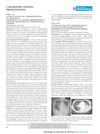
 This case report highlights a rare instance of diffuse alveolar hemorrhage in a patient with catastrophic antiphospholipid syndrome, emphasizing the importance of early recognition and multidisciplinary management.
 June 2026 in “Archives of Dermatological Research”
 In this study, the rs4541843 G > A variant was found to be significantly associated with increased risk and severity of alopecia areata, as well as elevated expression of hsa-miR-182-5p, suggesting their potential as molecular markers for diagnosis and severity assessment.
23 citations
,
October 2024 in “British Journal of Dermatology” In this study, ritlecitinib showed sustained effectiveness and a favorable safety profile in treating alopecia areata in patients aged 12 and older over 24 months, with improvements observed in hair and eyebrow regrowth and patient satisfaction.