 July 2022 in “Hair transplant forum international”
 In this study, researchers found that effective working memory performance in healthy, young adults depends on neural suppression of irrelevant information to prevent overload, rather than just enhancing relevant information.
 119 citations
,
June 1993 in “BMJ”
119 citations
,
June 1993 in “BMJ” This article discusses the high toxicity and potential use of thallium as a poison, highlighted by two cases of intentional thallium poisoning.
May 2024 in “Psychotherapie Forum” In this single-case study, researchers found that a combination of behavior and hypnotherapy led to positive psychological changes in a patient with Alopecia areata but did not result in hair regrowth, suggesting psychosomatic approaches may not address the hair loss mechanism.
 2 citations
,
January 1997 in “Archives of Dermatology”
2 citations
,
January 1997 in “Archives of Dermatology” This retrospective study of 1604 alopecia areata cases reported 13 instances of a potentially new hair regrowth pattern, termed the "androgenetic-like pattern".
 37 citations
,
November 2003 in “Veterinary pathology”
37 citations
,
November 2003 in “Veterinary pathology” This study showed that in C3H/HeJ mice, focal follicular inflammation starts before overt hair loss, with inflammation severity possibly reaching a threshold causing hair follicle dystrophy prior to visible hair loss.
 12 citations
,
August 2018 in “Psychiatry research”
12 citations
,
August 2018 in “Psychiatry research” This study found that estazolam improved PTSD-like behavior deficits in an animal model, which was linked to increased allopregnanolone levels in specific brain regions.
69 citations
,
May 1997 in “Veterinary Pathology” This study found that the angora mouse mutation prolongs the anagen phase, resulting in excessively long hair and follicular abnormalities, without involving circulating hair cycle factors.
34 citations
,
November 1974 in “Archives of Dermatology” This report discusses historical cases of visual side effects from scalp corticosteroid injections for alopecia areata and attributes their rarity now to improved injection techniques and smaller particulate sizes in suspensions.
June 2008 in “Alcoholism Clinical and Experimental Research” This study discusses how chronic ethanol exposure and withdrawal affect GABAA receptor subunit expression and function, finding that some changes can be selectively blocked by certain drugs like diazepam and finasteride.
July 1996 in “Hair transplant forum international” This article discusses the work of Masumi Inaba and Yoshikata Inaba on androgenetic alopecia, presenting no new findings.
14 citations
,
March 2014 in “Acta anaesthesiologica Taiwanica” This report presents a case of Tapia's syndrome and pressure alopecia occurring simultaneously after open septorhinoplasty, emphasizing the need for awareness of these complications among anesthesiologists and surgeons.
 June 2023 in “British journal of dermatology/British journal of dermatology, Supplement”
 This report highlights a case of a 35-year-old man developing alopecia universalis following alemtuzumab treatment for multiple sclerosis, suggesting potential links between this medication and drug-induced alopecia areata, though the genetic overlap of the conditions may also play a role.
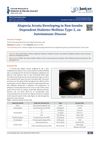 January 2019 in “Current research in diabetes & obesity journal”
 A woman with type 2 diabetes developed alopecia areata, suggesting a link between the two autoimmune conditions.
 1 citations
,
January 1996 in “Springer eBooks”
1 citations
,
January 1996 in “Springer eBooks” This article traces the origin of the term "androgenetic" and discusses the progressive nature of androgenetic alopecia with age, reporting no new research findings.
16 citations
,
June 2016 in “Innovare Academic Sciences - Innovare Journal of Ayurvedic Sciences” This article reviews historical and traditional uses of the herb Bacopa monnieri, or Brahmi, for enhancing memory and other medicinal benefits, but presents no new research findings.
 January 2026 in “Dermatology and Therapy”
 This review explores the potential connection between GA and various types of alopecia but reports no new clinical findings, emphasizing the need for further research.
43 citations
,
December 2004 in “Journal of loss & trauma” This study highlights the significant negative psychological and social impacts of alopecia and suggests that treatment approaches should incorporate psychological support.

This study found that the transcription factor Meis2 is crucial for the maturation and innervation of sensory neurons responsible for light touch in mice, with its absence leading to reduced touch sensitivity.
53 citations
,
May 2011 in “Dermatologic therapy” This article discusses the pathogenesis and possible biological mechanisms of alopecia areata but reports no new clinical results.
2 citations
,
May 2025 in “The Journal of Dermatology” This study reported that a large proportion of US adults with physician-diagnosed alopecia areata experience substantial emotional and mental health comorbidities and report significant stigma across all disease severities, yet few are receiving counseling or therapeutic intervention.
April 2025 in “International Journal of Clinical & Medical Case Studies” This source explains that unlike genetic hormonal alopecia, alopecia areata is associated with inflammatory factors and may also involve psychological and genetic contributions.
 1 citations
,
May 2023 in “Indian Journal of Dermatology Venereology and Leprology”
1 citations
,
May 2023 in “Indian Journal of Dermatology Venereology and Leprology” This study found that patients with alopecia areata were more likely to experience hearing loss compared to healthy individuals, potentially due to damage to follicular melanocytes involved in the autoimmune process.
 11 citations
,
November 2020 in “Movement Disorders Clinical Practice”
11 citations
,
November 2020 in “Movement Disorders Clinical Practice” A man developed neurological issues from SARS-CoV-2 without severe breathing problems, worsening to death.
10 citations
,
October 1981 in “Archives of Dermatology” This case report describes a 36-year-old man with tinea incognito manifesting as asymptomatic, flat patches of alopecia, which did not improve with standard treatments.
13 citations
,
March 2020 in “Spectrochimica Acta Part A Molecular and Biomolecular Spectroscopy” This study used infrared spectroscopic imaging and scanning electron microscopy to reveal that alopecic hair has more irregular laminated structures and differing chemical profiles than normal hair, suggesting changes related to alopecia progression.
19 citations
,
January 2011 in “Frontiers in Endocrinology” The study found that social isolation in mice increases the sensitivity of their hippocampal synapses to ethanol's inhibitory effects on long-term potentiation, an effect preventable by finasteride.
July 2004 in “DOAJ (DOAJ: Directory of Open Access Journals)” This preliminary study explores the role of melancholic mania in anorexia nervosa, noting it may reinforce the condition's difficult-to-reverse pathology and is often accompanied by poor self-esteem and maternal fixation.
May 2015 in “Journal of the American Academy of Dermatology” New hair after alopecia areata can be thinner and change color but usually keeps the same shape.
174 citations
,
July 2003 in “The Journal of Clinical Endocrinology & Metabolism” This study investigated genetic and phenotypic characteristics of androgen insensitivity syndrome in individuals with a 46,XY karyotype, documenting a range from complete to partial insensitivity.
6 citations
,
March 2005 in “Clinical and Experimental Dermatology” This report documents the first known association of alopecia areata with idiopathic primary hypophysitis, suggesting a shared autoimmune basis.