 June 2023 in “JAAD Case Reports”
 This article reviews the epidemiology of desmoplastic melanoma and reports no new clinical findings, emphasizing higher risks in chronically sun-exposed older males.
February 2026 in “JEADV Clinical Practice” This report describes a rare case of scarring alopecia, diagnosed as lichen planopilaris (LPP), affecting solely the limbs, highlighting the necessity for thorough evaluation of LPP beyond the scalp.
 November 2025 in “Archives of Dermatological Research”
 Using a higher concentration of triamcinolone acetonide leads to faster hair regrowth in scalp patchy alopecia areata.
January 2024 in “Muller Journal of Medical Sciences and Research” This study found that trichoscopy was 73.77% concordant with histopathology in diagnosing patchy alopecia, highlighting its usefulness as a diagnostic tool for conditions like alopecia areata, lichen planus pigmentosus, and discoid lupus erythematosus.
22 citations
,
September 2024 in “Chemical Engineering Journal” A new microneedle patch effectively and safely treats alopecia areata.
3 citations
,
May 2025 in “Carbohydrate Polymers” In this study, researchers developed a dissolvable microneedle patch containing baricitinib for alopecia areata treatment, reporting significantly higher hair growth in mouse models compared to controls, suggesting its potential as an effective, pain-free topical therapy.
 May 2024 in “AlQalam Journal of Medical and Applied Sciences”
 This study observed that recurrent alopecia areata patients with salmon patches on the nape often had severe disease, particularly alopecia areata ophiasis, which was more common in females.
January 2026 in “Zenodo (CERN European Organization for Nuclear Research)” This article explores the pathophysiology of alopecia and reviews various treatment options, including allopathic, homeopathic, naturopathic, cosmeceutical, and ayurvedic approaches, in light of the increasing interest in hair health and the rise in alopecia cases. Results are not reported.
January 2026 in “Zenodo (CERN European Organization for Nuclear Research)” This article explores the various causes of alopecia and provides an overview of treatments such as allopathic, homeopathic, naturopathic, cosmeceutical, and ayurvedic methods, emphasizing recent advancements in addressing hair loss.
 30 citations
,
October 2013 in “Lupus”
30 citations
,
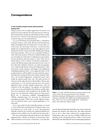
October 2013 in “Lupus” This study identified distinct clinical and dermatoscopic features to differentiate non-scarring patchy alopecia in SLE from alopecia areata, emphasizing the value of serological tests in diagnosis.
 11 citations
,
July 2008 in “International Journal of Dermatology”
11 citations
,
July 2008 in “International Journal of Dermatology” This article discusses a case of patchy alopecia areata that spares greying hairs but reports no new findings; it refers to existing literature for context.
 April 2018 in “bioRxiv (Cold Spring Harbor Laboratory)”
 This study identified a specific genetic variant in the CCHCR1 gene that may contribute to alopecia areata through impaired keratinization, suggesting an alternative mechanism beyond autoimmune causes.
1 citations
,
February 2025 in “Journal of Drugs in Dermatology” This report describes two cases of cutaneous lupus erythematosus mimicking alopecia areata, highlighting the importance of considering CLE in the diagnosis of patchy hair loss to prevent scarring alopecia.
 34 citations
,
June 2007 in “The Journal of Dermatology”
34 citations
,
June 2007 in “The Journal of Dermatology” This study observed that non-scarring diffuse hair loss was common in systemic lupus erythematosus patients, but did not find a significant relationship with the SLE Disease Activity Index.
 20 citations
,
March 2019 in “Journal of The European Academy of Dermatology and Venereology”
20 citations
,
March 2019 in “Journal of The European Academy of Dermatology and Venereology” In this study, 5% minoxidil significantly improved outcomes for children and adults with patchy alopecia areata compared to placebo, with moderate quality evidence and no severe adverse events reported, though more research is needed to address remaining uncertainties.
19 citations
,
July 2019 in “Journal of Cosmetic Dermatology” This study found that in patients with patchy alopecia areata, certain trichoscopic features like upright regrowing hairs and pigtail hairs are positive predictive markers for treatment success.
 13 citations
,
January 2014 in “Postępy Dermatologii i Alergologii”
13 citations
,
January 2014 in “Postępy Dermatologii i Alergologii” This report describes four cases of patchy, non-scarring alopecia areata that spared gray hairs and affected only pigmented hairs.
6 citations
,
November 2020 in “Clinical Cosmetic and Investigational Dermatology” This study found that intralesional injections of triamcinolone acetonide at 5 mg/mL are as effective and safe as 10 mg/mL for treating patchy alopecia areata on the scalp, with similar hair regrowth rates, side effects, and recurrence observed between the two dosages.
 5 citations
,
January 2009
5 citations
,
January 2009 This study found that Betamethasone was more effective than Tacrolimus and soft paraffin in promoting hair regrowth in patients with mild to moderate patchy alopecia areata.
 1 citations
,
January 2019 in “Medical principles and practice”
1 citations
,
January 2019 in “Medical principles and practice” This case report describes a 17-year-old boy with alopecia areata who had vitamin D deficiency and an incidentally discovered adrenal ganglioneuroma, with alopecia receding after vitamin D supplementation but later recurring despite normalized vitamin D and no tumor return.
July 2026 in “Journal of Investigative Dermatology” This retrospective cohort study found that individuals with alopecia totalis or universalis have a higher prevalence of systemic autoimmune diseases, particularly endocrine diseases and inflammatory bowel disease, compared to those with patchy alopecia areata.
 May 2026 in “Journal of the Egyptian Womenʼs Dermatologic Society”
 In this prospective study, 15 patients with patchy alopecia areata treated with intralesional methotrexate every two weeks showed a significant improvement in hair regrowth and reduction in lesion severity, with changes linked to decreased tissue levels of TNF-α.

In this phase 2 trial, STS01 1% significantly improved hair regrowth in patients with mild to moderate patchy alopecia areata compared to placebo, with a manageable skin irritation side effect profile.
 February 2026 in “International Journal of Homoeopathic Sciences”
 This case report from Dr Batra’s Homeopathy Clinic documents a middle-aged man with trichotillomania who showed marked improvement in hair regrowth and reduced hair pulling after receiving a classical homeopathic treatment for seven months.
 September 2025 in “American Journal of Dermatopathology”
 In this report, a unique case of lupus panniculitis of the scalp was diagnosed in a 40-year-old woman presenting with non-scarring patchy alopecia, which responded completely to oral prednisolone and methotrexate treatment.
September 2025 in “Diseases” This study found that patients with patchy alopecia areata had significantly higher serum levels of pro-inflammatory cytokines IL-6, TNF-α, IL-17A, and IL-21 compared to healthy controls, with these levels correlating positively with disease severity, age, and disease duration.
July 2026 in “Journal of Investigative Dermatology” Alopecia totalis/universalis involves more intense immune activity and inflammation than patchy alopecia areata.

In a phase 2 trial, researchers tested a topical formulation for alopecia areata and found significant hair regrowth with the treatment, but these improvements did not lead to substantial enhancements in health-related quality of life.
January 2026 in “JEADV Clinical Practice” This study examines the depiction of a soldier with an atypical hairstyle resembling alopecia in an Isenmann painting, possibly reflecting medical conditions like tinea capitis or alopecia areata to emphasize the soldier's moral degradation, though artists historically mixed medical conditions for stylistic purposes.
 January 2026 in “Dermatology Online Journal”
 This case report highlights that CCCA can present with multifocal patchy hair loss in younger men of African descent, suggesting the need for careful evaluation when diagnosing atypical alopecia patterns.