 January 2026 in “Frontiers in Public Health”
 This study observed distinct post-marketing safety signal patterns for baricitinib and tofacitinib in adult AA, influenced by their differing regulatory uses and real-world contexts, and emphasizes the need for future studies to validate these findings.
 93 citations
,
May 2010 in “European Journal of Cancer”
93 citations
,
May 2010 in “European Journal of Cancer” This phase II trial found that BI 2536 demonstrated limited antitumor activity across five solid tumor types, with no confirmed objective responses observed.
 6 citations
,
February 2023 in “Advances in Therapy”
6 citations
,
February 2023 in “Advances in Therapy” This study found that patients with rheumatoid arthritis, atopic dermatitis, and alopecia areata receiving baricitinib had low incidence rates of adverse events, especially among low-risk individuals, with varying rates among those at higher risk.
July 2026 in “Dermatology and Therapy” In this retrospective study, baricitinib and ritlecitinib showed similar effectiveness and safety over 52 weeks for treating severe alopecia areata, with non-severe adverse events more common for baricitinib, driven by weight gain.
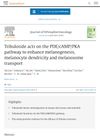 December 2023 in “Journal of ethnopharmacology”
 This study found that tribuloside, a flavonoid from Tribulus terrestris L., enhances melanin production in human melanocytes, zebrafish, and human skin samples without causing toxicity, potentially through inhibiting PDE to increase cAMP levels and promote the melanin biosynthesis pathway.
This study found that oral baricitinib was more effective than methotrexate in treating severe alopecia areata, with significant improvements in SALT scores over six months.
508 citations
,
June 2009 in “Current drug metabolism” This review details the skin and hematological toxicities of tyrosine kinase inhibitors like erlotinib, gefitinib, and imatinib, and highlights ongoing concerns about cardiac toxicity, reporting no new clinical findings.
November 2023 in “SKIN The Journal of Cutaneous Medicine” This study assessed ritlecitinib's effects on sustained hair regrowth in patients with alopecia areata who showed improvement at 24 weeks, confirming ongoing benefits through 48 weeks for scalp, eyebrow, and eyelash hair regrowth in this post hoc analysis.
June 2026 in “International Journal of Research in Medical Sciences” This study compared the adverse effects of baricitinib and methotrexate in treating severe alopecia areata and found baricitinib to have a better safety profile, though it was associated with increased cholesterol, triglyceride, and LDL levels.
June 2025 in “British Journal of Dermatology” This case report details a probable severe adverse event associated with ritlecitinib for alopecia areata, highlighting risks of pulmonary emboli, infection, atrial fibrillation, and acute kidney injury despite an absence of known risk factors.
23 citations
,
October 2024 in “British Journal of Dermatology” In this study, ritlecitinib showed sustained effectiveness and a favorable safety profile in treating alopecia areata in patients aged 12 and older over 24 months, with improvements observed in hair and eyebrow regrowth and patient satisfaction.
 January 2024 in “Clinical and Experimental Dermatology”
 In this study, baricitinib treatment over an average of 18.5 months resulted in a 72% reduction in alopecia severity scores among patients aged 65 or older, with mild adverse effects and no severe complications reported.
May 2025 in “CPT Pharmacometrics & Systems Pharmacology” This study examined the safety profile of ritlecitinib, a drug for alopecia areata, and found that it does not cause significant QTc prolongation or severe lymphopenia, with no unique safety risks expected in adolescents.
December 2025 in “Actas Dermo-Sifiliográficas” This review analyzes the mechanism and evidence supporting the approved use of ritlecitinib, a JAK3/TEC kinase inhibitor, for treating severe alopecia areata in patients aged 12 and older, highlighting its role in the changing therapeutic landscape of this immune-mediated disease.
 December 2024 in “Clinical and Experimental Dermatology”
 In this study, researchers found that ritlecitinib, a JAK3/TEC inhibitor, significantly improves hair regrowth, quality of life, and psychological well-being in patients with severe alopecia areata who had inadequate or no response to baricitinib, a JAK1/2 inhibitor.
 June 2026 in “Current Oncology Reports”
 This review highlights the potential of Sacituzumab Tirumotecan, an antibody-drug conjugate, in treating gynecologic cancers, with ongoing Phase III trials indicating a manageable safety profile and future results expected to shed light on its effectiveness in improving survival and response rates.
 March 2020 in “Section 5: Patient safety and quality assurance”
 This study found that tofacitinib and baricitinib had an acceptable adverse reaction profile when used to treat rheumatoid arthritis, with similar side effects to those described in their technical data sheets.
22 citations
,
May 2011 in “European Journal of Cancer” This phase I study determined that a combination of oral SU-014813 and docetaxel is a feasible treatment with a manageable safety profile and potential anti-tumor activity, particularly noted in melanoma and GIST patients.

In this randomized controlled trial, researchers found that after six months of treatment, oral baricitinib was significantly more effective than methotrexate for improving hair regrowth in patients with severe alopecia areata, as measured by the Severity of Alopecia Tool score.
 2 citations
,
April 2023 in “Expert Review of Clinical Immunology”
2 citations
,
April 2023 in “Expert Review of Clinical Immunology” This review details how baricitinib successfully demonstrated significant hair regrowth in clinical trials for severe alopecia areata, now leading to its approval as the first systemic therapy for the condition, while also highlighting the importance of assessing individual risk factors for adverse events.
5 citations
,
March 2020 in “Thoracic Cancer” In this phase I study, CT-707, a new ALK inhibitor, showed a 77% response rate among Chinese patients with advanced ALK-rearranged non-small cell lung cancer, suggesting clinical effectiveness despite some adverse events like diarrhea and liver enzyme elevation.
 June 2023 in “Fundamental & clinical pharmacology”
 This research highlights that while JAK inhibitors are effective for various inflammatory conditions, studies raise concerns about increased risks of venous and arterial thromboembolism, and cancer, particularly with tofacitinib and baricitinib, leading to European guidelines recommending caution in high-risk patients.
November 2024 in “SKIN The Journal of Cutaneous Medicine” This study found that daily treatment with ritlecitinib 50 mg over 24 months reduced the number of patients in the highest categories of scalp hair loss, with improvements seen in patient responses over time.
February 2026 in “The Journal of Dermatology” This study reports that ritlecitinib 50 mg, with or without an initial loading dose, demonstrated meaningful and sustained efficacy up to 24 months in the Asian subpopulation with severe alopecia areata, showing significant scalp, eyebrow, and eyelash hair regrowth, along with an acceptable safety profile.
1 citations
,
May 2025 in “Journal of the European Academy of Dermatology and Venereology” This review by Aceituno et al. found that both baricitinib and ritlecitinib demonstrate strong efficacy for severe alopecia areata, with meaningful hair regrowth by Week 24, but notes limitations like differing trial sizes and potential effect size overestimations.
 December 2025 in “International Journal of Innovative Technologies in Social Science”
 This study found that ritlecitinib, approved for alopecia areata in patients aged 12 and older, has an acceptable safety profile with mild to moderate side effects and no increase in serious adverse events compared to placebo.
7 citations
,
October 2024 in “Journal of the American Academy of Dermatology” This source reported that patients who initially responded to ritlecitinib treatment showed sustained hair regrowth through week 48, with up to one-third of those not meeting target efficacy at week 24 also achieving a response with continued treatment.
7 citations
,
September 2024 in “The Journal of Dermatology” This study evaluated the effectiveness and safety of ritlecitinib in patients aged 12 or older with alopecia totalis or universalis, finding higher hair regrowth response rates compared to placebo at 24 weeks, with continued improvement and acceptable safety through 48 weeks.
15 citations
,
January 2025 in “Journal of the European Academy of Dermatology and Venereology” Ritlecitinib is effective and safe for treating alopecia areata, promoting significant hair regrowth.
1 citations
,
September 2023 in “Journal of the American Academy of Dermatology” This study reported that most patients with alopecia areata who responded to ritlecitinib treatment by achieving a SALT score ≤20, SALT score ≤10, or improvements in eyebrow and eyelash assessments at Week 24 maintained their responses through Week 48.