 1 citations
,
November 2025 in “Clinical and Experimental Medicine”
1 citations
,
November 2025 in “Clinical and Experimental Medicine” This review highlights the emerging role of long non-coding RNAs (lncRNAs) in dermatology, suggesting that lncRNAs significantly impact signaling pathways involved in normal skin functions and skin diseases, offering potential as biomarkers and therapeutic targets.
 1 citations
,
December 2024 in “Dermatology and Therapy”
1 citations
,
December 2024 in “Dermatology and Therapy” This study found that the STRIAA scoring tool provides a rapid and highly reliable assessment of alopecia areata severity, showing a significant correlation with the traditional SALT score, thus enhancing clinical evaluation in patients with this condition.
 1 citations
,
January 2023 in “Brazilian Journals Editora eBooks”
1 citations
,
January 2023 in “Brazilian Journals Editora eBooks” Children's screen time increased during the pandemic, causing various health issues.
 1 citations
,
January 2023 in “IEEE access”
1 citations
,
January 2023 in “IEEE access” This review examines advancements in deep learning methods for detecting dermatological conditions from dermoscopic images, summarizing available datasets and suggesting future research directions, but reports no new results.
 1 citations
,
March 2013 in “The European Journal of Contraception & Reproductive Health Care”
1 citations
,
March 2013 in “The European Journal of Contraception & Reproductive Health Care” This publication discusses the political rationale behind the French regulator ANSM's decision to withdraw Diane®-35 from the market, in response to health concerns associated with third-generation oral contraceptives.
 November 2019 in “Harper's Textbook of Pediatric Dermatology”
 This index of Harper's Textbook of Pediatric Dermatology, Fourth Edition, provides no clinical results or new findings.
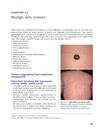
This chapter classifies various benign skin tumors and discusses their characteristics, treatment indications, and potential for recurrence, but reports no new clinical findings.
 July 2016 in “American Journal of Dermatopathology”
 The meeting showcased rare skin disease cases, highlighting the need for accurate diagnosis and treatment.
 July 2026 in “Quality in Sport”
 This review reports that Janus kinase inhibitors and regenerative therapies, such as exosomes and platelet-rich plasma, significantly improve scalp hair regrowth in moderate-to-severe alopecia areata, though challenges like high relapse rates and socioeconomic barriers remain, underscoring the need for personalized treatment protocols.
 April 2026 in “International Journal of Drug Delivery Technology”
 This study discusses advancements in nanotechnology and theranostic dressings, which may significantly improve chronic wound care by effectively targeting biofilms and enabling real-time monitoring, although obstacles to broad applicability and sustainability remain.
 April 2026 in “Research Square”
 In this study, trichoscopic examination revealed that variations in hair diameter were more common in certain types of alopecia affecting the frontal scalp, suggesting the importance of evaluating the entire scalp for accurate diagnoses, although limitations include a single center design and small sample size.
 March 2026 in “Frontiers in Medicine”
 This study provides a framework for understanding different types of alopecias based on immune privilege collapse at specific follicular sites, revealing distinct patterns in immune effector programs and stromal influences depending on the alopecia type.
 March 2026 in “Reports of Vinnytsia National Medical University”
 This study examined young Ukrainian men with alopecia areata and found that different severities of the condition were associated with distinct clinical and trichoscopic features, such as variations in hair loss, stress levels, and nail involvement, among others.
 January 2026 in “Dermatology Practical & Conceptual”
 This study observed that 78.3% of patients with alopecia areata exhibited nail changes detectable by dermoscopy, notably nail pitting, in contrast to 14.2% of healthy controls, with these changes significantly associated with disease severity, age, and duration.
In this study, a Monte Carlo-generated synthetic cohort analysis found that higher simulated cannabis exposure was linked to increased self-assessed hair loss severity and reduced follicular density, suggesting potential connections worth exploring in further clinical research.
 March 2025 in “Pakistan Journal of Health Sciences”
 In this study, patients with Alopecia Areata showed significant clinical improvement after intralesional steroid treatment, as trichoscopic features like black dots and exclamation mark hairs decreased, while short vellus and circle hairs increased, highlighting Trichoscopy's utility in monitoring treatment response.
 March 2025 in “Institutional Repositories DataBase (IRDB)”
 The testes significantly contribute to vitamin D metabolism and may affect male reproductive health and conditions like hair loss.
 January 2025 in “Bright Sky Publications eBooks”
 This abstract does not report specific research findings but describes a book titled "Medical Physics and Laser Technology: Advancements and Applications in Modern Healthcare," authored by Zahraa Zuhair Ghafel Saeid and colleagues, which is available for purchase.
 January 2025 in “Journal of Rawalpindi Medical College”
 In this study, among 800 Pakistani patients with Alopecia Areata, the most common location for hair loss was the scalp (89.9%), with significant associations between age and various dermoscopic features like black dots and exclamation mark hairs.
 December 2024 in “Ankara Universitesi Eczacilik Fakultesi Dergisi”
 This review highlights Nigella sativa L. (black cumin) as a plant with numerous health benefits, noting its rich nutritional profile and reported therapeutic effects such as antioxidant and anti-inflammatory activities, identified through various in vitro, in vivo, and clinical research studies.
 October 2023 in “Benha Journal of Applied Sciences”
 This review evaluates the role of the nuclear receptor PPAR- in skin diseases, highlighting its regulation of inflammation, lipid metabolism, and immune response, and suggests that PPAR-agonists could be promising therapies for conditions like psoriasis and atopic dermatitis.
 August 2023 in “Repository of the University of Primorsk (University of Primorska)”
 A Western diet may increase acne risk, while a Mediterranean diet and certain supplements can help reduce it.
 January 2023 in “Brazilian Journals Editora eBooks”
 Girls with Autism Spectrum Disorder may show different symptoms than boys, leading to missed or delayed diagnoses.
 January 2023 in “Brazilian Journals Editora eBooks”
 People with cleft lip and palate often have respiratory problems.
 January 2023 in “Brazilian Journals Editora eBooks”
 Passiflora incarnata may help with anxiety and sleep issues but has side effects; teleconsultation for heart failure can improve quality of life; increased screen time for children during the pandemic led to more clinical complaints; older and severely affected COVID-19 patients are more likely to have long-term symptoms.
 January 2023 in “Brazilian Journals Editora eBooks”
 Nursing staff's mental health was affected during the COVID-19 pandemic.
 January 2023 in “Brazilian Journals Editora eBooks”
 The document concludes that Passiflora incarnata could help with anxiety, telemedicine might improve heart failure care, screen time for kids has increased, pregnant teens in Brazil are mostly okay with their body image, rare tuberculosis infection can occur after knee surgery, older and severely ill people are more likely to have long COVID-19 symptoms, HPLC might diagnose more diabetes cases, and psychiatrists should be involved in pain management.
 January 2023 in “Brazilian Journals Editora eBooks”
 Pharmacists play a key role in managing the use of anxiety medications and ensuring patients use them correctly.
 January 2023 in “Brazilian Journals Editora eBooks”
 Psychiatrists are crucial in pain management teams because they help treat severe pain and related mental health issues.
 January 2023 in “Brazilian Journals Editora eBooks”
 The document concludes that Passiflora incarnata may help with anxiety, healthcare workers need mental support, common bacteria cause hospital UTIs, telehealth for heart failure needs research, kids' screen time has increased, pregnant teens are mostly okay with their body image, diagnosing post-surgery tuberculosis is hard, older and severely ill people are more likely to have long COVID symptoms, and psychiatrists should be part of pain management teams.