1 citations
,
December 2023 in “Journal of Ayub Medical College Abbottabad” This study found that alopecia areata is significantly associated with thyroid autoimmunity, but not with clinical or subclinical thyroid disease, in the Pakistani population.
12 citations
,
August 2011 This paper discusses tinea capitis in adults, emphasizing that it particularly affects postmenopausal African American or Black women, and notes challenges in treatment due to antifungal resistance.
5 citations
,
May 2024 in “Journal of Allergy and Clinical Immunology Global” In this case study, a 29-year-old male with severe atopic dermatitis and alopecia universalis experienced an excellent response to treatment with upadacitinib, indicating it may be a promising option for similar patients.
 1 citations
,
August 2022 in “JAAD case reports”
1 citations
,
August 2022 in “JAAD case reports” This article discusses the patterns and variants of alopecia areata, including the rare sisaipho, but reports no new research findings.
 9 citations
,
February 1996 in “Lancet”
9 citations
,
February 1996 in “Lancet” In this study, reversible ageusia in a patient was strongly suggested to be caused by losartan, with potential implications for angiotensin receptor involvement in taste disturbance.
November 2025 in “Journal of Cutaneous Medicine and Surgery” This study observed that JAK inhibitors were effective and safe for treating alopecia totalis and universalis, with improved response rates seen most with ritlecitinib and tofacitinib by week 24.
December 2025 in “Actas Dermo-Sifiliográficas” This review analyzes the mechanism and evidence supporting the approved use of ritlecitinib, a JAK3/TEC kinase inhibitor, for treating severe alopecia areata in patients aged 12 and older, highlighting its role in the changing therapeutic landscape of this immune-mediated disease.
 18 citations
,
January 2014 in “Postępy Dermatologii i Alergologii”
18 citations
,
January 2014 in “Postępy Dermatologii i Alergologii” This paper reviews current treatments for alopecia areata and emphasizes the importance of tailoring therapy to each patient's specific condition and needs without reporting new clinical results.
April 2025 in “Anais Brasileiros de Dermatologia” Abrocitinib effectively treats severe alopecia areata with significant improvement and no side effects.
 10 citations
,
August 2011 in “Clinics”
10 citations
,
August 2011 in “Clinics” This article presents a dissenting opinion, arguing that the case described by Dr. Molina et al. was diffuse alopecia areata, not acute alopecia areata as claimed, emphasizing the importance of distinct clinical differences.
 March 2026 in “Zenodo (CERN European Organization for Nuclear Research)”
 This case report details a 29-year-old male with recurrent alopecia areata who achieved complete hair regrowth after five months of Ayurvedic treatments, including Virechan therapy, Shamana Chikitsa, and Jalaukavacharana, with no adverse effects.
 July 2022 in “International Journal of Trichology”
 This case report describes a young Indian boy with resistant alopecia areata who experienced nearly complete hair regrowth within 5 months of treatment with oral tofacitinib.
43 citations
,
November 2009 in “Archives of dermatology” This study found that alefacept showed no significant improvement in treating severe alopecia areata compared to placebo over a 24-week period.
13 citations
,
February 2025 in “Journal of the European Academy of Dermatology and Venereology” Ritlecitinib shows promise for treating alopecia areata, especially with early and extended treatment.
1 citations
,
June 2025 in “Journal of Patient Experience” This study found that Finnish individuals with alopecia areata, especially those with significant hair loss, reported reduced well-being and significant comorbidities, highlighting unmet needs for treatment and professional support.
1 citations
,
May 2024 in “Archives of Dermatological Research” This study found that children with alopecia areata had more neglectful family environments and higher levels of anxiety and depression compared to healthy control peers, suggesting a psychosomatic component to the condition.
 October 2024 in “La Tunisie Médicale”
 In this cross-sectional study conducted at Farhat Hached Hospital in Tunisia, more than half of the 60 alopecia areata patients surveyed experienced depression, particularly younger individuals and those with severe or specific forms of the condition, underscoring the need for psychological support.
 4 citations
,
January 2022 in “Dermatologic Therapy”
4 citations
,
January 2022 in “Dermatologic Therapy” In this retrospective analysis, the authors reported that off-label tofacitinib treatment in 35 alopecia areata patients demonstrated safety, with no serious adverse events, and effectiveness, with 83.9% showing significant scalp regrowth and 32.3% achieving near total or total regrowth.
 May 2026 in “Journal of Skin and Sexually Transmitted Diseases”
 This review highlights the demonstrated efficacy and growing use of upadacitinib for cutaneous disorders, emphasizing its cost-effectiveness and recent availability in India compared to other biologics and small-molecule therapies, rather than providing new primary data.
This study found that mild skin injuries in rats, especially those dosed with dihydrotachysterol, lead to mineral deposits in hair follicle tissue within 6-12 hours, as confirmed by chemical and X-ray diffraction analyses.
 April 2024 in “Research Square”
 This study observed that children with alopecia areata had higher anxiety and depression scores, and their families showed more neglectful parenting styles compared to healthy controls.
3 citations
,
May 2025 in “Carbohydrate Polymers” In this study, researchers developed a dissolvable microneedle patch containing baricitinib for alopecia areata treatment, reporting significantly higher hair growth in mouse models compared to controls, suggesting its potential as an effective, pain-free topical therapy.
 August 2018 in “Journal of the American Academy of Dermatology”
 Calcipotriol may effectively treat hair loss in alopecia areata, working better in children than adults.
 34 citations
,
June 1990 in “British Journal of Dermatology”
34 citations
,
June 1990 in “British Journal of Dermatology” This study found that etretinate treatment led to an increase in plucked telogen hair counts, suggesting a reduction in the duration of anagen as the primary cause.
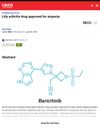 June 2022 in “C&EN global enterprise”
 This source notes that Olumiant (baricitinib), a rheumatoid arthritis drug by Eli Lilly and Company, has been approved as the first systemic treatment for severe alopecia areata.
 3 citations
,
September 2017 in “Pediatric Dermatology”
3 citations
,
September 2017 in “Pediatric Dermatology” This article discusses contact dermatitis linked to alopecia and hyperpigmentation, but it reports no new clinical results.
 September 2025 in “Australasian Journal of Dermatology”
 In this update, researchers incorporated TGA-approved Janus Kinase inhibitors into the Australian treatment guidelines for chronic, moderate to severe Alopecia areata, aiming to enhance recommended therapies by providing guidance on the use and management of these systemic medications.
 September 2024 in “Drugs & Therapy Perspectives”
 In this study, ritlecitinib, an oral medication approved for adolescents and adults, significantly reduced scalp hair loss and promoted eyebrow and eyelash regrowth in severe alopecia areata patients, with benefits sustained over 48 weeks and generally well-tolerated minor side effects.
7 citations
,
September 2024 in “The Journal of Dermatology” This study evaluated the effectiveness and safety of ritlecitinib in patients aged 12 or older with alopecia totalis or universalis, finding higher hair regrowth response rates compared to placebo at 24 weeks, with continued improvement and acceptable safety through 48 weeks.
 1 citations
,
July 2019 in “Medicina Clínica (English Edition)”
1 citations
,
July 2019 in “Medicina Clínica (English Edition)” Tofacitinib partially improved hair regrowth in a patient with severe hair loss.