 3 citations
,
February 2022 in “Dermatology practical & conceptual”
3 citations
,
February 2022 in “Dermatology practical & conceptual” This study found that trichoscopy is an effective noninvasive technique for diagnosing frontal fibrosing alopecia, confirming its valuable role alongside traditional histopathological examination.
 41 citations
,
July 2017 in “Journal of The American Academy of Dermatology”
41 citations
,
July 2017 in “Journal of The American Academy of Dermatology” This study observed that frontal fibrosing alopecia also occurs in men, with clinical features and areas of involvement similar to those seen in women, but often affecting sideburns and facial hair.
1 citations
,
August 2024 in “Anais Brasileiros de Dermatologia” This review discusses the non-follicular skin manifestations of frontal fibrosing alopecia and how they affect diagnosis and treatment, but reports no new clinical results.
 70 citations
,
April 2016 in “Experimental Dermatology”
70 citations
,
April 2016 in “Experimental Dermatology” In this study, oral tofacitinib treatment led to significant hair regrowth and changes in skin and blood biomarkers in a patient with alopecia areata.
 18 citations
,
June 2017 in “Journal of The American Academy of Dermatology”
18 citations
,
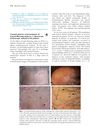
June 2017 in “Journal of The American Academy of Dermatology” In this study, trichoscopy consistently identified typical findings of frontal fibrosing alopecia, revealing three unusual clinical patterns in 18.4% of patients, which may aid in the differential diagnosis when clinical presentations are atypical.
 5 citations
,
June 2019 in “British Journal of Dermatology”
5 citations
,
June 2019 in “British Journal of Dermatology” No results are provided in this article as it lacks an available abstract, making it unclear what effects apremilast and tofacitinib have in a humanized mouse model of alopecia areata.
 1 citations
,
July 2023 in “Cutis”
1 citations
,
July 2023 in “Cutis” This study suggests that scalp rolling could be a promising and affordable adjuvant treatment for alopecia areata, potentially promoting hair regrowth by enhancing the effects of topical medications and inducing collagen.
 35 citations
,
November 2010 in “Journal of Cutaneous Pathology”
35 citations
,
November 2010 in “Journal of Cutaneous Pathology” This study reported that dilated follicular infundibula are a highly useful histopathologic criterion for diagnosing alopecia areata, particularly during its recovery stage.
 7 citations
,
August 2018 in “The American Journal of Dermatopathology”
7 citations
,
August 2018 in “The American Journal of Dermatopathology” This study describes a newly observed "inflammatory vellus involvement" pattern in early frontal fibrosing alopecia, which may lead to misdiagnosis due to the absence of typical histological features.
17 citations
,
June 2016 in “Archives de Pédiatrie” This case report describes three pediatric cases of frontal fibrosing alopecia, a condition typically seen in postmenopausal women, including a unique instance involving female twins.
 23 citations
,
June 1950 in “American journal of diseases of children”
23 citations
,
June 1950 in “American journal of diseases of children” This article discusses the interest in folic acid antagonists for leukemia treatment, noting their potential mechanism of interfering with cellular growth, but reports no new clinical results.
 5 citations
,
April 2019 in “Journal of The American Academy of Dermatology”
5 citations
,
April 2019 in “Journal of The American Academy of Dermatology” This review discusses the complex nature of frontal fibrosing alopecia, suggesting it is a misnomer and possibly a subset of lichen planopilaris, but reports no new clinical results.
2 citations
,
January 2019 in “Skin appendage disorders” This article reports a case of frontal fibrosing alopecia in its early inflammatory stage that responded positively to intralesional steroid treatment.
This study outlines treatment strategies for autoimmune alopecia areata, detailing that while mild cases may resolve on their own, severe cases often require intervention, with new JAK inhibitors like baricitinib and ritlecitinib emerging as promising treatments for those not responding to traditional therapies.
 26 citations
,
October 2016 in “Case Reports in Dermatology”
26 citations
,
October 2016 in “Case Reports in Dermatology” In this study, tofacitinib treatment in a male patient with alopecia areata led to significant hair regrowth and improvement in nail dystrophy symptoms, restoring finger function within 10 months.
June 2025 in “British Journal of Dermatology” This study found that both tofacitinib and methotrexate effectively reduced hair loss and psychological distress in patients with moderate-to-severe alopecia areata, but tofacitinib showed much greater efficacy. Both treatments had similar safety profiles, with no serious adverse effects reported.
2 citations
,
October 2000 in “Journal of Investigative Dermatology” AUC and APL are distinct conditions needing careful clinical assessment.
 November 2021 in “CRC Press eBooks”
 This article reviews anagen effluvium, a type of non-scarring alopecia that affects both men and women, often induced by chemotherapy or radiation, and discusses diagnostic approaches but reports no new clinical findings.
 238 citations
,
November 2016 in “Journal of The American Academy of Dermatology”
238 citations
,
November 2016 in “Journal of The American Academy of Dermatology” In this study, tofacitinib was reported to improve scalp hair regrowth in patients with severe alopecia areata, alopecia totalis, and alopecia universalis, showing a higher response in alopecia areata.
 49 citations
,
May 2018 in “Journal of the American Academy of Dermatology”
49 citations
,
May 2018 in “Journal of the American Academy of Dermatology” This letter discusses the limited treatment options for pediatric alopecia areata and the lack of controlled studies for therapies like systemic and off-label immunosuppressive drugs, without reporting new clinical results.
June 2025 in “British Journal of Dermatology” This report describes two unusual cases of frontal fibrosing alopecia in men, highlighting potential vaccine-related immune triggers and genetic factors, especially regarding the pronounced facial papular phenotype observed.

This study found a significant positive association between higher air quality index values and the incidence of alopecia areata, with a clear dose-response relationship observed among the participants.
January 2016 in “Indian dermatology online journal” This case study diagnosed a 60-year-old woman with frontal fibrosing alopecia after histopathological analysis showed characteristic scarring patterns in the hairline area.
July 2024 in “Journal of Investigative Dermatology” Linalool in fragrances may harm hair follicles and contribute to hair loss.
 33 citations
,
January 2010 in “Case reports in dermatology”
33 citations
,
January 2010 in “Case reports in dermatology” This article presents a case study of a 50-year-old woman with frontal fibrosing alopecia and discusses the role of dermoscopy in differentiating it from other types of alopecia, reporting no new clinical results.
 49 citations
,
January 2003 in “Clinical and Experimental Dermatology”
49 citations
,
January 2003 in “Clinical and Experimental Dermatology” This report from the UK reviews the literature on post-menopausal frontal fibrosing alopecia and highlights its under-recognition and distinctive characteristics compared to lichen planopilaris, but does not provide new results.

This abstract contains no research findings; it outlines website features and access options for the JAMA network's publications.
1 citations
,
February 2025 in “Pediatric Dermatology” This study found that oral tofacitinib achieved significant hair regrowth in children with moderate to severe alopecia areata, with 72.2% reaching a 75% improvement and 52.8% achieving complete regrowth, though some patients did not respond and further research is needed on the treatment's long-term effects.
 April 2023 in “World Journal Of Advanced Research and Reviews”
 This study in Morocco found that all women with frontal fibrosing alopecia presented frontotemporal hairline recession, with trichoscopic features such as perifollicular erythema and follicular hyperkeratosis being indicative of the condition, and suggested a potential link between cosmetic products or emotional factors and the disease.
 2 citations
,
July 2021 in “JAAD Case Reports”
2 citations
,
July 2021 in “JAAD Case Reports” This case study suggests that trichoscopic examination of the beard can aid in diagnosing frontal fibrosing alopecia in men, especially when challenging to differentiate from androgenetic alopecia.