 4 citations
,
January 2024 in “JEADV. Journal of the European Academy of Dermatology and Venereology/Journal of the European Academy of Dermatology and Venereology”
4 citations
,
January 2024 in “JEADV. Journal of the European Academy of Dermatology and Venereology/Journal of the European Academy of Dermatology and Venereology” This consensus statement outlines a treatment algorithm for alopecia areata, detailing systemic treatment indications and options, including EMA-approved medications baricitinib and ritlecitinib for severe cases, as well as other off-label treatments and adjuvant therapies like oral minoxidil.
97 citations
,
January 2006 in “Dermatology” This study found that intramuscular triamcinolone acetonide or pulse therapy effectively treats alopecia areata with manageable side effects, but further strategies are needed to reduce relapse rates.
30 citations
,
January 2024 in “Frontiers in Pharmacology” This study identified common and previously unlisted adverse events associated with four anti-CGRP monoclonal antibodies for migraine prevention, highlighting a varied safety profile post-marketing.
June 2026 in “JEADV Clinical Practice” In this case report, a 77-year-old woman developed alopecia areata after discontinuing cemiplimab treatment for metastatic cutaneous squamous cell carcinoma, suggesting an immune-related adverse effect potentially linked to systemic immune activation.
 33 citations
,
December 2005 in “Archives of dermatology”
33 citations
,
December 2005 in “Archives of dermatology” This study presents case reports of four patients with alopecia areata or alopecia universalis, highlighting varied responses to treatments like prednisone, intralesional triamcinolone, and squaric acid dibutyl ester.
This study found that a short-term treatment with all-trans retinoic acid may effectively stabilize platelet counts in idiopathic thrombocytopenic purpura patients experiencing fluctuations during thrombopoietin receptor agonist therapy.
September 2002 in “Oncology Times” This study presented at the ASCO Annual Meeting reported that the epidermal growth factor receptor antibody ABX-EGF showed preliminary efficacy in renal cell cancer patients, with tolerable side effects, while bortezomib demonstrated clinical benefit in a significant proportion of multiple myeloma patients.
 49 citations
,
March 2014 in “Journal of Investigative Dermatology”
49 citations
,
March 2014 in “Journal of Investigative Dermatology” This study demonstrated that combining AMD3100 with low-dose tacrolimus in a stem cell mobilization approach significantly reduced wound healing time and improved scar and hair follicle regeneration in full-thickness skin wounds.
 January 2009 in “Yearbook of Dermatology and Dermatologic Surgery”
 Etanercept is safe and may help improve hidradenitis suppurativa, but more research is needed.
1 citations
,
April 2025 in “Skin Health and Disease” This study is collecting real-world data to evaluate abrocitinib and conventional systemic treatments in moderate-to-severe atopic dermatitis across five European registers over a three-year period.
This study found that neutrophil-rich hair follicle inflammation caused by a monoclonal antibody targeting murine EGFR in mice involved TNFα and interleukin-1, suggesting these cytokines play a role in EGFR antibody-induced rashes in cancer patients.
 3 citations
,
May 2019 in “Cytotherapy”
3 citations
,
May 2019 in “Cytotherapy” In this study, only a subset of proposed biomarkers universally responded to priming in mesenchymal stromal cells, suggesting limited utility for standardized potency assays across different MSC types and conditions.
The study found that the combined administration of regulatory T cells and rapamycin improved outcomes in an experimental model of chronic graft-versus-host disease.
11 citations
,
August 2021 in “Stem Cell Research & Therapy” This study found that coadministration of pimecrolimus may interfere with the therapeutic efficacy of mesenchymal stem cell therapy in atopic dermatitis.
10 citations
,
August 2019 in “European Journal of Dermatology” This abstract provides no new clinical results; it discusses the role of surgery and interventional radiotherapy in treating cutaneous squamous cell carcinoma.
 5 citations
,
January 2021 in “Inflammatory Bowel Diseases”
5 citations
,
January 2021 in “Inflammatory Bowel Diseases” In this report, a female patient with ulcerative colitis, alopecia areata, and pyoderma gangrenosum showed improvement in all three conditions after being treated with tofacitinib.
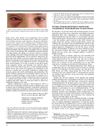 16 citations
,
August 2011 in “Annals of Allergy Asthma & Immunology”
16 citations
,
August 2011 in “Annals of Allergy Asthma & Immunology” This report describes a case of a 19-year-old woman experiencing severe recurrent angioedema with airway issues, leading to multiple emergency visits and unsuccessful treatment with typical steroid-sparing agents.
This review examines the potential of CAR-T cell therapy as a transformative treatment for refractory autoimmune diseases, highlighting its mechanisms, clinical challenges, and promising strategies for precision immunotherapy despite issues like complex manufacturing and antigen escape.
May 2025 in “Journal of the European Academy of Dermatology and Venereology” This study reported that etrasimod did not achieve significant improvements in hair regrowth for moderate to severe alopecia areata at 24 weeks, although it showed a dose-dependent trend and was safe and well-tolerated over 52 weeks.
53 citations
,
July 2009 in “Cancer Research” In this mouse study, the researchers found that the monoclonal antibody ME1 causes hair follicle inflammation by up-regulating TNFα, which can be reduced by TNFα and interleukin-1 inhibitors.

This study reports two cases of severe alopecia areata showing seemingly permanent hair regrowth with a modified triamcinolone acetonide regimen involving epinephrine, and suggests a potential role for epinephrine in enhancing treatment efficacy.
10 citations
,
April 1964 in “Journal of the American Geriatrics Society” This article reviews triamcinolone acetonide as an intramuscular long-acting steroid therapy for dermatologic disorders but reports no new clinical results.
 June 2020 in “Journal of Investigative Dermatology”
 This study observed that insurance coverage for oral tofacitinib in alopecia areata patients was difficult to obtain, with 71% of patients ultimately not receiving approval despite the drug's efficacy as an off-label treatment.
 April 2024 in “Clinical and experimental dermatology”
 This retrospective study evaluated the use of tofacitinib as an induction therapy for severe alopecia areata and found it promising and comparable to the standard oral mini-pulse treatment, though pulse steroids may be considered if tofacitinib response is inadequate.
43 citations
,
November 2009 in “Archives of dermatology” This study found that alefacept showed no significant improvement in treating severe alopecia areata compared to placebo over a 24-week period.
March 2023 in “International Journal of Trichology” This case report describes the first known occurrence of alopecia areata associated with cemiplimab, an anti-PD1 drug, in a patient with a positive cancer treatment response.
1 citations
,
February 2025 in “Archives of Dermatological Research” Using Excimer light with topical steroids is the most effective treatment for alopecia areata.
August 2024 in “British Journal of Dermatology” The trial is ongoing, but researchers are evaluating the efficacy and safety of REZPEG, a potential new therapy for severe alopecia areata, which selectively expands regulatory T cells.
 October 2024 in “Canadian Journal of Health Technologies”
 This CADTH recommendation advises that Olumiant should be publicly reimbursed for treating severe alopecia areata in adults, provided conditions such as a 50% scalp hair loss and specific prescribing criteria are met.
 4 citations
,
May 2018 in “Journal of Neuro-Ophthalmology”
4 citations
,
May 2018 in “Journal of Neuro-Ophthalmology” This review describes the evolution of treatments for relapsing multiple sclerosis, highlighting that while newer potent monoclonal agents can potentially achieve disease remission, they also pose moderate to severe adverse event risks that healthcare providers must understand.